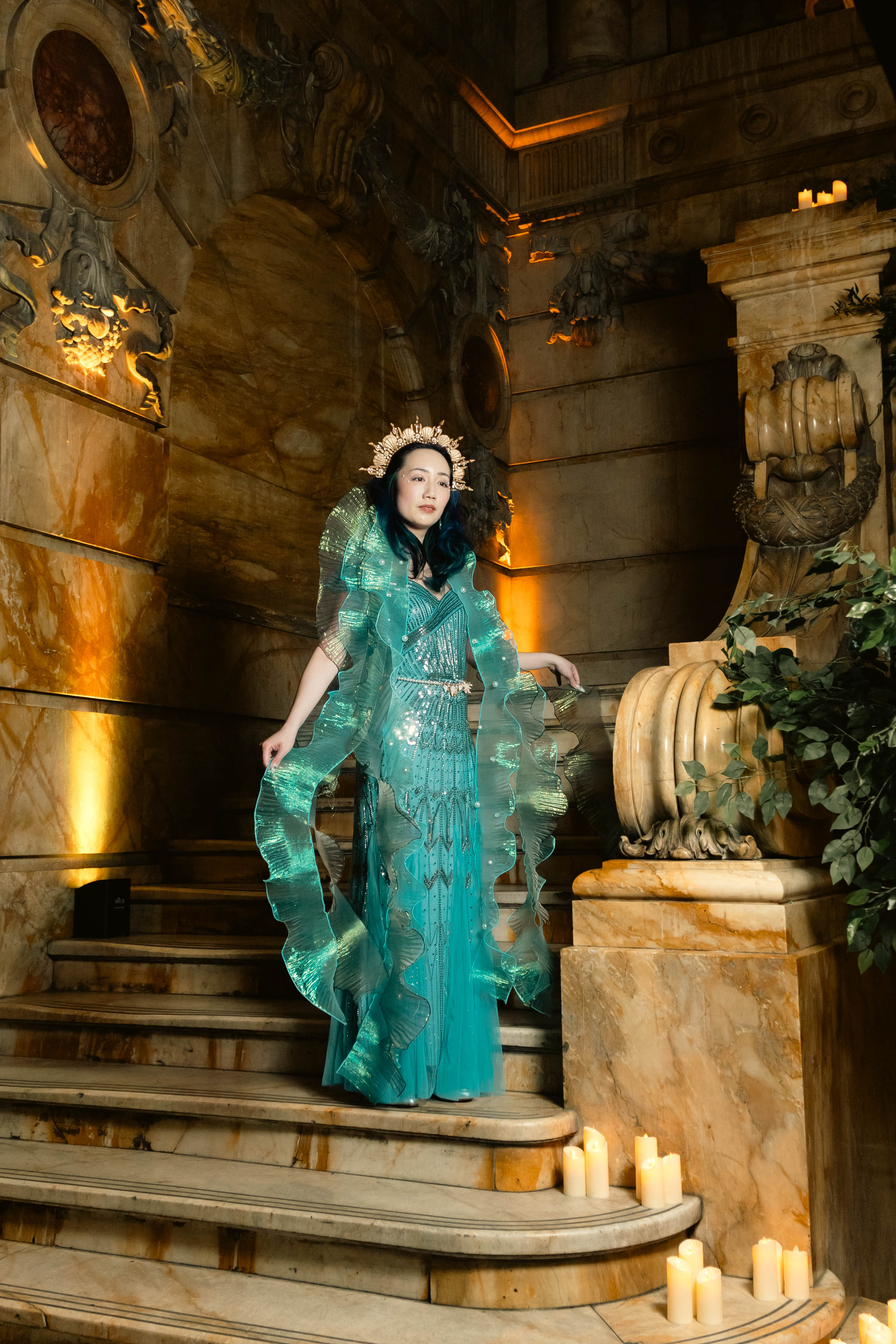
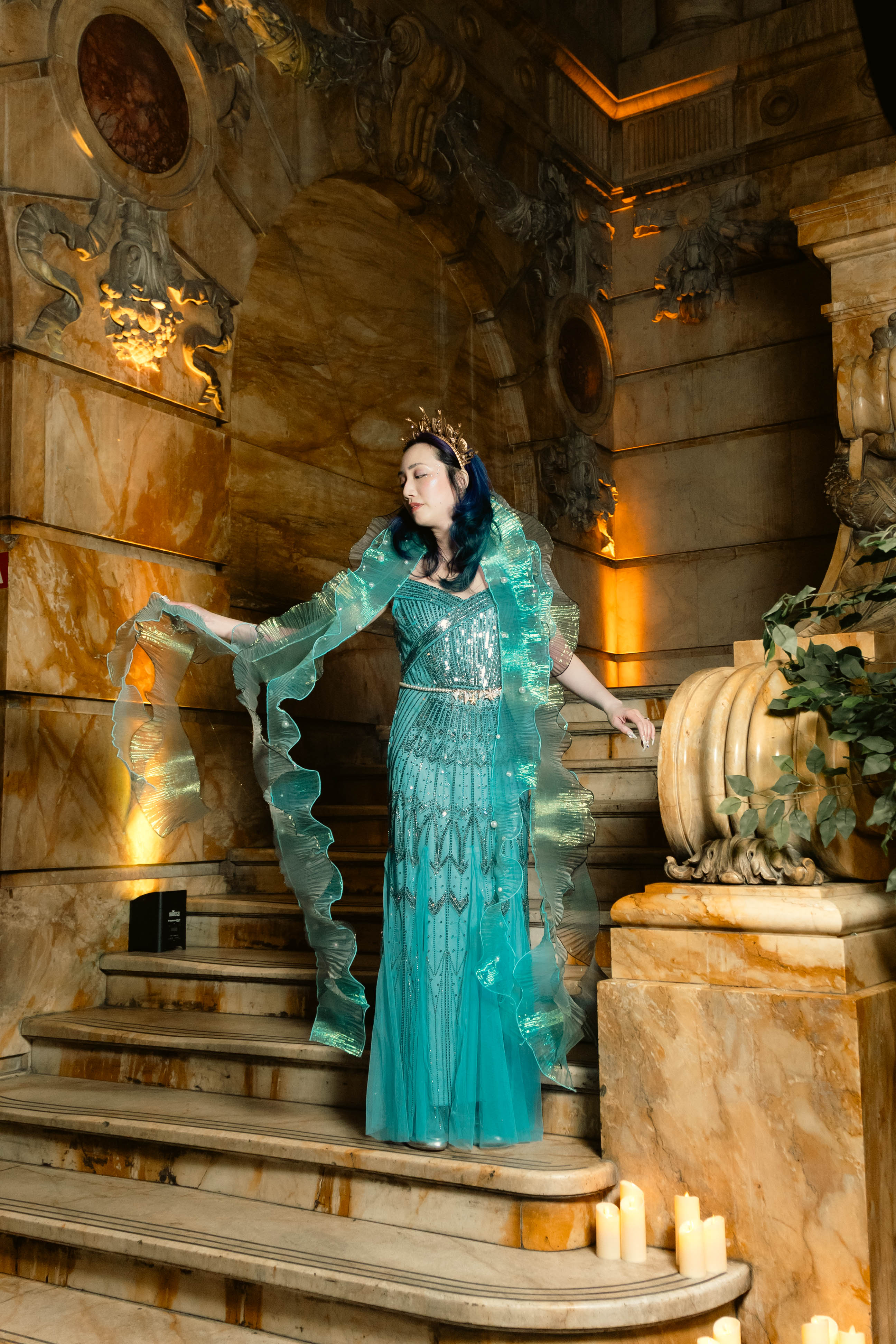
I was invited to be a special guest at the Second Star Events Neverland Ball, a fantasy costume ball that took place in New York City in May. People were encouraged to dress as a mermaid, pirate, fairy, or other character from Peter Pan. I decided to lean into the mermaid theme and sewed an ocean-inspired shawl out of iridescent fabric to go with a sparkly dress I already in my closet from Babeyond. It was not difficult to make and I got so many compliments on it so I wanted to share how easy it is to make your own!
All the pretty ruffled iridescent fabric was purchased from Amazon (affiliate link) and you can get a lot of the other supplies there too. I’ll have links to all my materials and accessories summarized at the end of this post.
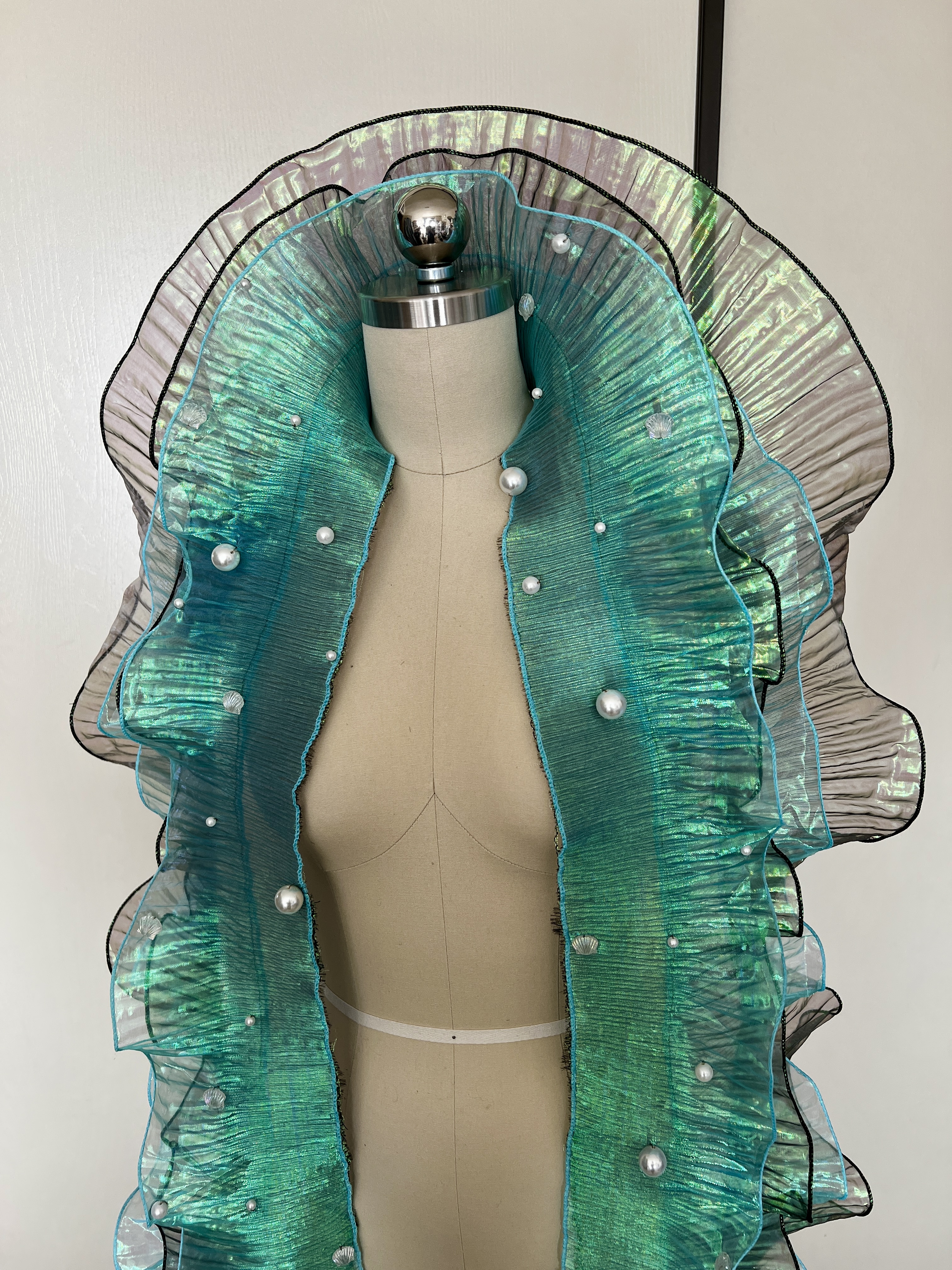
I bought two different colors (blue and green) of the ruffled iridescent fabric and layered them to add dimension. The green fabric is a little wider than the blue to add some extra interest. You can see from the side view below if we numbered the layers from left to right they would look like this:
Blue with pearls and beads sewn on
Green
Blue
Green
Each piece of fabric was about 3 yards long. I am 5’6″ so you’ll want to cut longer or shorter depending on your height. I cut 4 pieces of fabric (2 green and 2 blue).
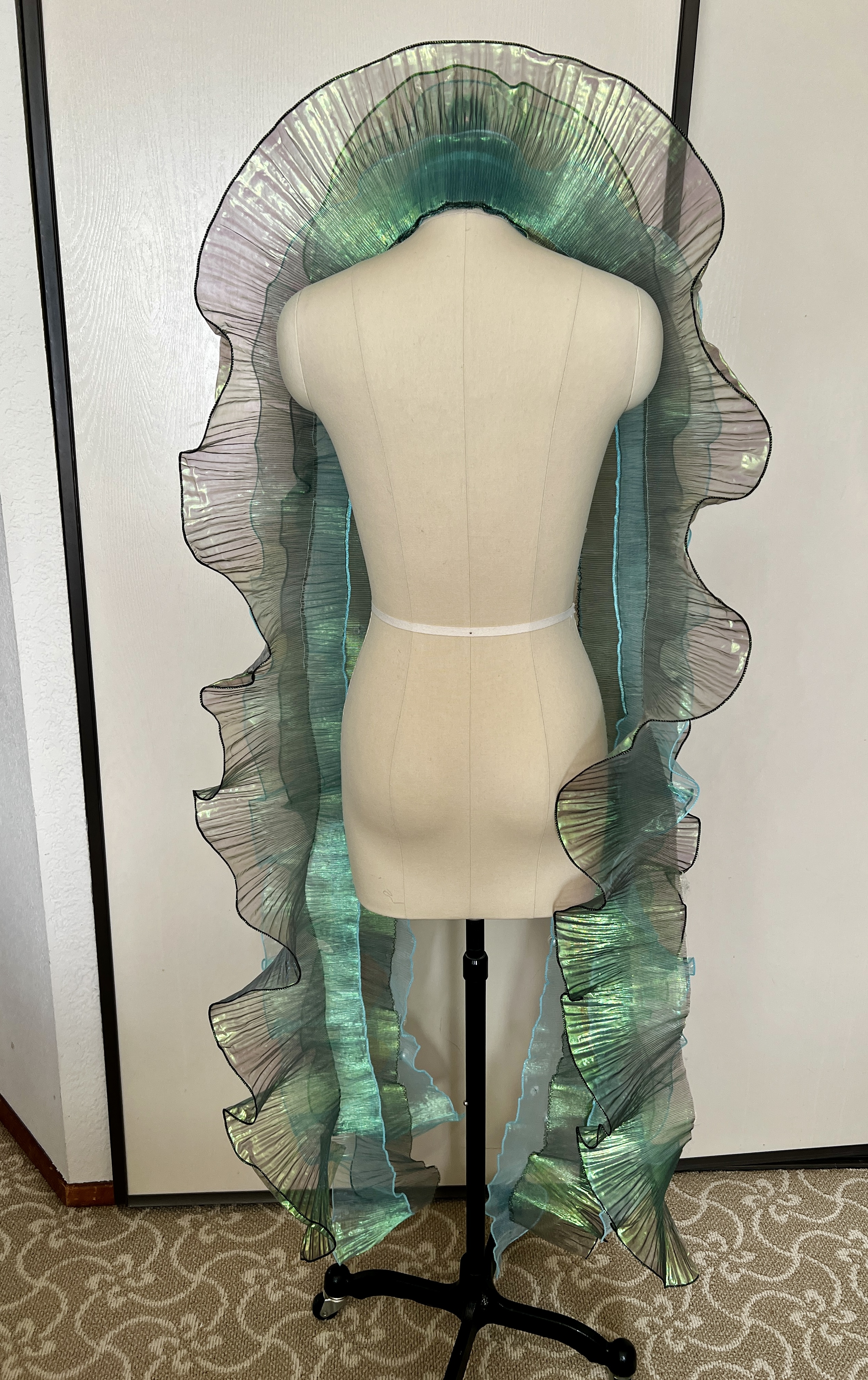
When you sew the pieces together, they are only attached at the middle section, leaving the ends to hang free and wave about on the dance floor! This is the view from the back. I ended the stitching around waist-height.
Referring to the numbered layers in the list above, this is your order of sewing:
Put the edge of #4 (green) halfway under #3 (blue) and stitch down by machine. (This means you will be sewing down the center of #3).
Put the edge of #3 (blue) halfway under #2 (green) and stitch down by machine. (This means you will be sewing down the center of #2).
Line up the edges of #2 (green) and #1 (blue) with blue on top and stitch down at the edges by machine.
Hand-sew pearls and beads onto #1 (blue).
It doesn’t matter if the ends aren’t exactly even or the layers aren’t lined up perfectly halfway because it just adds to the natural kelp-like look.
Shell-shaped beads: Amazon (affiliate link). These are not exactly the same color I had in my stash but are the same size and shape and I think they would show up better because they are more opaque.
Faux pearls: Amazon (affiliate link). Mine are collected over time from different sources but these are a similar assortment. You’ll want varied sizes and for them to be plastic not glass to avoid being too heavy.
Belt: I made my belt using a shell bracelet similar to this one (Amazon affiliate link) and extending the length with faux pearls.
I enjoy sewing for many historical costume eras, as those of you who follow my blog or watch my costuming content on my Instagram know, and I always have fun considering the accessories. My biggest piece of advice for making your look complete is to consider not just the gown, but the hats, shoes, gloves, stockings and especially the jewelry! I wear many historically-inspired costume jewelry pieces that I have either made or purchased, vintage or new, but I also like to admire genuine antique pieces. (All jewelry photos in this blog post were kindly provided by Antique Ring Boutique, who sponsored this post, but allowed me to write whatever I wish).
I thought it would be fun to share in this post a few eras I like to costume from, some inspirational images, and of course some beautiful genuine antique jewelry!
Whether you are a new historical costumer looking for an overview, or an experienced maker wanting to gaze at some lovely shiny things, I hope this post gives you some inspiration.
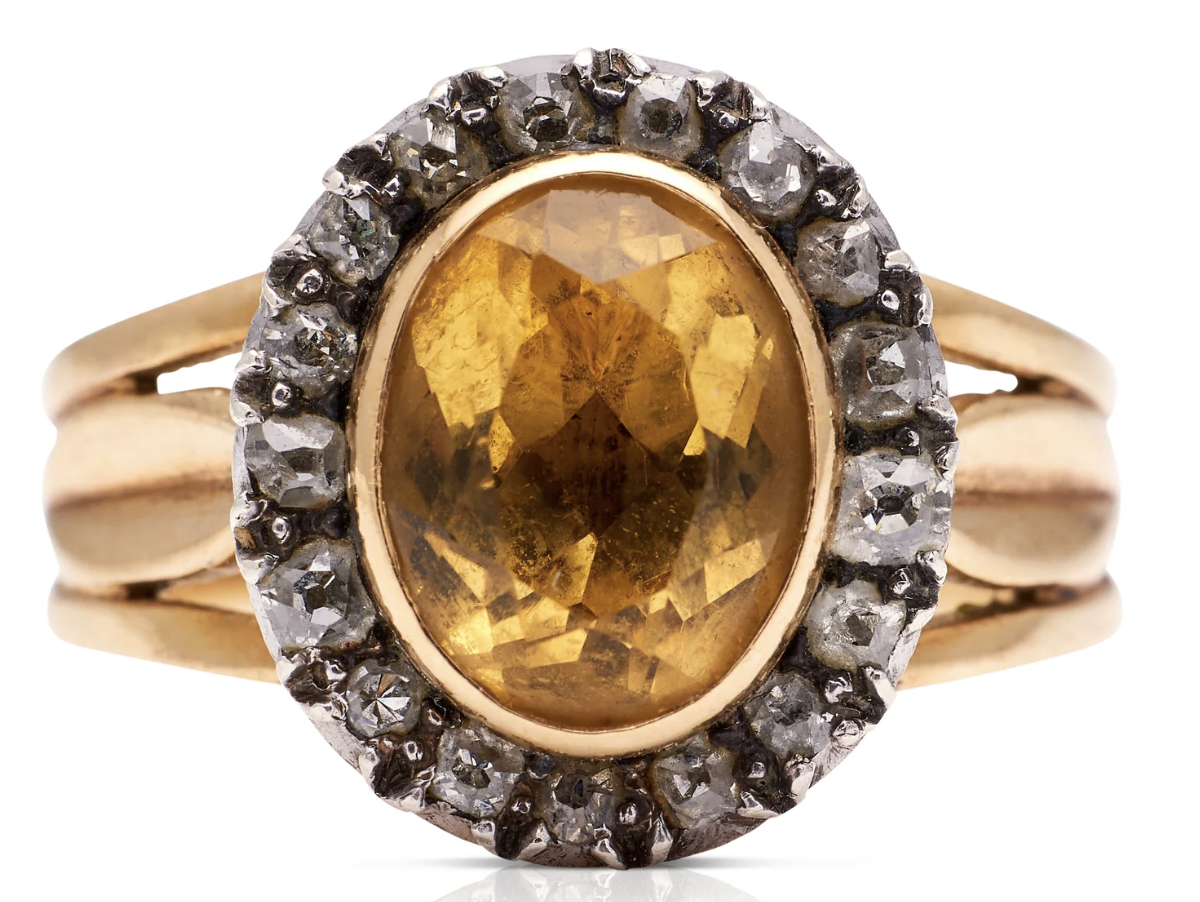
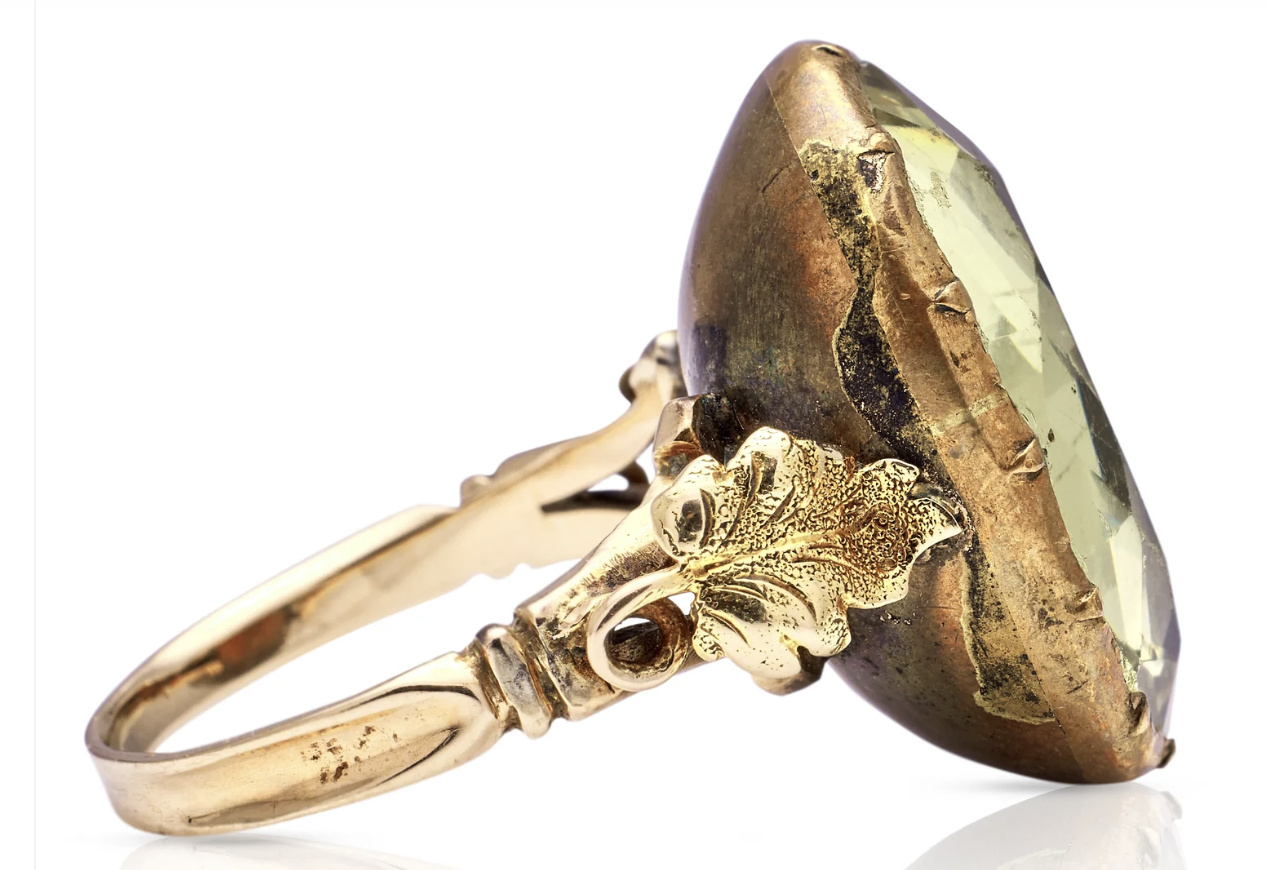
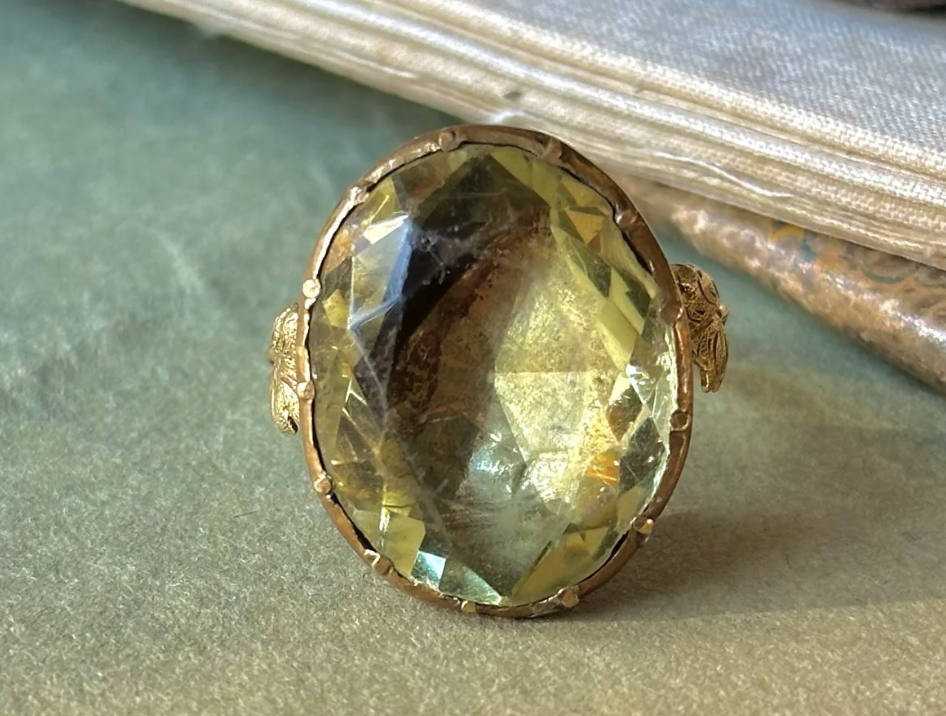
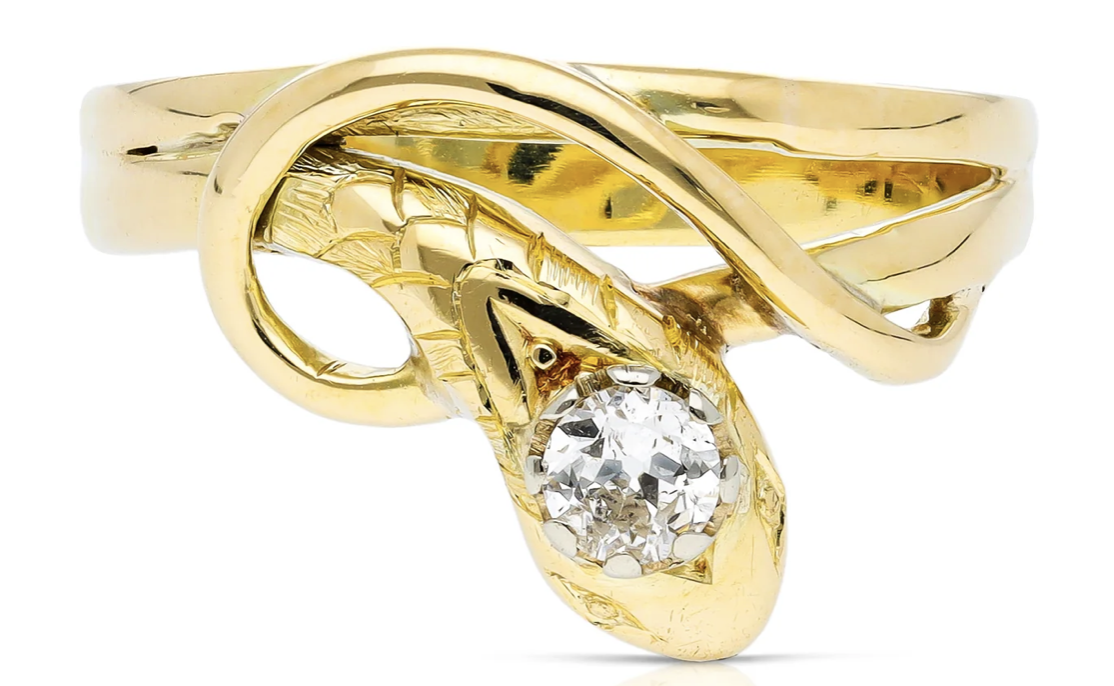
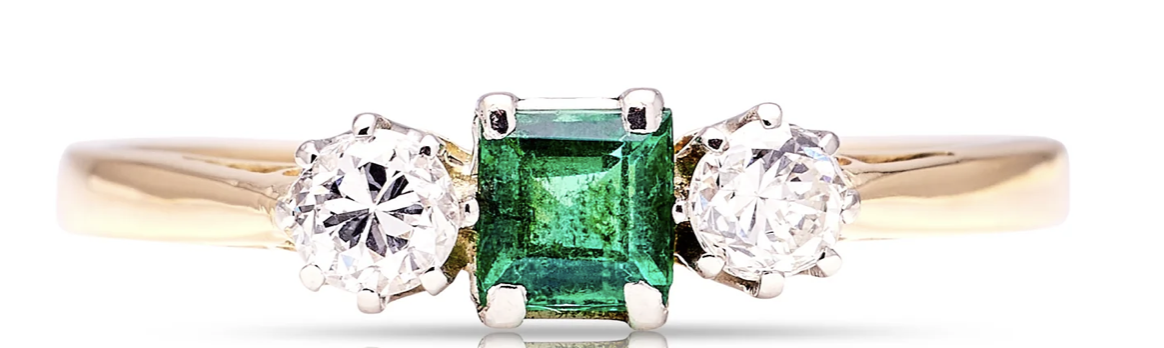
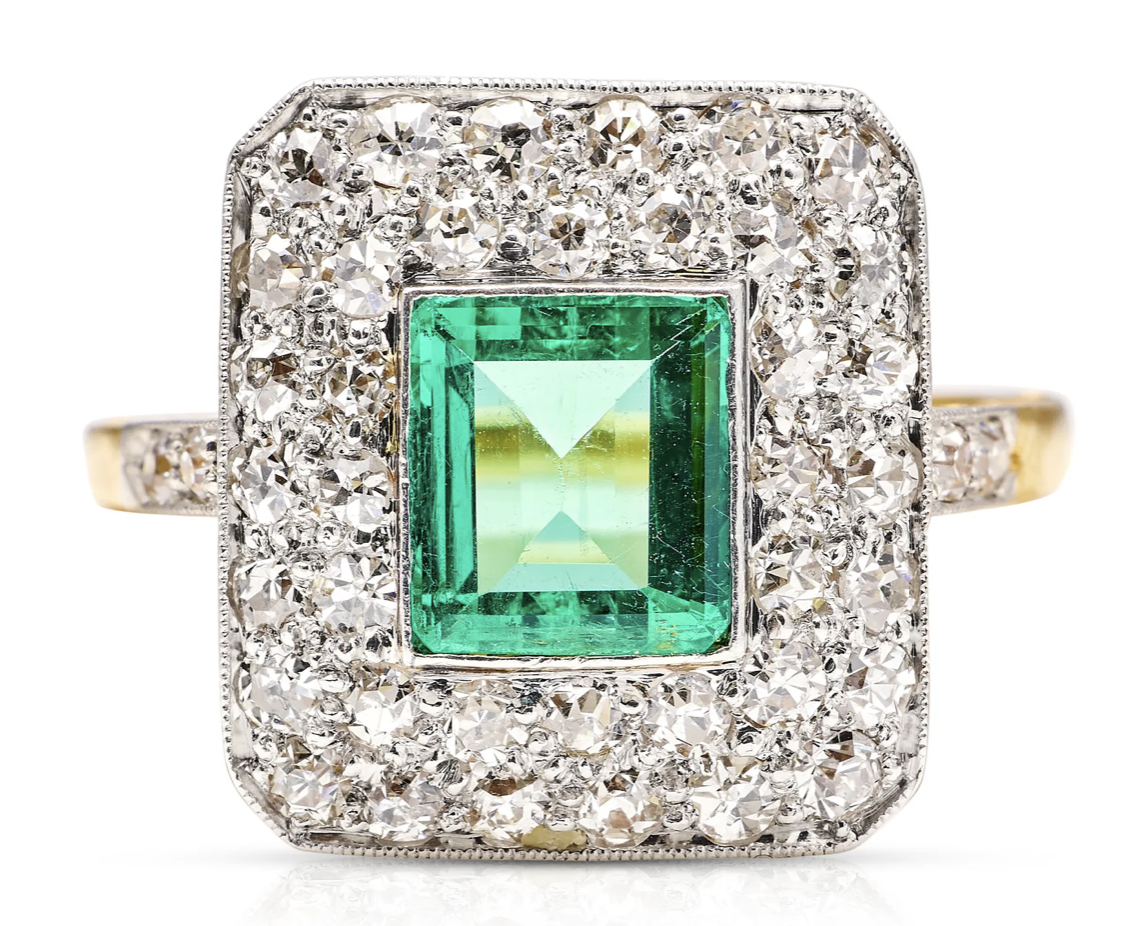
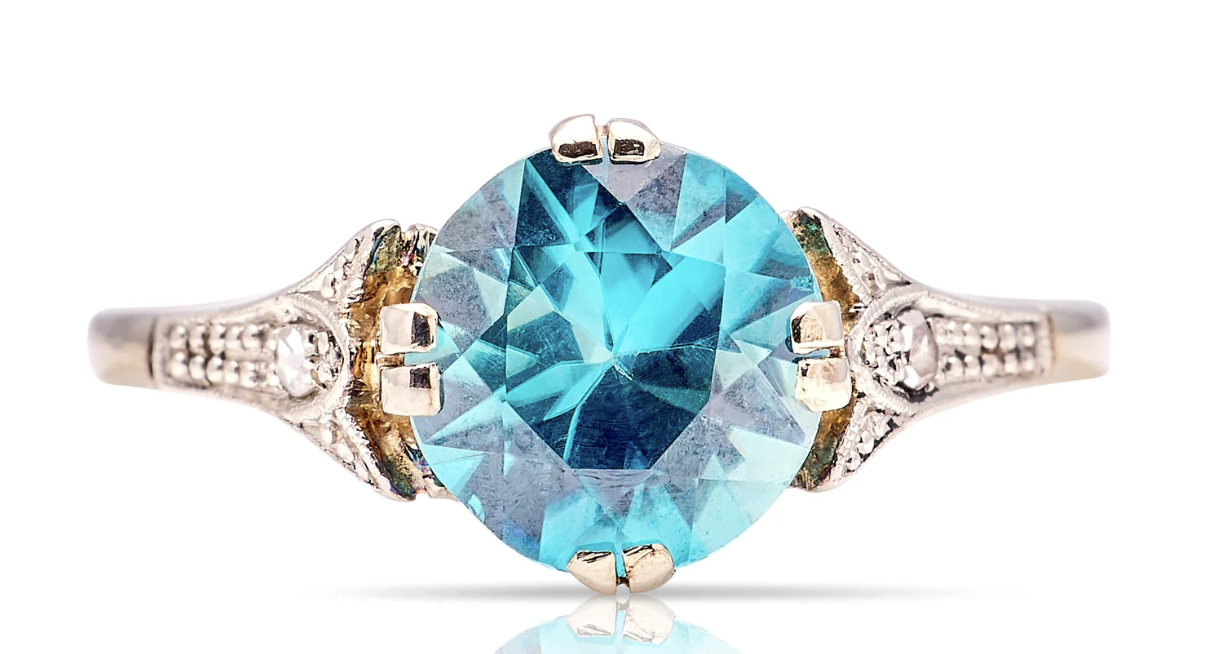
For each ring I’ve included a main image plus a link to a page where you can see even more photos of different views, and read about the piece.
Georgian (1714-1837)
The Georgian era is named after the start of the reign of King George I in 1714 and includes the end of the reign of King George IV in 1830 and the regency period of William IV in 1837.
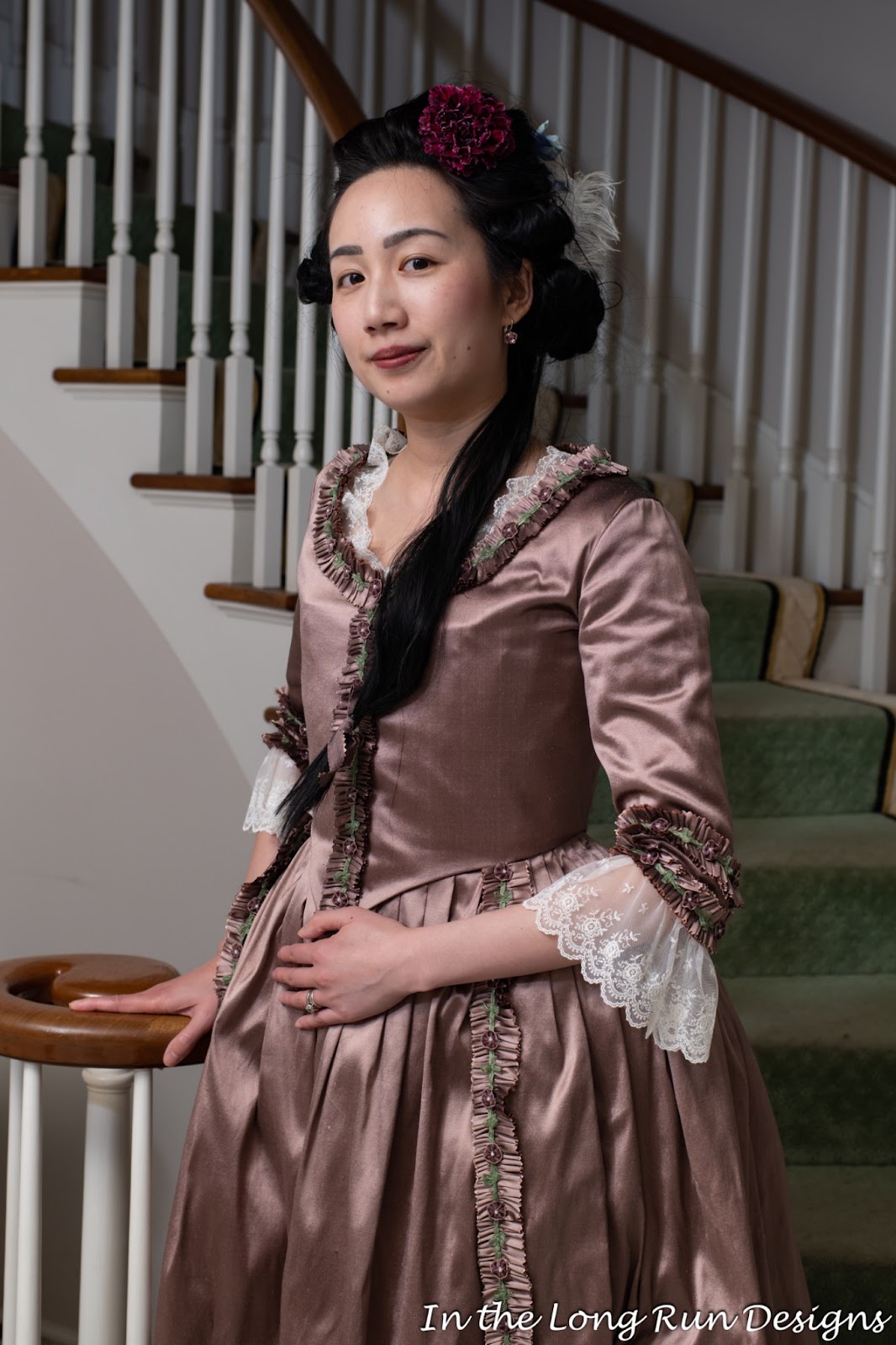
I love costuming from the 18th and early 19th century, and have made a number of outfits from this time. This mauve silk dress is a favorite (photo by In the Long Run Designs).
The 18th century brings to mind Marie Antoinette, silk gowns, panniers, and big hair! Extravagant jewelry, especially with foil-backed stones, glittered under candlelight at court. Rose gold, yellow gold, and silver were popular metals for rings.
The Victorian period was named after long-reigning monarch Queen Victoria of England. Since the period was so long, there were many silhouettes, including the full short dresses of the 1830s, the hoop skirts of the 1850s, and bustle dresses of the 1870s and 1880s. I am particularly fond of bustle dresses like this one I wore to a museum event. (Photo by John Carey Photographic).
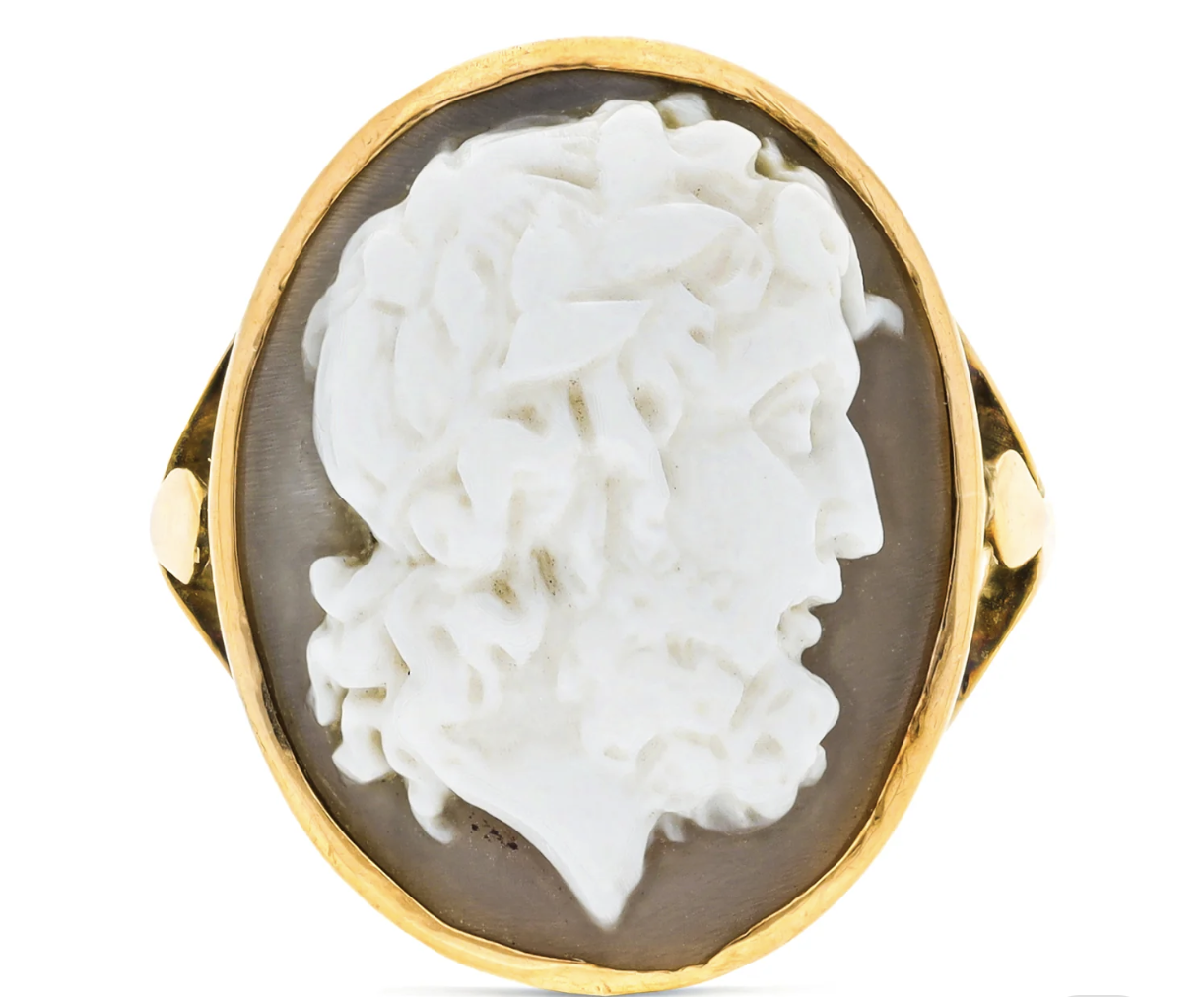
During the Victorian era, diamond rings were very popular. Different materials such as amethyst, emeralds, agate, pearls, and even hair! (often found in mourning jewelry) were used. Carved cameo and intaglio jewelry continued to be popular, such as this lapis lazuli ring.
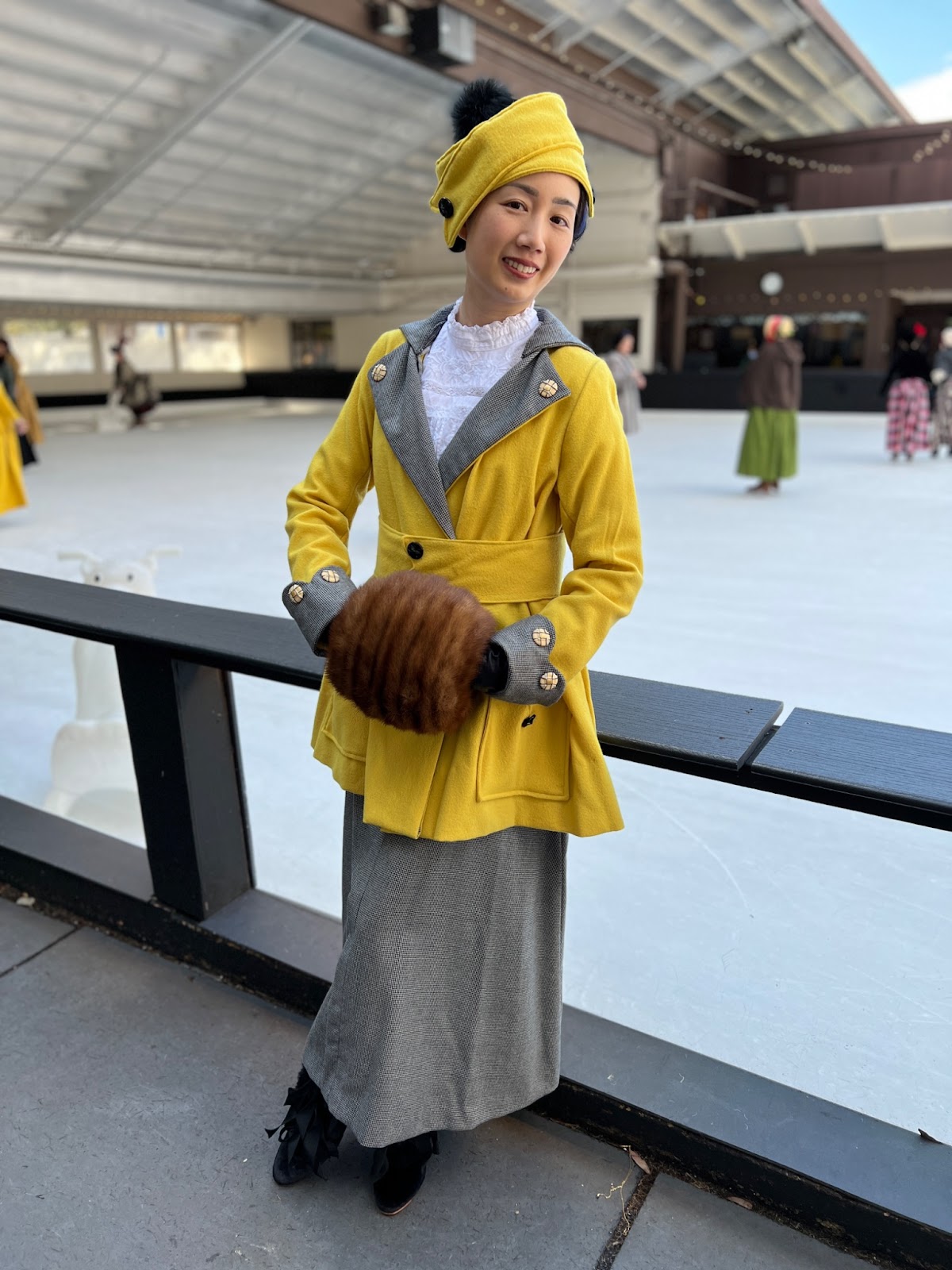
The Edwardian period was named after King Edward VII, and the time of some very elegant designs. The blouse and walking skirt combination was common for daywear, and an easy way to get into historical costuming. Suits and stylish jackets were also common, and we also saw women’s sportswear. This wool suit I made and wore to a historical ice-skating party.
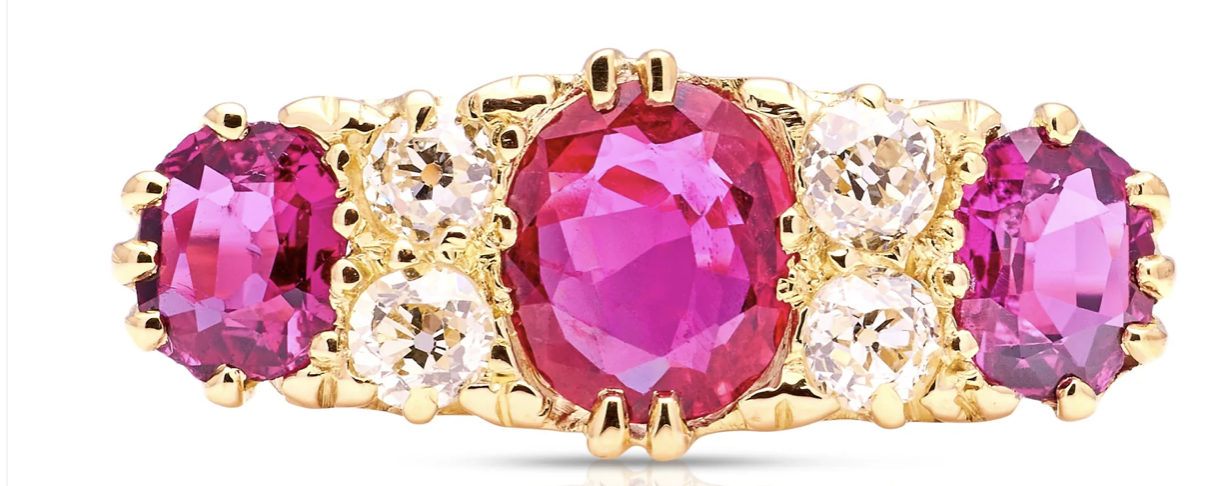
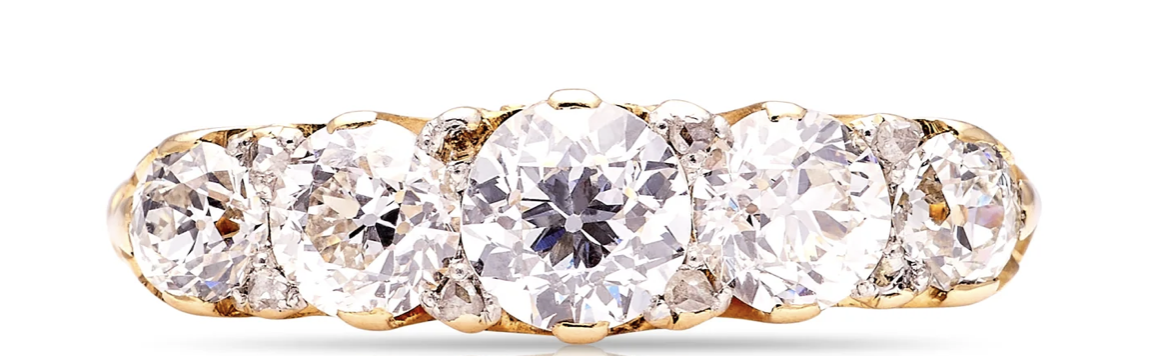
The Edwardian era includes part of the Belle Epoque and Art Nouveau eras, and some designs that are still very wearable today, such as this five stone diamond ring:
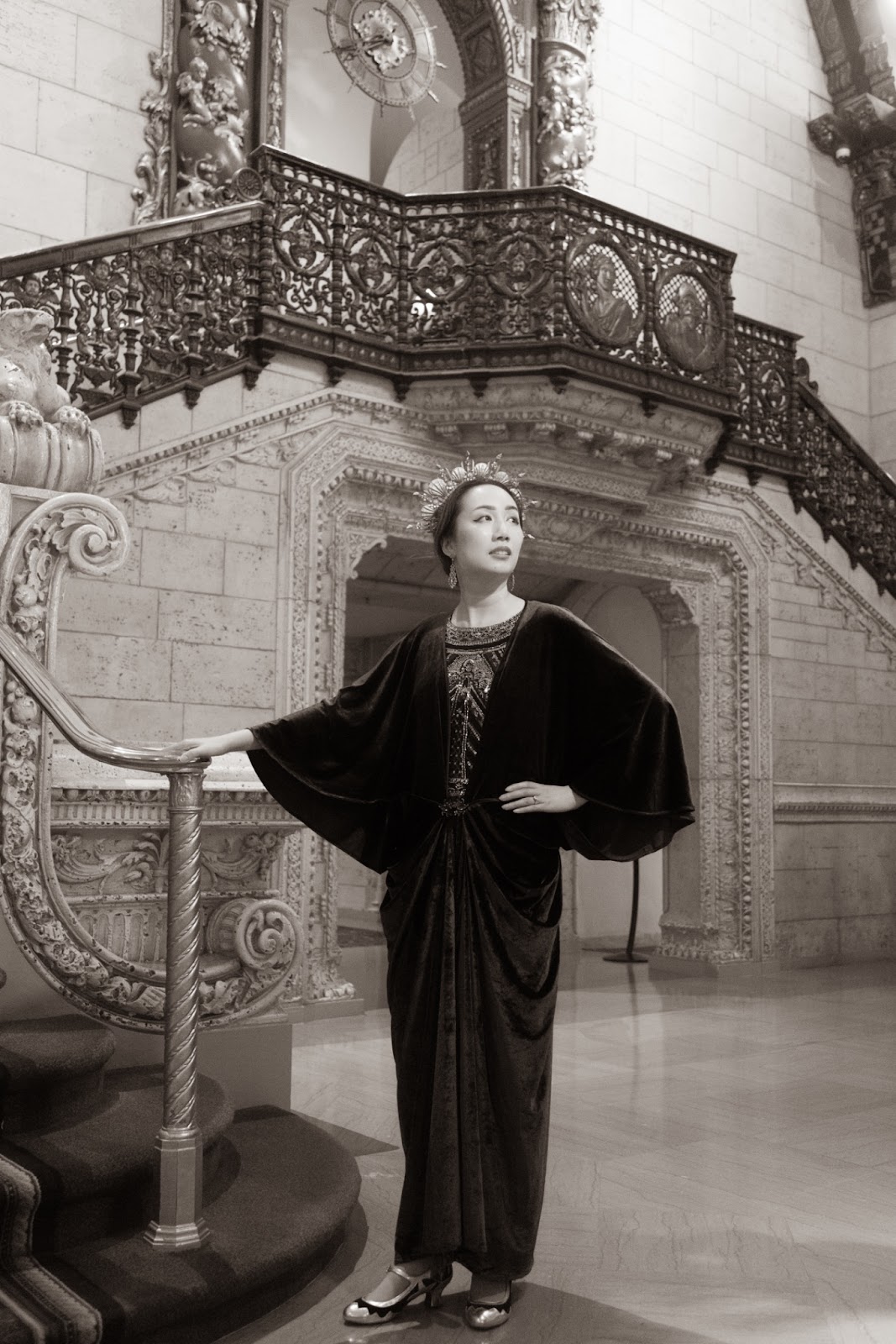
If you love Old Hollywood glamor or flapper dresses, the Art Deco era is for you! I own a number of 20s-inspired dresses, but my heart also lies with the long gowns of the 1930s. I do pull inspiration from each. This photo was taken at the historic Biltmore Hotel in LA by Jason Holmes Photography.
I hope you’ve enjoyed looking at these rings. If you have a favorite, either from the ones I’ve shown you or from the Antique Ring Boutique site, let me know! (Or you might let someone in your life know you deserve a sparkly treasure for the holidays).
Note: Some of the links may be affiliate links. As an Amazon Associate I earn from qualifying purchases. This means I get a small cut out of what you buy that goes towards my domain registration fees.
GENERAL SEWING:
The Pattern Making Primer: All You Need to Know About Designing, Adapting, and Customizing Sewing Patterns – Jo Barnfield and Andrew Richards
The Edwardian Modiste: The Edwardian Modiste: 85 Authentic Patterns with Instructions, Fashion Plates, and Period Sewing Techniques – Frances Grimble (this author also has books on bustle era and Gilded Age fashions)
Years ago I made a black 1660s dress but wanted a more colorful one. I finally got my excuse to make one when my local costume guild decided to put on an event called “DuMasquerade,” a dinner event celebrating the works of Alexander Dumas. I made a dress out of purple taffeta and wore a dragon mask perched upon my head.
In this post I’ll show you the dress I wore, plus some tips/tricks to make your sewing faster and/or more polished. I only had a few weeks to make this dress so I definitely took some shortcuts!
I used the Nehelenia 1660s dress pattern since I was familiar with it, having used it before. This style of dress features a long skirt, a fully boned bodice with a pointed center front, and puffy sleeves, made of a purple taffeta fabric. I am happy to brag that I made this dress for less than $25! A friend found the fabric for $2.50/yard at a local shop, and I got the fancy trim on clearance for $1/yard. The ruffles are made from a cotton organdy curtain I got for free. The lining uses scraps from a previous project and the boning is 4 different colors/lengths of zip ties and boning bits I found around the house or was given to me from someone destashing. The bum roll uses scraps from another finished dress. I already owned the pattern, shoes, wig, and petticoats from previous costumes. I was so under budget for this dress I decided to buy those pearly bodice decorations from an Etsy shop called Recycled Rockstah. The dragon mask is a kid’s Halloween mask that I painted and attached to a headband. Some of my costume projects can get pricey but every so often I like to challenge myself to make something for a low cost, to remind myself of how I started costuming, and to let others know that with a little luck and patience (and keeping a stash!) it’s possible to look fancy for less. Yes, I had the privilege of time and experience, but I firmly believe costuming is for everyone and every budget. You don’t have to have silk to be valid.
TIPS/TRICKS
Tip/trick #1: Instead of making a corset as a separate garment, make your bodice fully boned. To do this you will cut out two linings and stitch them together with a series of parallel lines to make channels for your boning! Then you will cover this boned lining layer with your fashion fabric layer.
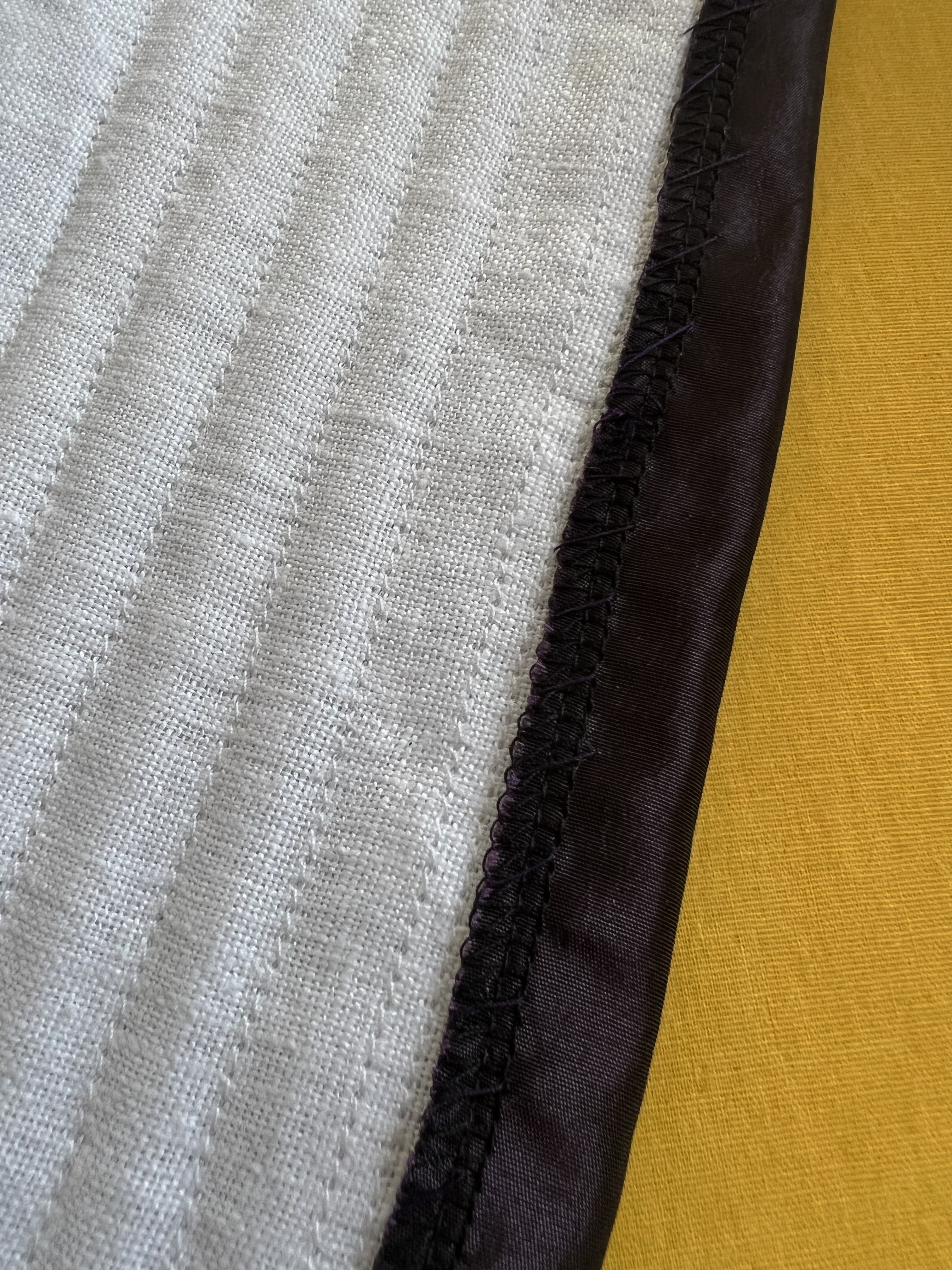
Tip/trick #2: When you cut out your bodice fashion fabric pattern pieces, extend the sides of the pieces that will make up the neckline, back closure, and bottom edge by about an inch. After you assemble the bodice fashion layer you can serge the raw edges, fold them over, and then whipstitch them to the lining. This way your linings won’t show when worn and you can skip making facings.
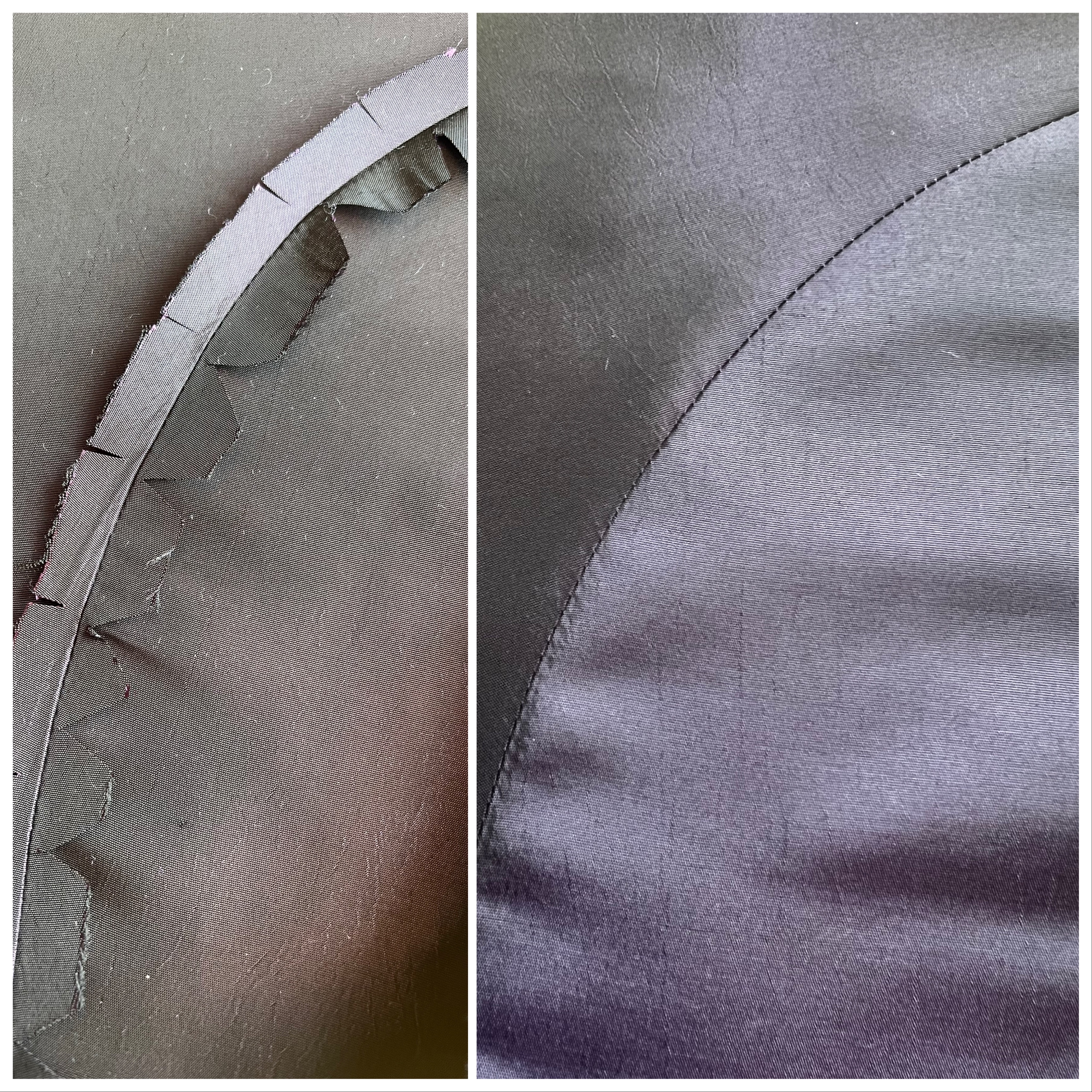
Tip/trick #3: To make your curved seams nice and smooth, you will want to clip after sewing. Iron your seam allowances open. Cut notches in the inner curve of the seam allowance and snip or cut notches in the outer curve of the seam allowance. Iron again on the right side of the fabric to make a very neat seam.
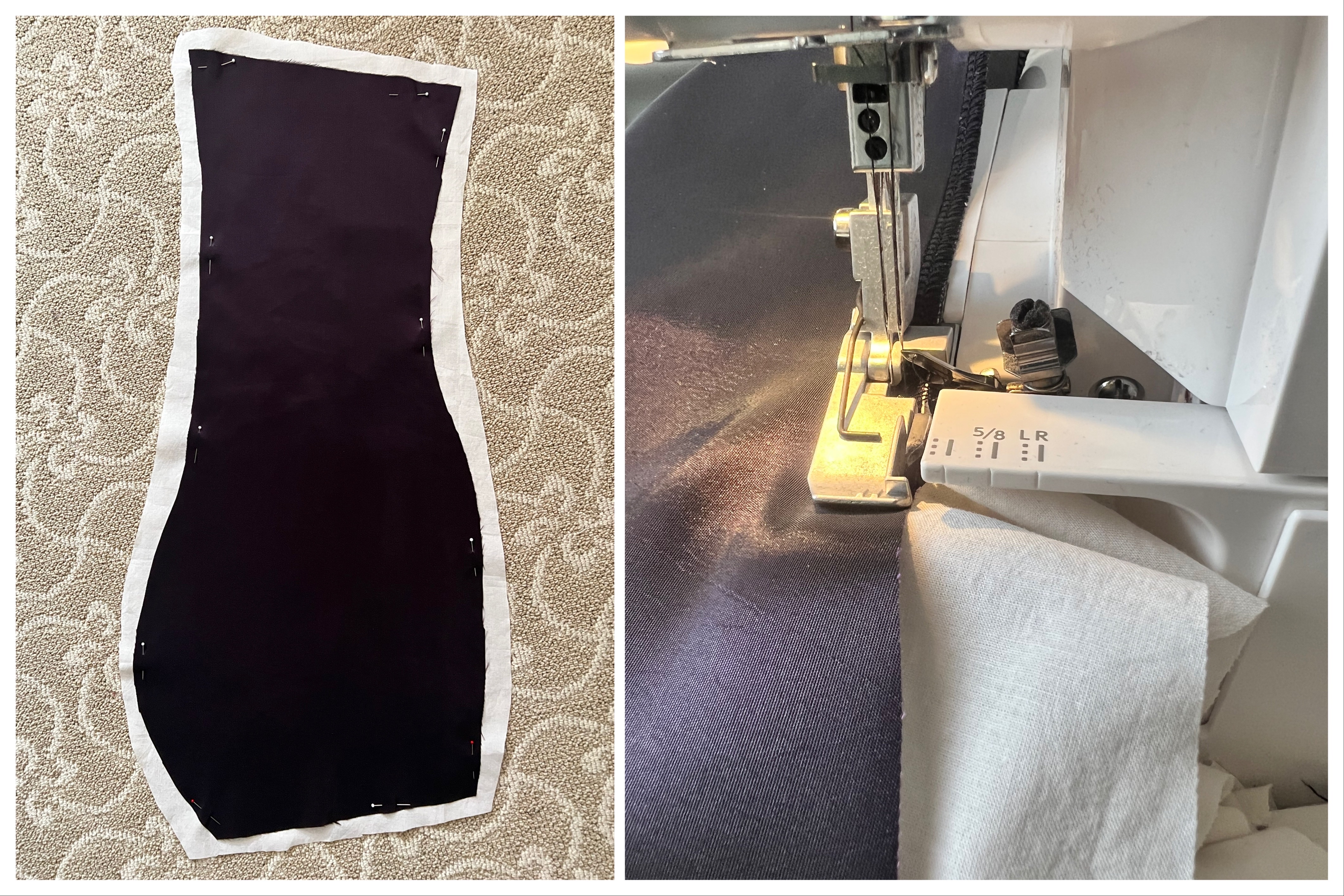
Tip/trick #4: To add extra body to thin fabric, flat-line it by adding an extra layer of fabric. However, to save time on cutting your pattern piece out twice, only cut out one layer and put it on the second. Use your serger to sew the pieces together and trim the excess at the same time!
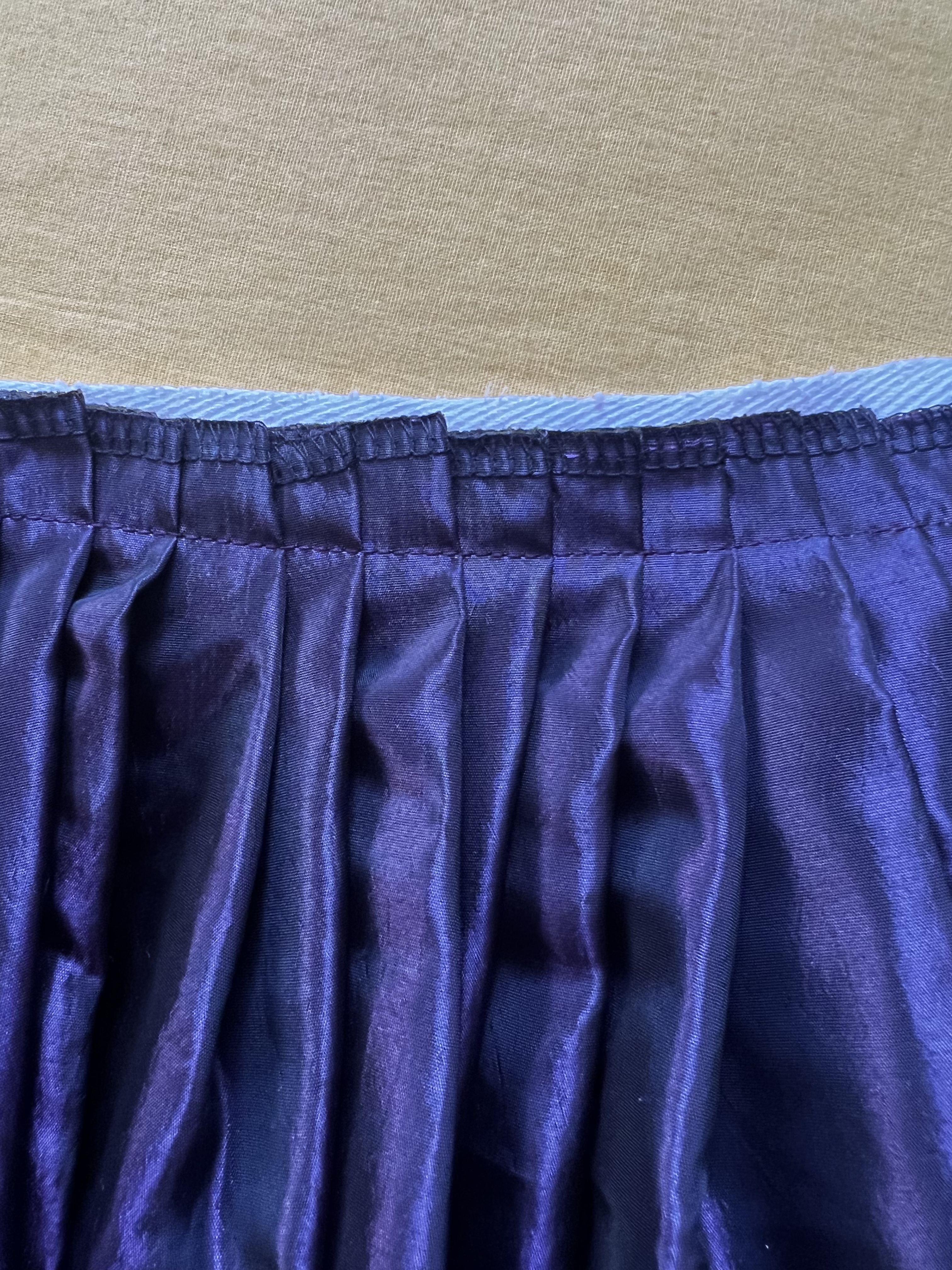
Tip/trick #5: Use knife pleats instead of cartridge pleats. Historically many gowns of this type used cartridge pleating to gather up the skirt. However, this is time-consuming and uses hand-sewing so I prefer knife pleats when I want to make the costume quickly. First serge the raw edges of the top edge of your skirt, then pleat, then stitch down the pleats.
Tip/trick #6: If you want to skip making a waistband for the skirt, and have the convenience of a one-piece dress instead of a separate bodice and skirt, when you stitch down your skirt pleats sew them to a piece of twill tape. Then you will whip-stitch your twill tape to the bodice.
Tip/trick #7: If you are trying to sew thing tubular like a sleeve or cuff, remember you can remove the flatbed/storage tray of your Janome to turn it into a free arm machine, making it easier to maneuver your sewing project.
Tip/trick #8: To save time installing metal eyelets or sewing thread eyelets by hand, use the automatic eyelet stitch under your buttonhole menu. After sewing, use an awl to open the holes and put your lacing through. (My dress closes in the back with adjustable lacing).
Tip/trick #9: To save time doing math, use an expandable sewing gauge to mark out where your evenly spaced eyelets should be. This also works for measuring out buttonholes and pleats.
Tip/trick #10: To avoid having an obvious machine-sewn hem, but not have to go through the effort of hemming your skirt by hand, you can cover your machine-sewn hem with a pretty trim. For this hem I serged the raw edge, folded it up inside the skirt, stitched it down, pinned on trim, and then sewed down both edges of the trim using a matching thread.
Thank you for reading and I hope this helps you with your costumes!
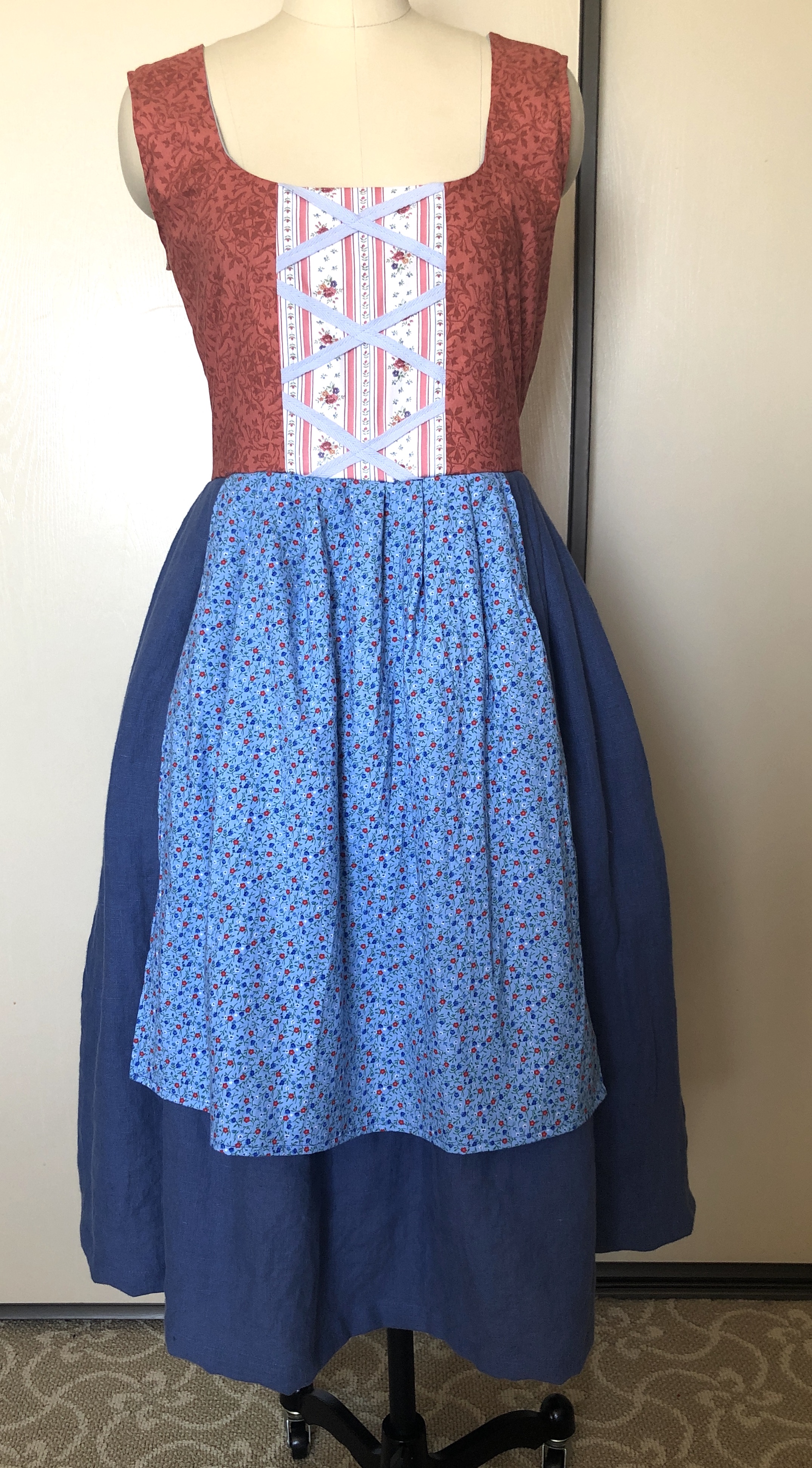
If you are a fan of the Lord of the Rings books or movies, you’re probably a fan of hobbits, those charming folks whose ladies wear very cute pastoral outfits. With the new Rings of Power show coming out soon I thought this would be a good time to show you an easy hobbit lady outfit. Many of the hobbit women wear a 4 separate garments: a blouse, a bodice that laces up the back, a skirt, and an apron. To simplify the sewing and getting dressed, I decided to turn the last 3 items into one zippered dress. This dress also works great for a trendy cottage core look, and is a wonderful stash-buster for combining all those various fabric scraps you have that aren’t enough to make up a full garment by themselves.
Note: I am a member of the Janome Maker program and this skirt is sewn on a Janome Skyline S9 and a Janome FA4 serger. (This post is sponsored by Janome but all content and opinions are mine).
Materials needed:
2 yards fabric for skirt (I used 58″ wide blue linen)
1 yard fabric for apron (I used a floral print; you can use a lace fabric too)
1 yard fabric for bodice
1 yard fabric for bodice lining
Fabric scrap for center front bodice
1-2 yards colored twill tape or ribbon
1 zipper plus various matching threads
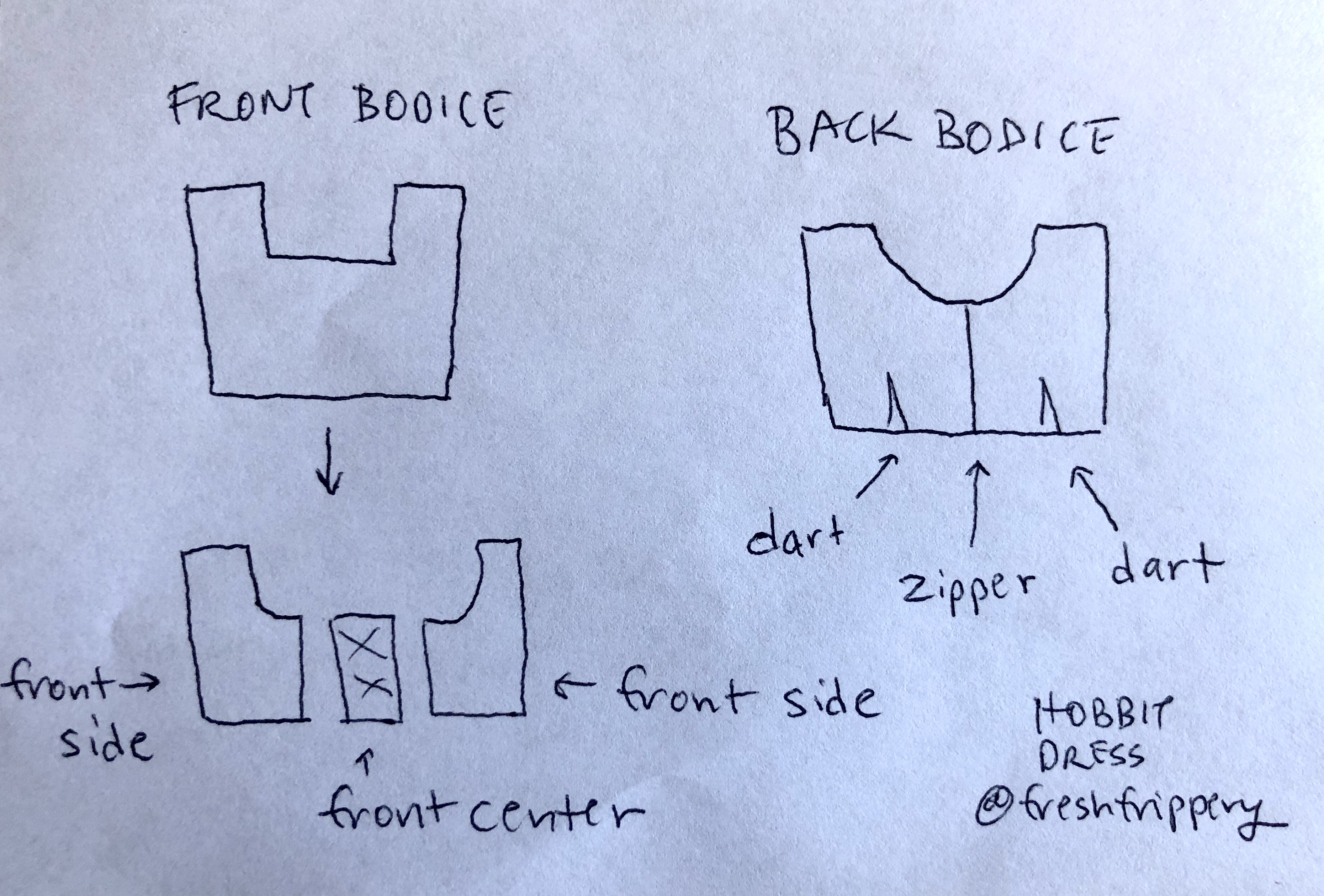
I self-drafted my own pattern (with the basic shapes shown below) but you can start with any square-necked basic bodice, or a dirndl-style dress that fits you. You will take your pattern and slice the front bodice into 3 parts (a front center and 2 front sides). The front center is going to be a different color of fabric that we will add criss-crossed twill tape or ribbons to. The width of your front center will depend on your body measurement, but for reference I cut a 6″ wide panel (for a 5″ finished panel with seam allowance) for a 34″ bust.
The first thing you will make is the front center panel. Put down strips of twill tape or ribbon in a criss-cross pattern on your rectangle and stitch them down. The raw edges will get trimmed and then sewn to the front side pattern pieces. (If your decorative fabric is thin like mine, then you will want to back it with a second piece of fabric).
Once you have the front center prepped you’ll sew it to the front sides, then sew the bodice backs to the front sides, and also join the shoulder seams according to your dress pattern. For the bodice lining you’ll do similar construction except you’ll skip making a decorative front center panel. Don’t forget to put darts in your back panels if your pattern calls for them.
Stitch the fashion and lining layers right sides together at the necklines and flip right side out, creating a clean edge at the neckline. For the armholes fold the raw edges in, pin in place, and top-stitch. For the center back where the zipper will go, serge the raw edges.
To make the skirt I used 2 rectangular panels of 58″ wide fabric cut to a length of 30″ but the length can vary based on your preference for a longer or shorter skirt. (I am 5’6″ and after some length is taken up through construction and hemming the skirt falls a few inches below my knee).
Optional: If you want a pocket you can cut a strip from one of the skirt panels and use that to cut out pocket pieces. I like to use my cell phone and hands as guides for how big the pocket should be. Serge all the raw edges of the skirt and pocket pieces first. Stitch one pocket piece to one skirt panel at the edge, right sides together. Put the right sides of the skirt panels together with the pocket pieces flipped out to be right sides together as well. Sew down the skirt side seams and around the pocket as shown by the pins, leaving an opening for your hand to reach in.
For the apron I cut out a 22″ wide and 20″ long rectangle (with the exact size according to your preference). You will want to hem the sides and bottom of the apron to finish the edges before pinning it to the center of the front skirt panel at the top edge and then serging the raw edge of the top of the skirt.
Split the back skirt panel down the middle to allow for a zipper and serge the new raw edges.
Pleat the top of the skirt to fit your bodice, matching up the side seams of each. Sew the bodice to the skirt and press the waist seam open and flat.
Insert a zipper down the center back from the bodice to part way down the skirt, then finish the rest of the back skirt seam.
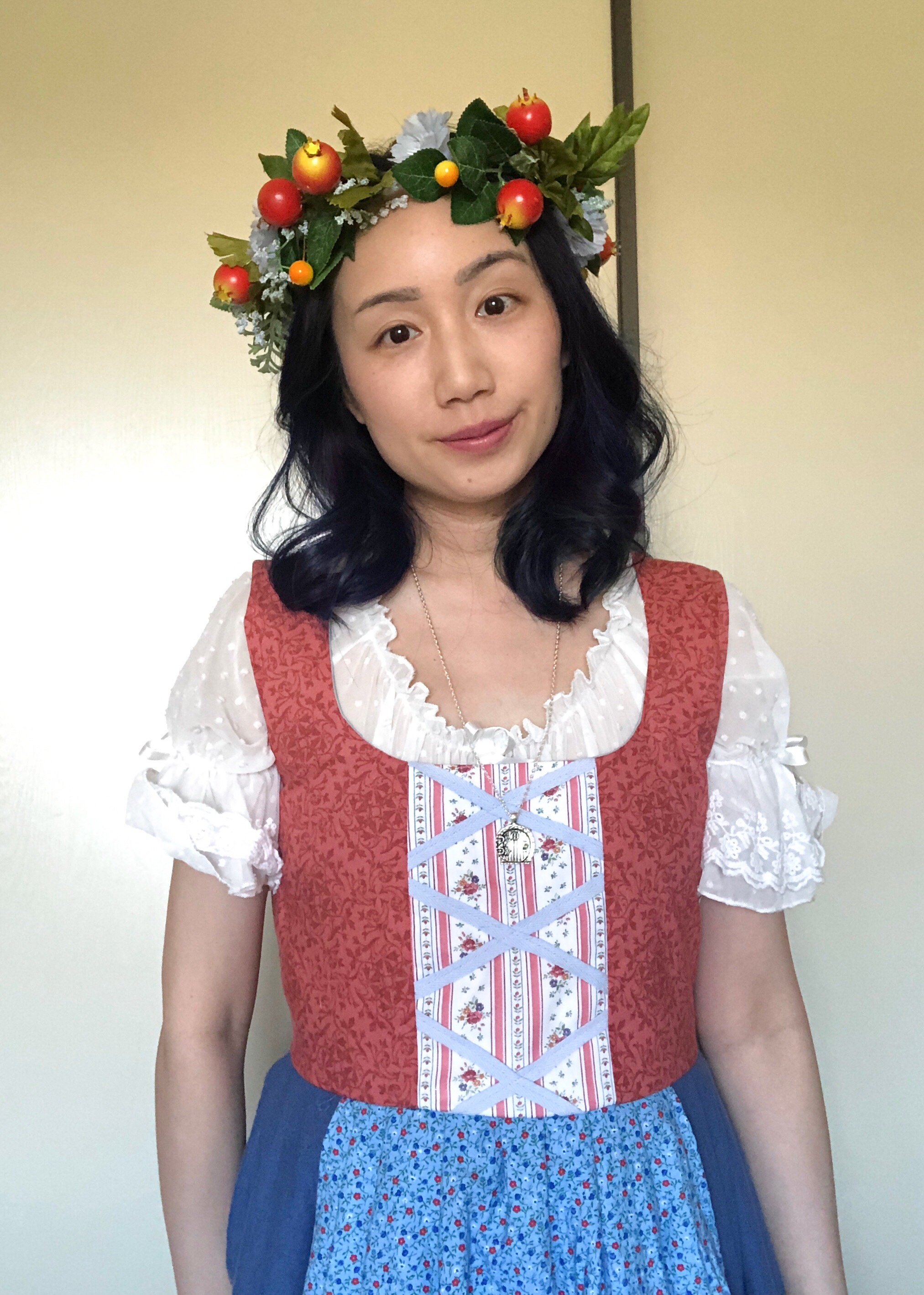
Hem the bottom of the skirt by folding it up twice to your desired length, and your hobbit dress is done! Pair it with a cute blouse and a floral headdress and you will fit right in at the Shire!
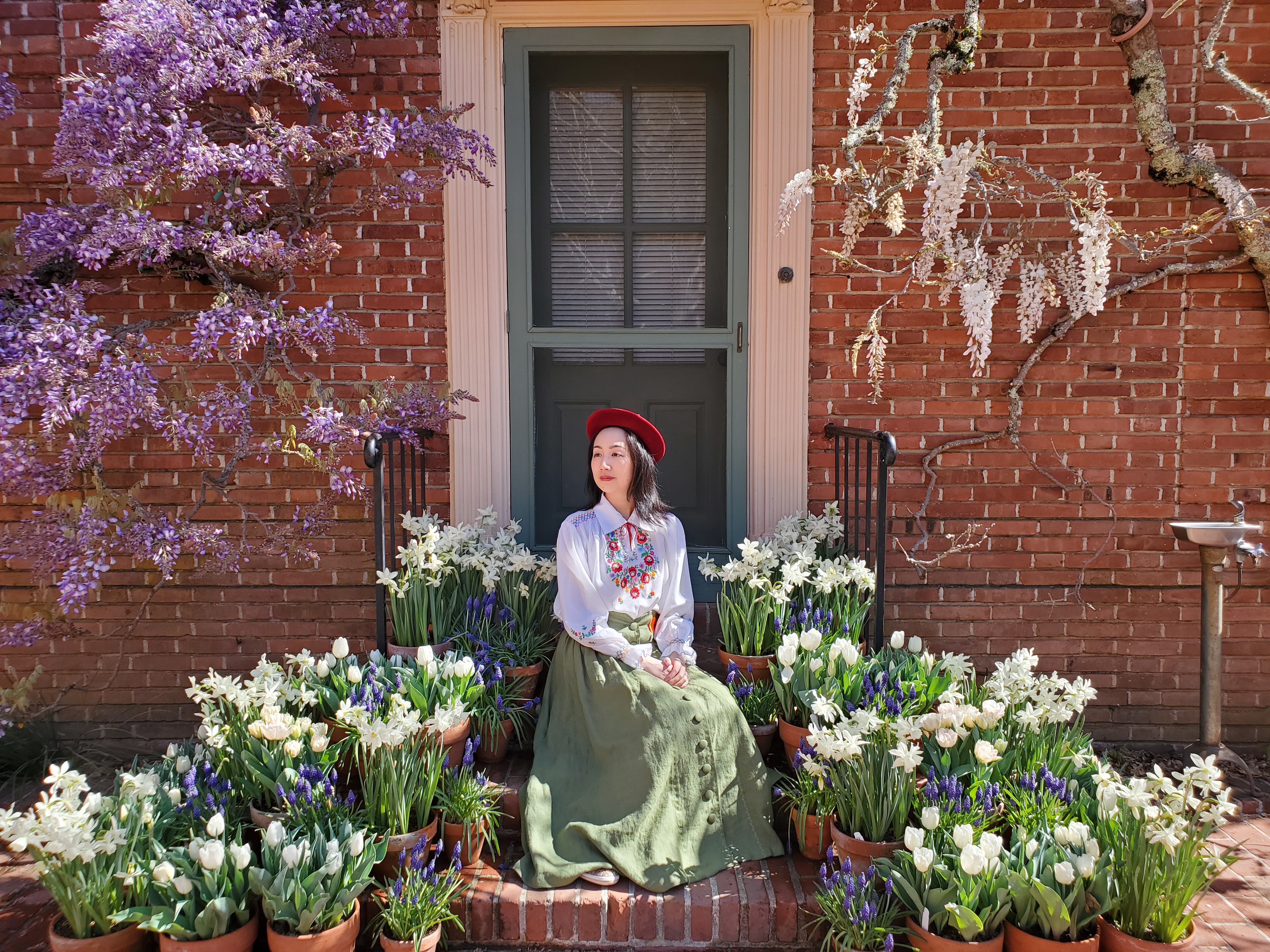
A few months ago I used the Wearing History Leslie skirt pattern to make a cute high-waisted 1950s skirt that also has some Edwardian vibes if made up in a long length. I was drawn to the high waist with the sweetheart shape and the column of buttons down the front. I used a green linen and top-stitched it with decorative vines in a lighter green to give it a bit of an elven feel.
Keep in mind that the actual pattern (based on a vintage one) runs longer than the illustrations show. I made the shorter daytime length, and it still hits me mid-shin. The pattern is available as a printed and print at home version in 26-48″ waist sizes.
I enjoyed wearing it to the Filoli Gardens with a vintage hat and embroidered Hungarian blouse.
Due to the high waist, depending on the same of your body you may have to adjust how deep the curve is. There is also a little adjustment possible from how much overlap you make in the front, but you can shift too much without distorting the sweetheart shape.
I liked the gathered hip gores and thought they were flattering. I repeated the top-stitching there to emphasize the shape of the front panels.
I made self-covered buttons out of the same green linen.
Here’s a helpful hint: When cutting open your buttonholes you can put a pin there to stop your seam ripper from accidentally ripping too far.
I think this is a rather versatile skirt I can wear with vintage looks, cottage core style, and dress it up or down. I am considering making the floor-length evening version (without buttons) in a taffeta one day. Thanks for reading!
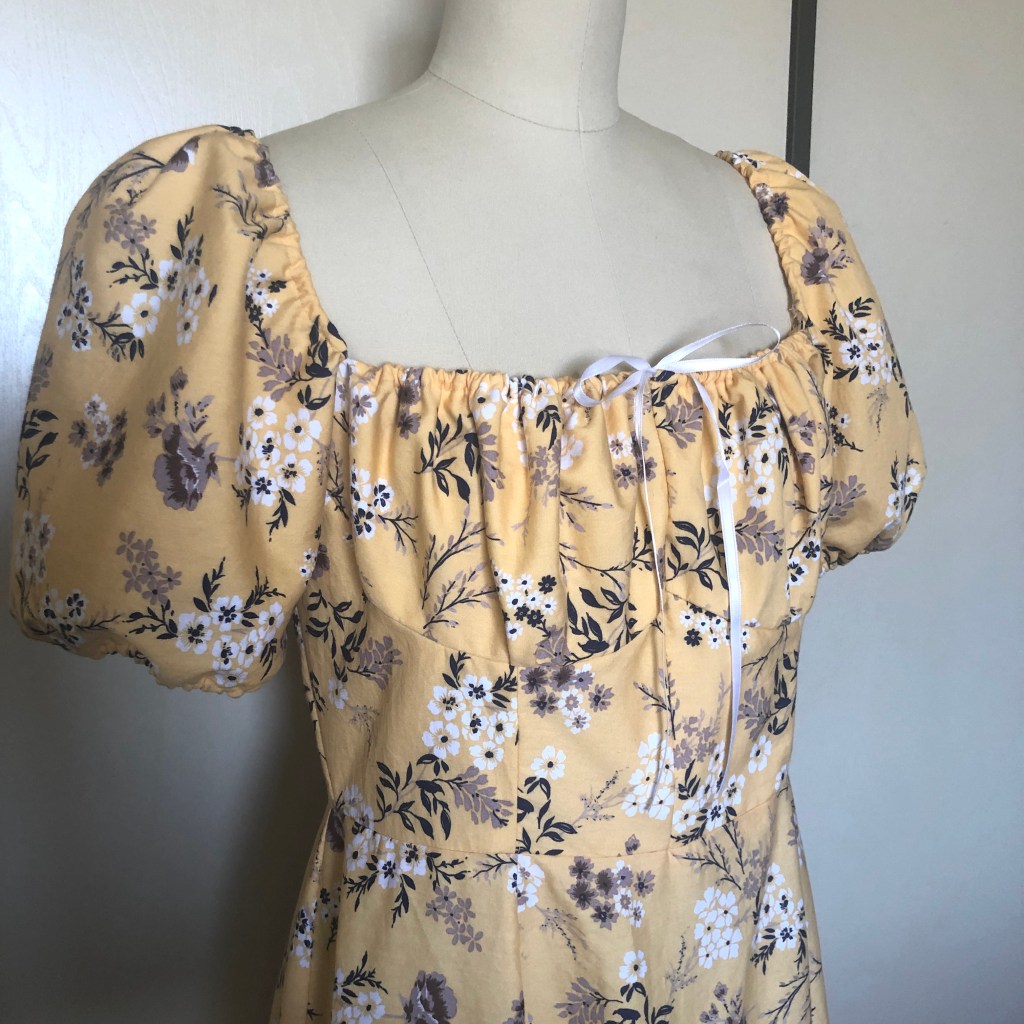
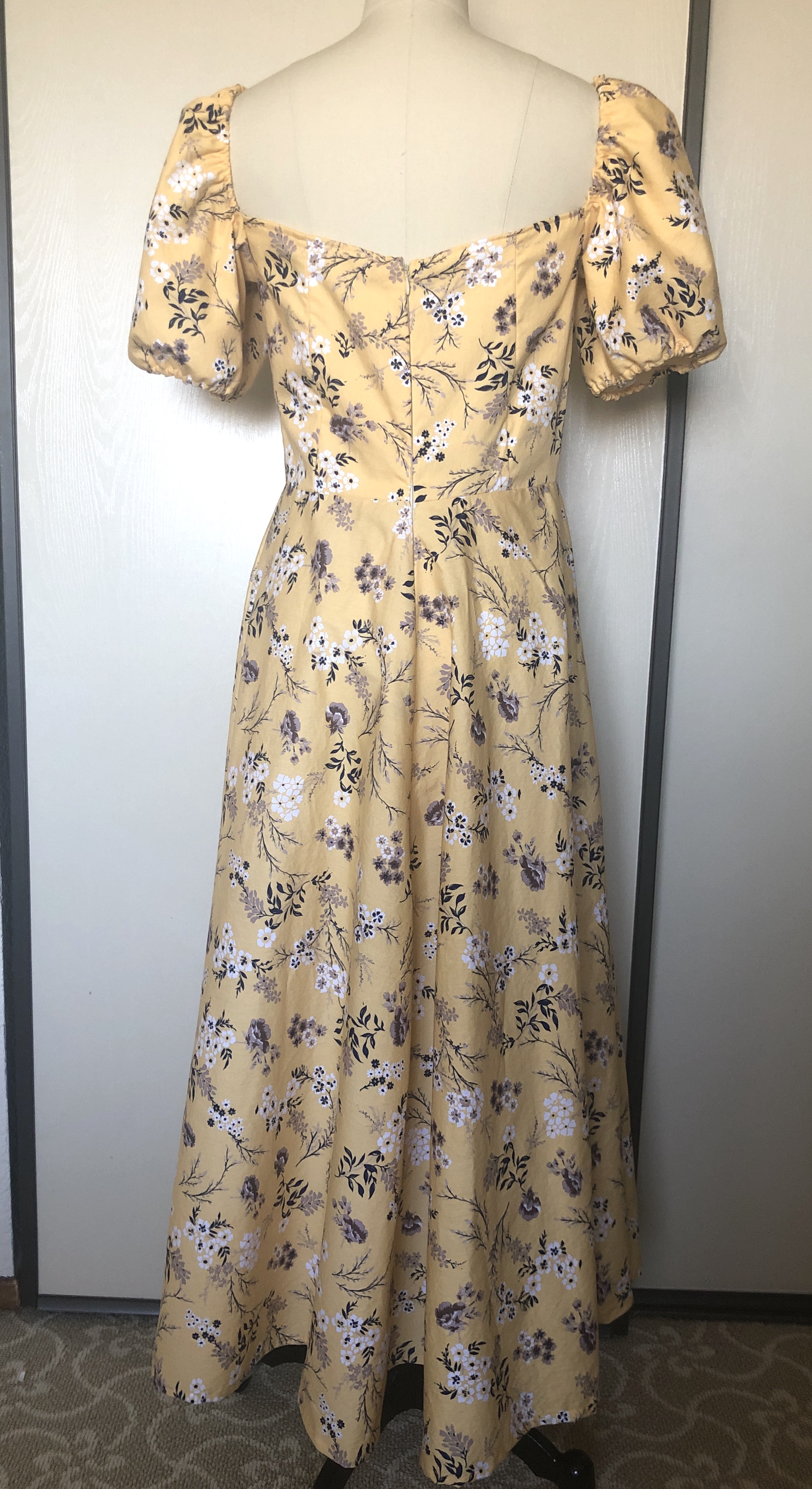
Warm weather means pretty cotton frocks to me so I just recently completed this yellow floral dress, inspired by the cute “milkmaid” style dresses. A lot of cotton prints are a bit thin and require some lining, and I have a special trick to save time by using my serger instead of cutting out the lining twice (later in this post).
Note: I am a member of the Janome Maker program and this skirt is sewn on a Janome Skyline S9 and a Janome FA4 serger. (This post is sponsored by Janome but all content and opinions are mine).
The dress is made of 100% cotton and the yellow print has white and gray flowers and foliage. (I bought 3 yards of a 58″ wide fabric and had some left over). I did not want the top to be see-through so I needed to line it. For this particular dress I decided to flat-line it, which means each individual lining piece is attached to the fashion fabric before the garment is assembled. (This is different from the approach of constructing the fashion and lining layers separately, then putting them together).
The classic method of flat-lining is to cut out the lining and fashion pieces and stitch them together, but I have a time-saving hack using my Janome FA4 serger! First, I put the fashion layer on top of the lining fabric, put in a few pins to keep it from shifting, and cut it out roughly with my rotary cutter.
Then I serge the edges of the fashion fabric, while using the built-in blade of my serger to trim away the excess lining. This saves me the trouble of carefully cutting out the lining and making sure all the edges line up perfectly before sewing!
After serging/flat-lining all the pieces I sewed the seams together normally. This is the bodice without the bust cups:
The bust cups are oval pieces of fabric that are gathered at the top and bottom to fit into the U shapes of the bodice. (The top is folded down to make a drawstring channel for the ribbons, which meet in the middle to make the top adjustable).
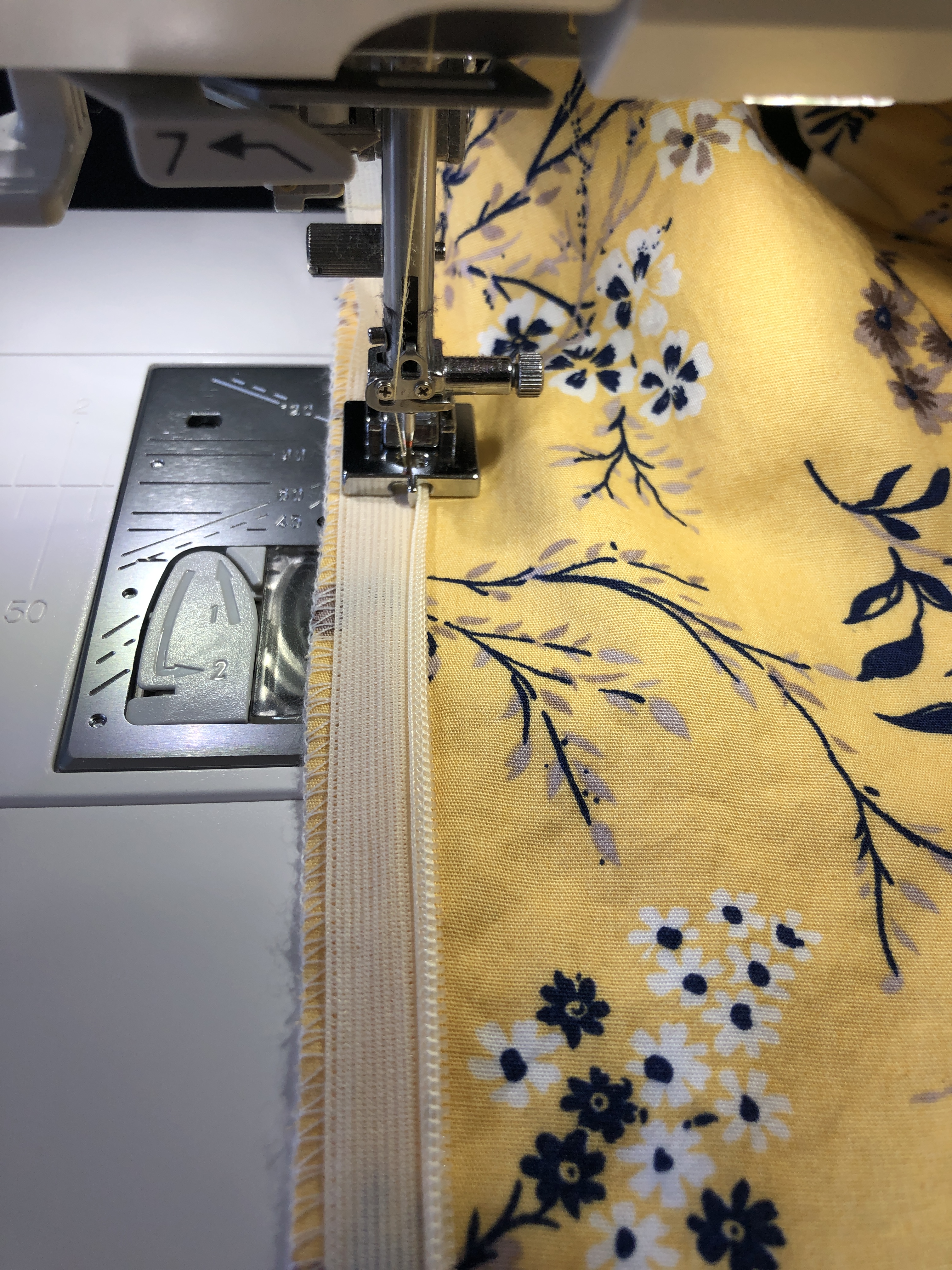
The sleeves have channels on both the top and bottom for elastic to gather it into a puffed sleeve. The underarm of the sleeve is sewn directly to the underarm of the dress while the top of the elasticated sleeve turns into the shoulder of the dress. A few tips I have for sewing this kind of style sleeve: (1) Finish off the top of the back bodice by folding down the serged edges before you attach the sleeve, otherwise you will end up with an odd corner in the back where some serging is visible. (2) Anchor one end of the elastic by sewing it down in the channel where the sleeve attaches to the back of the dress. Use a safety pin to keep the other end of the elastic from sliding back in the channel. Try on the dress, unpin the elastic and pull it tight until the sleeve fits you over the shoulders, then pin it back until you sew it down permanently. Tip #2 is especially important if you don’t have a helper; you can fit the sleeves yourself in a mirror because the loose elastic is in front!
The dress closes in the center back with an invisible zipper. Janome makes a concealed zipper foot (Z) that makes it easy to install one!
I am looking forward to wearing this dress this summer!
Last year I had the wonderful privilege of being one of the finalists selected to be in the Her Universe Fashion Show (HUFS), and then ultimately one of the winners! The show is normally held yearly at San Diego Comic Con during the summer but the applications open up in the spring. Since this year’s show announcement is coming up, I thought this would be a good time for me to write up a post about my experience and the many questions I’ve been asked since last summer. (If you want to see the FAQ that includes what the show is, how the contest is run, any advice, etc. please see the second half of this post after my design photos). In 2021 Her Universe held a virtual show, which meant that instead of walking the stage in front of a live audience in San Diego, we submitted a lot of footage that was edited for judging purposes and streaming as part of Comic-Con at Home. My experience is a little different from the in-person show, but a lot of the information is still applicable!
(Most of the photos in this post were taken by lovely friend Natalie while assisted by my other equally lovely friend Kelsey).
For those of you that don’t know, Her Universe and the HUFS was founded by Ashley Eckstein to promote geek fashion. The HUFS is a runway show where designers submit a “geek couture” design which is high fashion inspired by a fandom. The idea is to make something that wouldn’t be out of place on a Hollywood red carpet, rather than a direct cosplay of a character. Although Star Wars, Marvel, etc. are popular inspirations each year, ideas from books, TV shows, and obscure fandoms are accepted as well.
I was selected as the audience’s choice winner, and Teighlor Johnson and Skyler Barrett and were tied for the judges’ pick in Pokemon and Queen’s Gambit-inspired designs, respectively.
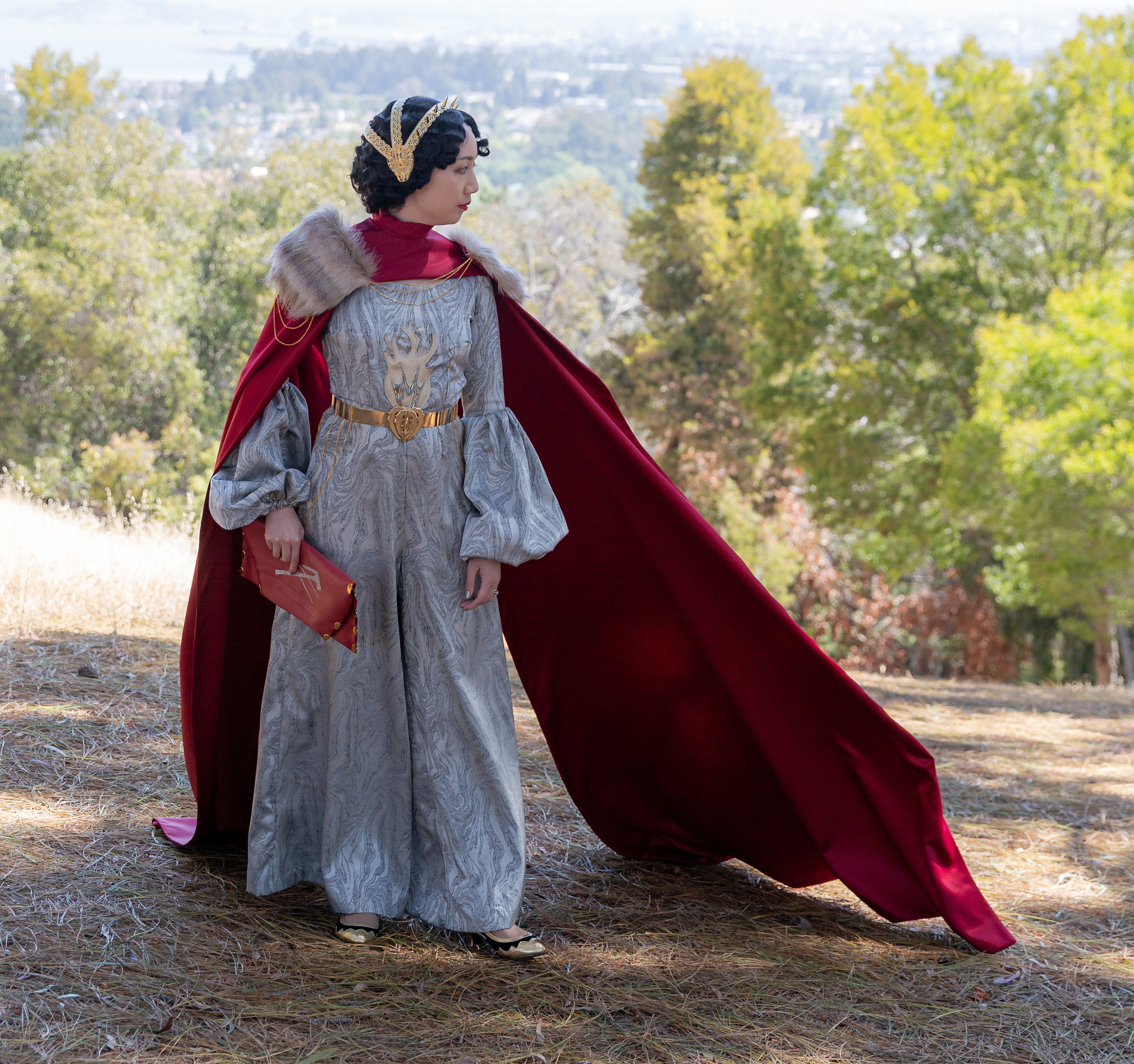
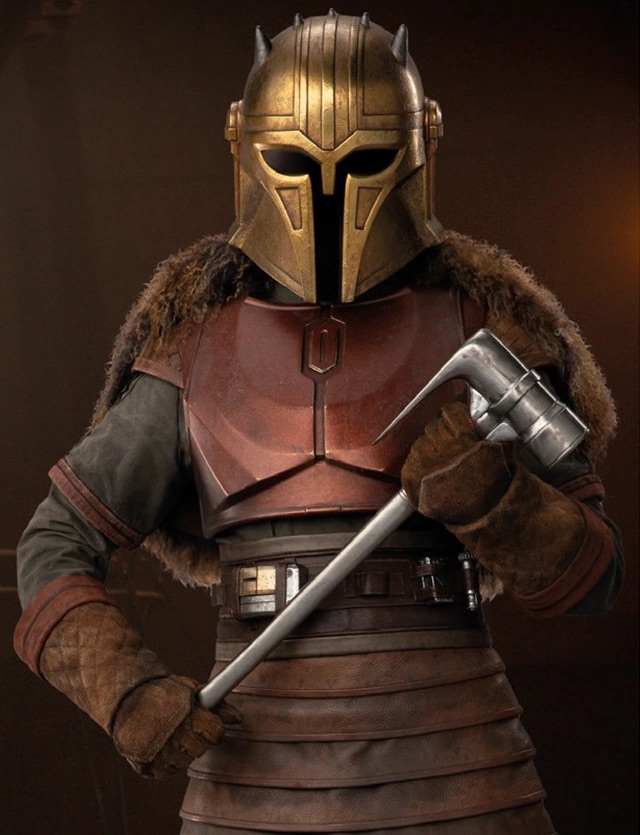
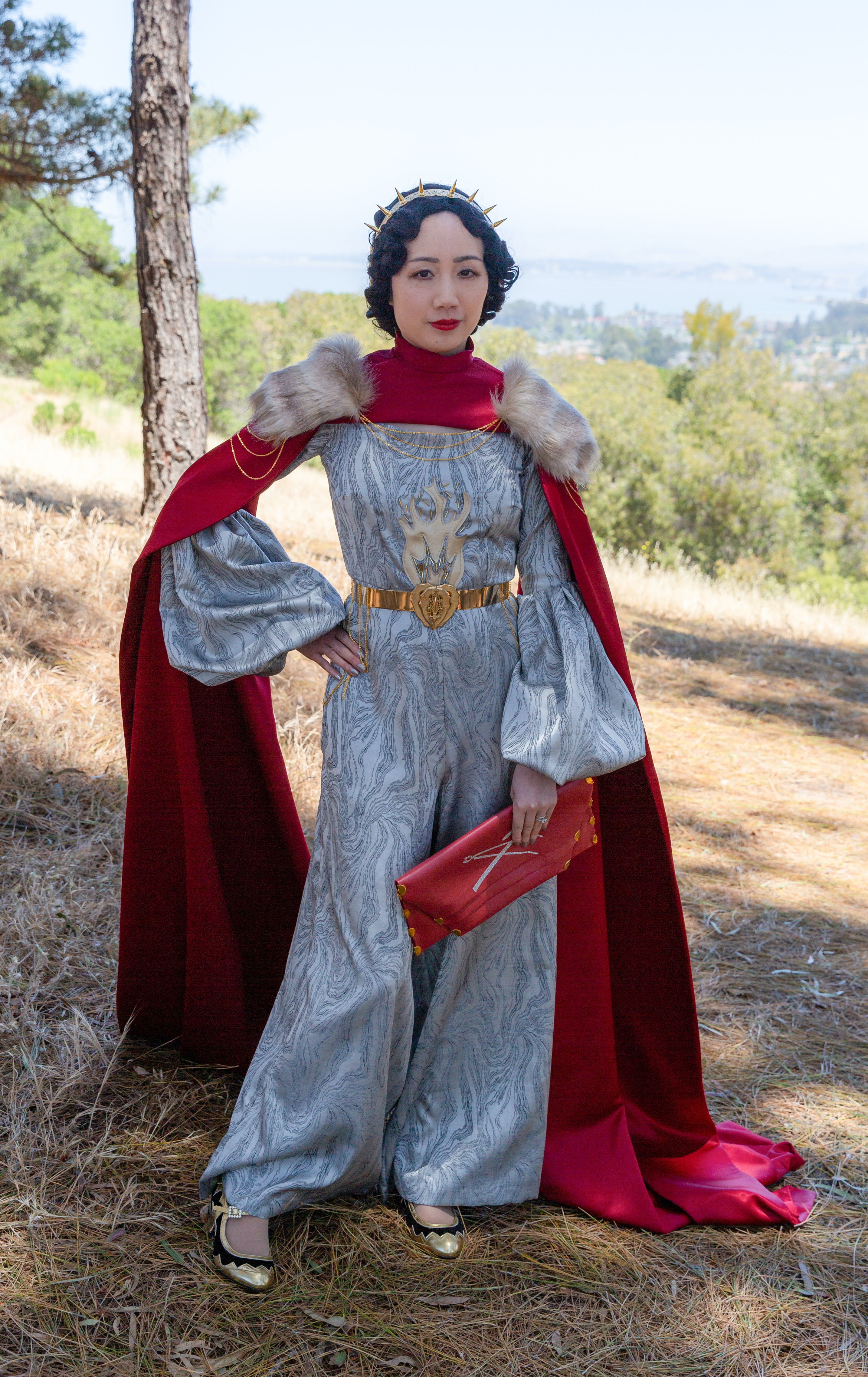
My design is called “This is the Way” and was inspired by the Armorer from Star Wars: The Mandalorian. This outfit consists of 5 pieces (a jumpsuit, a cape, a headpiece, a belt, and a purse). I have nods to her helmet in my headpiece, her fur cape in my epaulets, her tools in my appliqués, and the Beskar steel she works with in the fabric of my jumpsuit.
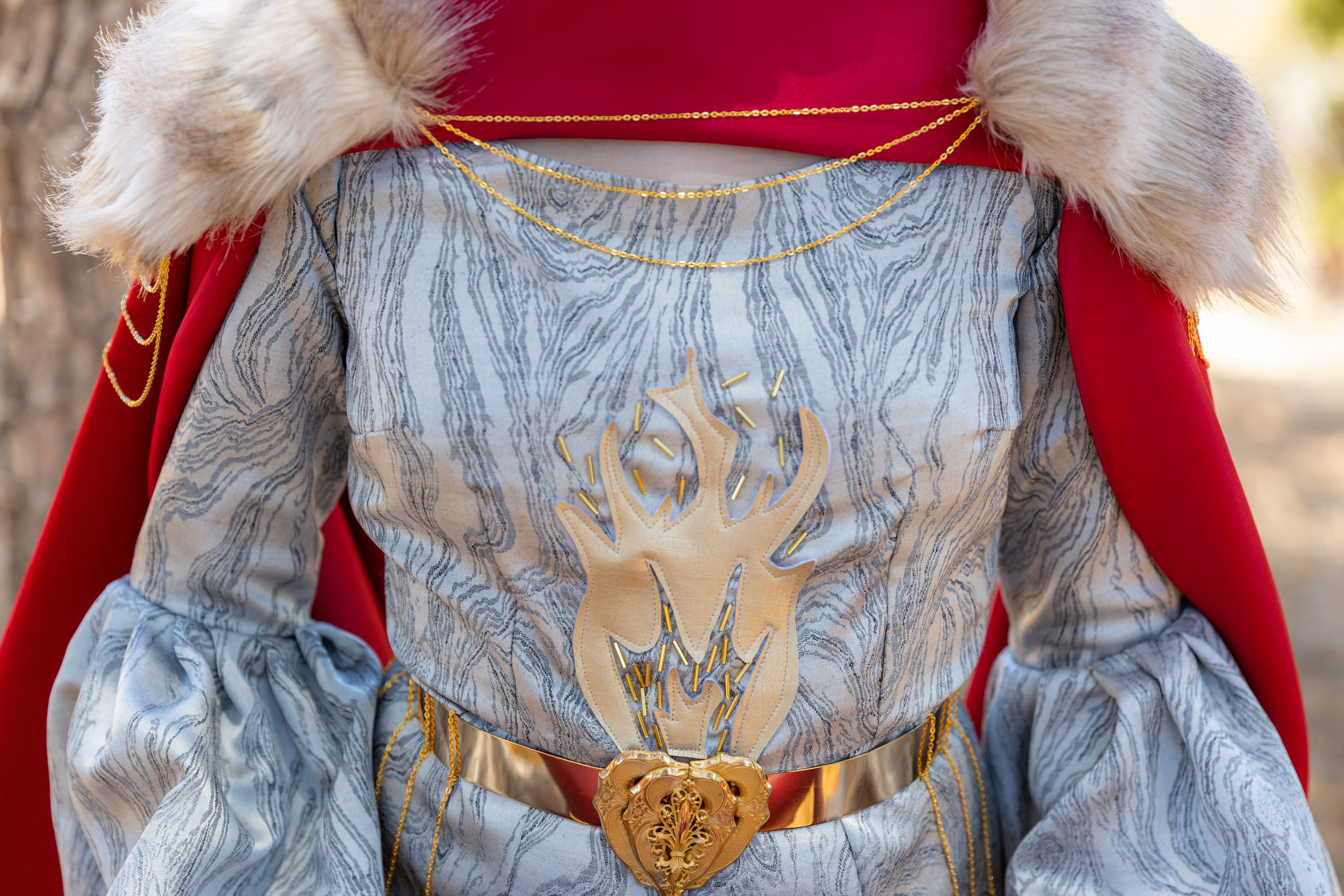
The jumpsuit is made of a silver and black silk and wool challis fabric woven to look like Beskar steel. The jumpsuit has super wide leg palazzo pants (with hidden pockets!) that are full enough to look like a skirt when standing still. The upper sleeves are fitted with a balloon shape in the lower sleeve, gathered into a cuff.
I love this fabric! Below from left to right is a dart, then an invisible zipper, then another dart. Running horizontally is a seam.
I used gold pleather to make a flame appliqué on the bodice to reference the forge where the Armorer works, and accented the appliqués with gold glass beads. The belt is a gold metal band that closes with an art nouveau clasp in the front. Gold chains hang from the belt on each hip.
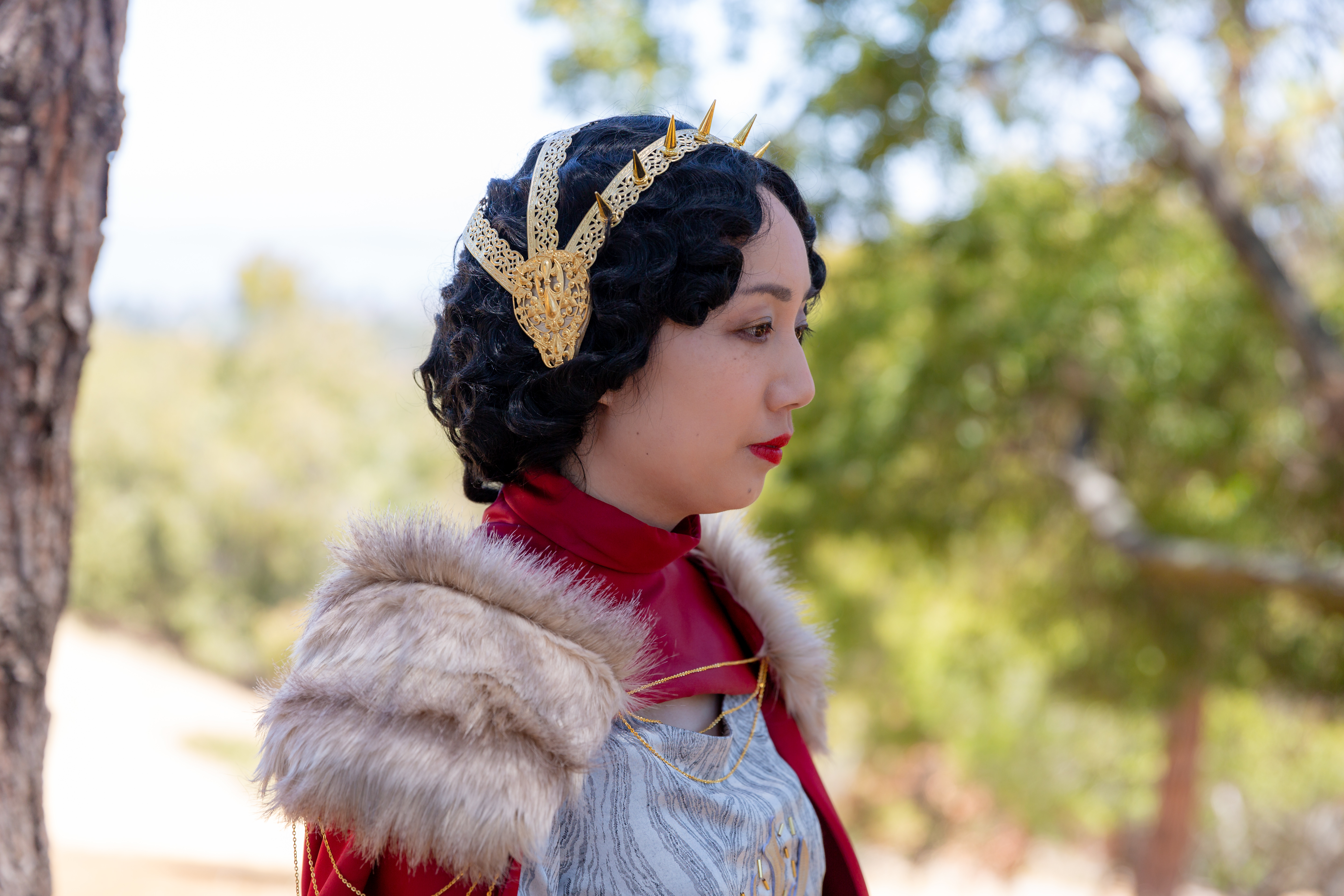
The bodice has a wide boat neck that creates a peekaboo effect combined with the high-necked red pleather backless “cape.” The brick red cape (lined in the same color) consists of a neck piece that covers the collarbone and extends to the shoulders, and long open “sleeves” that are long enough to trail on the floor, creating a train effect despite having no gown. The cape is open in the front and back so the jumpsuit is fully visible except for the shoulders, which has light brown fur epaulets on the cape. More gold chains hang from the shoulders and across the chest and back.
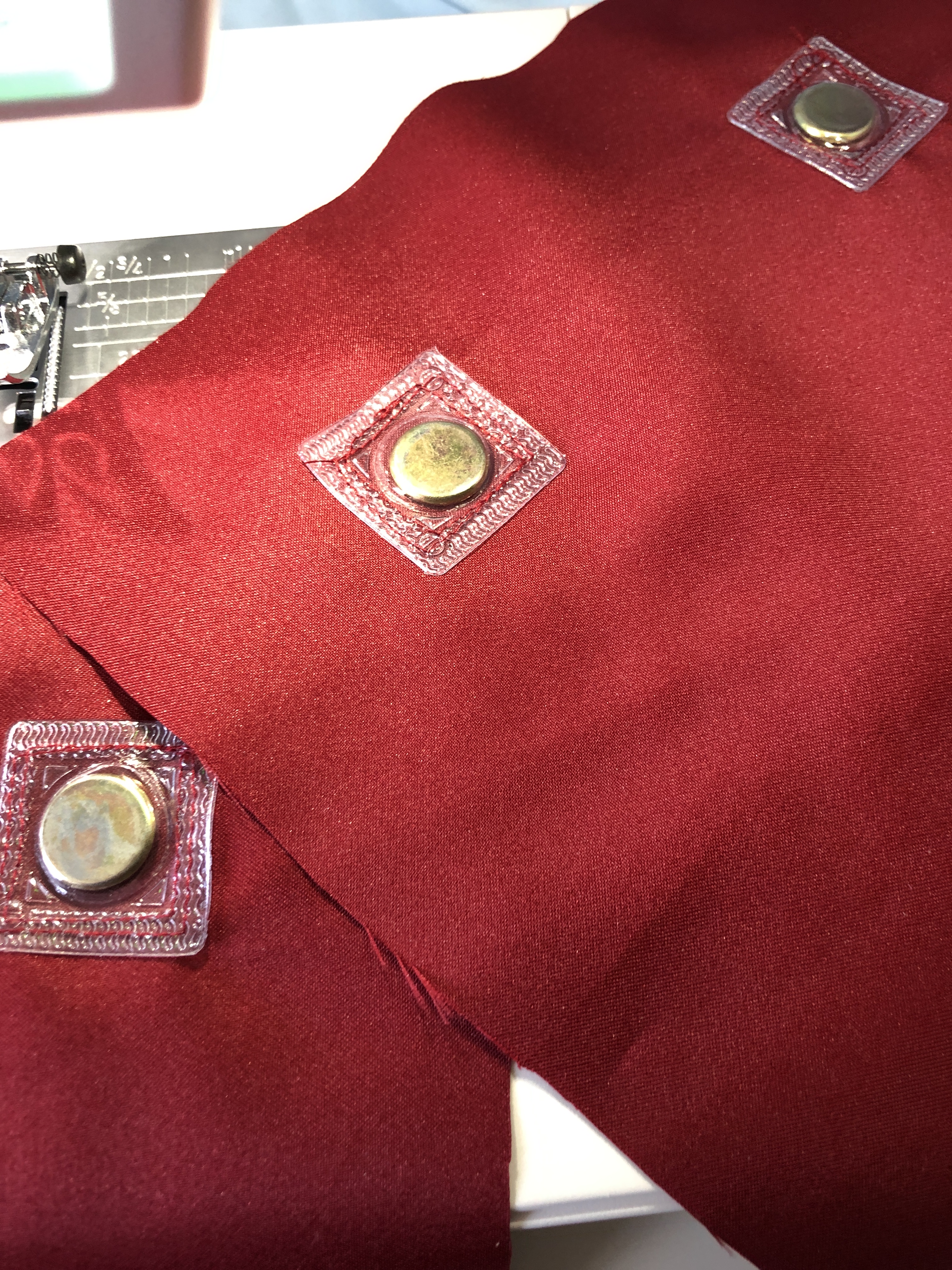
The cape closes at the neck with hidden hooks and bars. Then the epaulets and chains go on top, and I have hidden magnets sewn into the shoulders of the cape and the underside of the epaulets. The magnets I used are encased in plastic so I can sew them on. Here are some test pieces I did so you can see what they look like:
The headpiece is inspired by 1920s/1930s flapper headdresses and consists of 3 brass bands across the top of the head, attached to art nouveau style large decorative brass pieces over the ears. The front band has small golden spikes like a crown. The bands and ear pieces are wired together but the spikes are attached by drilling holes in the bands and screwing them in. I also added some gold pleather padding inside the ear pieces for comfort.
The purse is a clutch made of brick red pleather and lined in the same fabric as the cape. The purse flap is pleated like the Armorer’s apron and has her tools appliqued in silver. I created the design using my Silhouette Design Software and used glitter heat transfer vinyl.
The purse opens with a magnetic clasp and is decorated with gold metal half moons. As usual, I hand-sew in my labels.
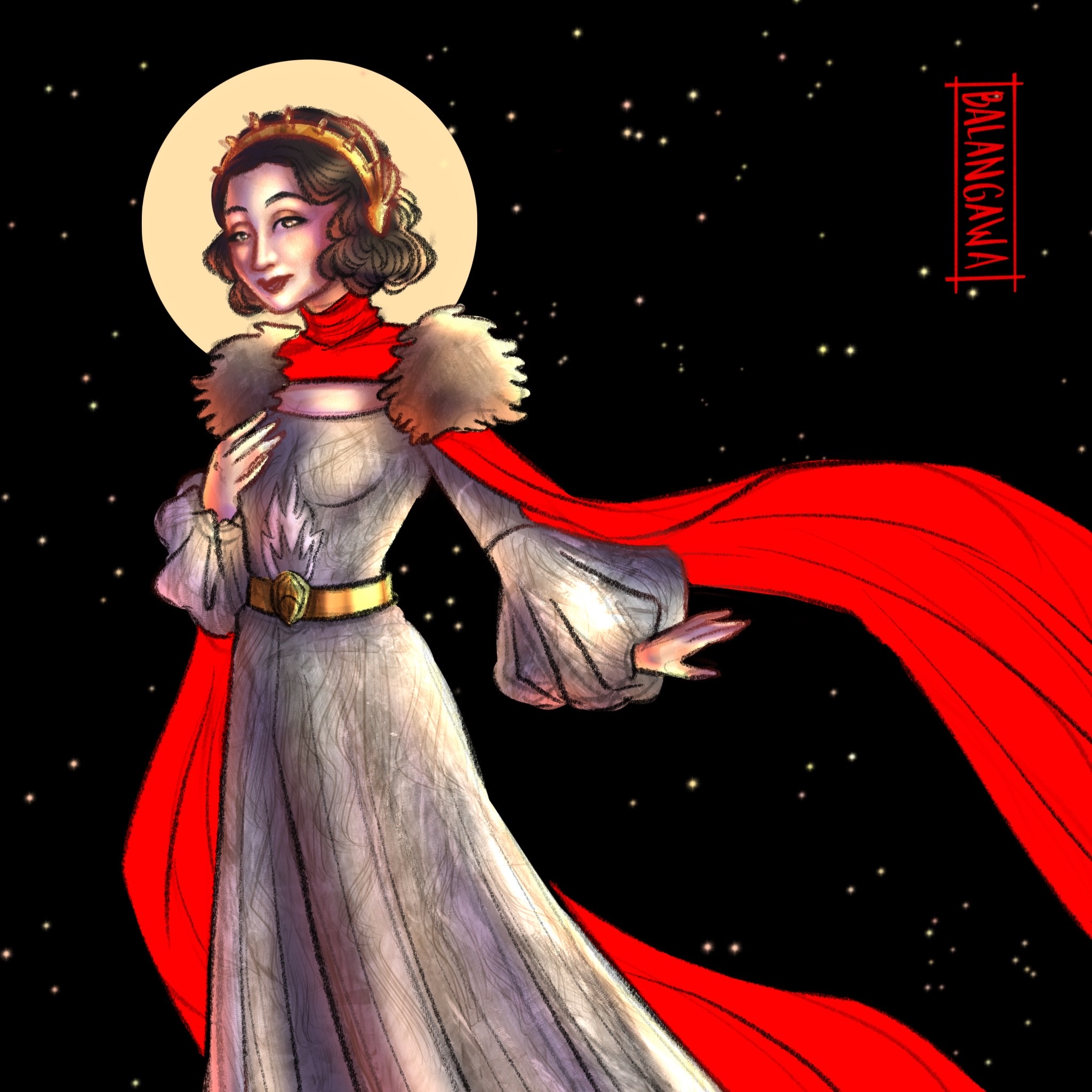
The talented artist Dani Balangawa drew this lovely portrait of my winning design and sent it to me as a surprise!
Materials sourced:
I was short on time and worldwide shipping was a little dicey at the time I was getting my materials so I bought a lot of things that I knew could get to me quickly. A lot of the items, especially the metal findings, may also be found through my usual sources of Aliexpress, eBay, and craft stores.
Where can I see examples of past Her Universe Fashion Show entries?
You can watch last year’s show on the HUFS blog, which also has links to photos from earlier shows. The site also has archives of footage from previous shows. I highly recommend you review those so you don’t inadvertently submit any similar designs.
What is the selection process like?
There is an online application where you can submit up to 3 original designs plus a written description. You will also be asked for a personal bio, info about your design/sewing experience, and some portfolio images. There may be additional questions about how you heard about the show, if you have any previous press, what you think about geek fashion, etc. You can also include links to your social media and personal website and an optional video about your designs.
Up to 25 finalists are chosen by a selection committee that consists of Ashley Eckstein and employees of Her Universe/Hot Topic. Those finalists are the ones that will appear in the HUFS during SDCC. There is one winner picked by judges at the show, and a second winner picked by audience voting. There can be more than two winners in case of a tie.
What should be in your portfolio/video?
The portfolio is a chance for you to show that you can complete your design. HU does not want to select a person who has a great sketch but doesn’t know how to sew. Your portfolio should demonstrate your skill and experience and prove you can deliver a finished item on show day. Personally I recommend submitting a collage for each image so that you can show some close-up shots of your details and accessories made, plus make sure that some of the skills and materials in your submitted designs show up in your portfolio. For example, if you submit embroidery or leatherwork you should show you have experience with embroidery or leatherwork.
The video is optional. There is a time limit of 5 minutes but it is a chance for you to talk about your designs and show off your personality or inspiration. You can hold up sketches, show off fabric swatches if you have any, etc. Not everyone submits a video with their application but I feel like it’s a great way to explain difficult concepts and convince them you should be in the show.
What is the general time line?
Generally, applications open in spring after WonderCon and the show is in July during San Diego Comic Con. In 2019 (live show) applications opened April 1 and closed April 19, notifications went to finalists on April 26, and the show was July 17. In 2021 (virtual show) applications opened March 18 and closed April 2, finalists were announced April 16, and the show aired July 23 but we had to be finished with our designs and submit photographs/videos by June 4 in order to give them time to edit the footage.
What prizes do the winners get?
The judges’ pick and the audience winner get equal prizes. Winners are invited back the following year to judge the next contest at SDCC and their travel is covered. There is also a cash prize (I’m not sure if the amount varies each year), a chance to design a collection for Her Universe/Hot Topic, and royalties from that collection.
What is the HU/HT collection? Do you get your designs reproduced or get to choose the theme?
The collection is determined by HU/HT based on their licensing agreement with an upcoming movie. The 2021 winners designed items to come out in time for the 2022 Jurassic World movie. Some past winners have designed Star Wars, Marvel, and Wonder Woman items. The collection is mean to be casual/streetwear garments and are sold online at HU and in HT shops.
Do you have to have a ticket to San Diego Comic Con to apply?
No, you do not need a SDCC ticket to participate in the show or come watch as an audience member. The HUFS is held at a hotel during SDCC, but is a separate event. Finalists in the show are also often gifted a pass to SDCC.
Do finalists have their costs covered?
No, you are responsible for buying your own materials for your design, and covering your own travel to San Diego. As stated above, you do not need to pay for a SDCC ticket. If you win and are invited back as a judge, then your travel is comped for your subsequent trip.
Is there an age limit?
You need to be at least 18 for HUFS. (One year there was an affiliated junior design contest for minors, but that was different from the main runway show). There is no upper age limit and you don’t have to be fresh out of design school. There are people in the show in their 30s and 40s, with established careers and/or kids doing this for fun.
The contest is called the HER Universe Fashion Show. Are men allowed?
Yes, male designers are allowed to participate. In past runway shows male designers submitted womenswear, but during the 2021 virtual show the finalists could also present menswear designs.
Do you have to model the clothing yourself?
No, you can have a friend model the clothing if you don’t want to wear it yourself and many designers prefer to hire a model for various reasons (runway experience, having a particular look in mind, ease of fitting, honoring a particular culture, etc.) However, many people also love modeling the clothing themselves! It is up to you.
Do you need to be a great fashion illustrator or submit professional drawings?
No, the design sketches just need to be able to convey your vision clearly to the selection committee. You are also allowed to include written descriptions and your sketch can be a collage that includes pics of fabric swatches, etc. You can also use your optional video to describe your design.
You are allowed to hire a pro artist or friend to polish up your designs, as long as all the ideas are your own. For example, maybe you’re not confident about rendering fabric or comfortable about your illustration skills, you can have someone do your final sketches, as long as they are not helping you design.
For myself, I have submitted before using my own drawings, and have also applied by having my drawings translated by costume illustrator Emily Hasty. You can see below my original sketches and notes and the professional rendering by Emily.
Here is the sketch from Emily I submitted as part of my HUFS application.
What is the “portfolio review” at WonderCon?
At WonderCon, a few months before SDCC, and before the HUFS application officially opens, the Her Universe/Hot Topic team will usually host a portfolio review at WonderCon. (This is separate from the HU panel that consists of the past year’s winners that will be judges for the year). This is a chance for aspiring applicants to have a few minutes with some HU/HT reps to get some quick feedback about their designs. This is completely optional, and is a nice bonus for anyone who’s already attending WonderCon who wants a second opinion, but is not a requirement to enter. (The HU/HT reps may or may not be the same people on the final selection committee).
Is there another place to get feedback?
There is an unofficial Facebook group called “The Workshop” that is a support group consisting of many past finalists and people who are interested in applying. It’s a friendly place to ask questions or talk about your designs.
What is the HU panel you referred to at WonderCon?
The panel consists of the previous year’s winners and gives info on the upcoming show plus a sneak peak at the HU/Hot Topic collection that is being released.
Would you recommend participating?
Absolutely! I had a wonderful experience and the people involved in the show (both organizing and participating) were lovely. The HU/HT staff provided lots of guidance, were available for questions, and were really responsive. Prior to applying for the first time I had talked to previous finalists about the general vibe to see if HUFS was something I wanted to join. Everyone I asked said that it was the type of show where people hyped each other up and helped each other backstage so please keep that atmosphere going if you participate! Since the 2021 show was virtual, we had weekly Zoom meetings hosted by HU and a private Facebook group. People were offering to help each other shop for materials in the LA Fabric District or mail spare supplies. When online voting opened the participants were encouraging their followers to check out the other finalists as well. It definitely felt more like a bunch of theatre kids banding together to put on a show rather than competitors in a pageant. I am very grateful to have been part of this experience and am looking forward to being a judge this year and cheering all of you on!
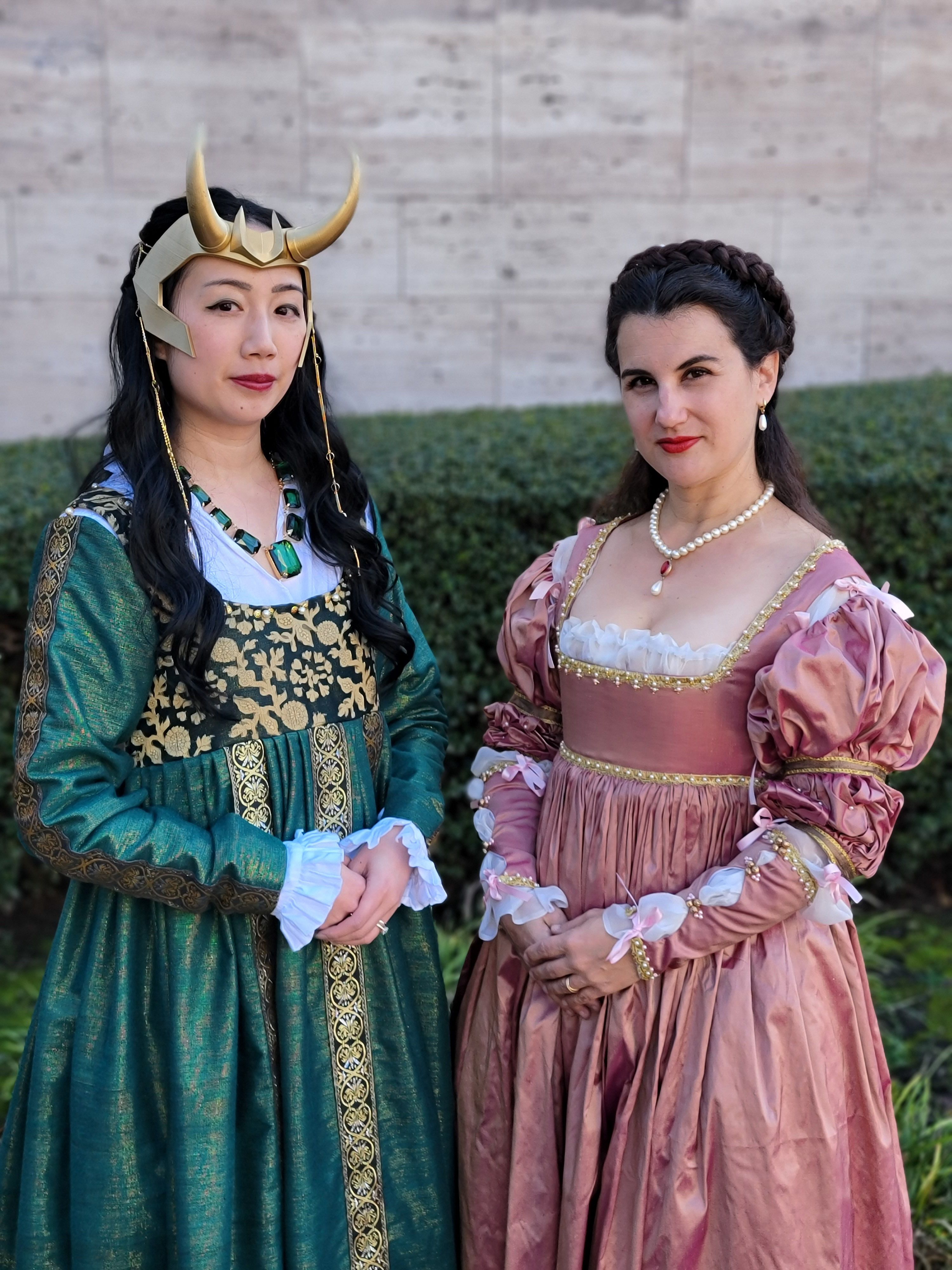
I was making a Borgias-inspired Renaissance dress and decided to lean into to the green gold color scheme and make it a historical Loki variant costume. I wanted a Renaissance gown but being shiny and pretty was more important to me than historical accuracy so this isn’t pegged to a specific decade, but rather a look inspired by both the Borgias HBO show and the character Loki from the Marvel Cinematic Universe.
The dress is made from beautiful green and gold shot raw silk suiting. The bodice uses the same fabric but with a silk/rayon organza burnout overlay, and the lining is a black cotton canvas for structure.
Rather than using a commercial pattern I Frankensteined together math and modified pattern bits from previous costumes I made. The bodice is a shorted version of the kirtle I previously made using help from the Tudor Tailor book (Amazon affiliate link). I widened the shoulder straps and added some more seam allowance but it is otherwise generally the same.
The skirt is made of pleated rectangular panels. Each of the front and back are 1.5 panels wide, with the seam hidden under the metallic jacquard trim.
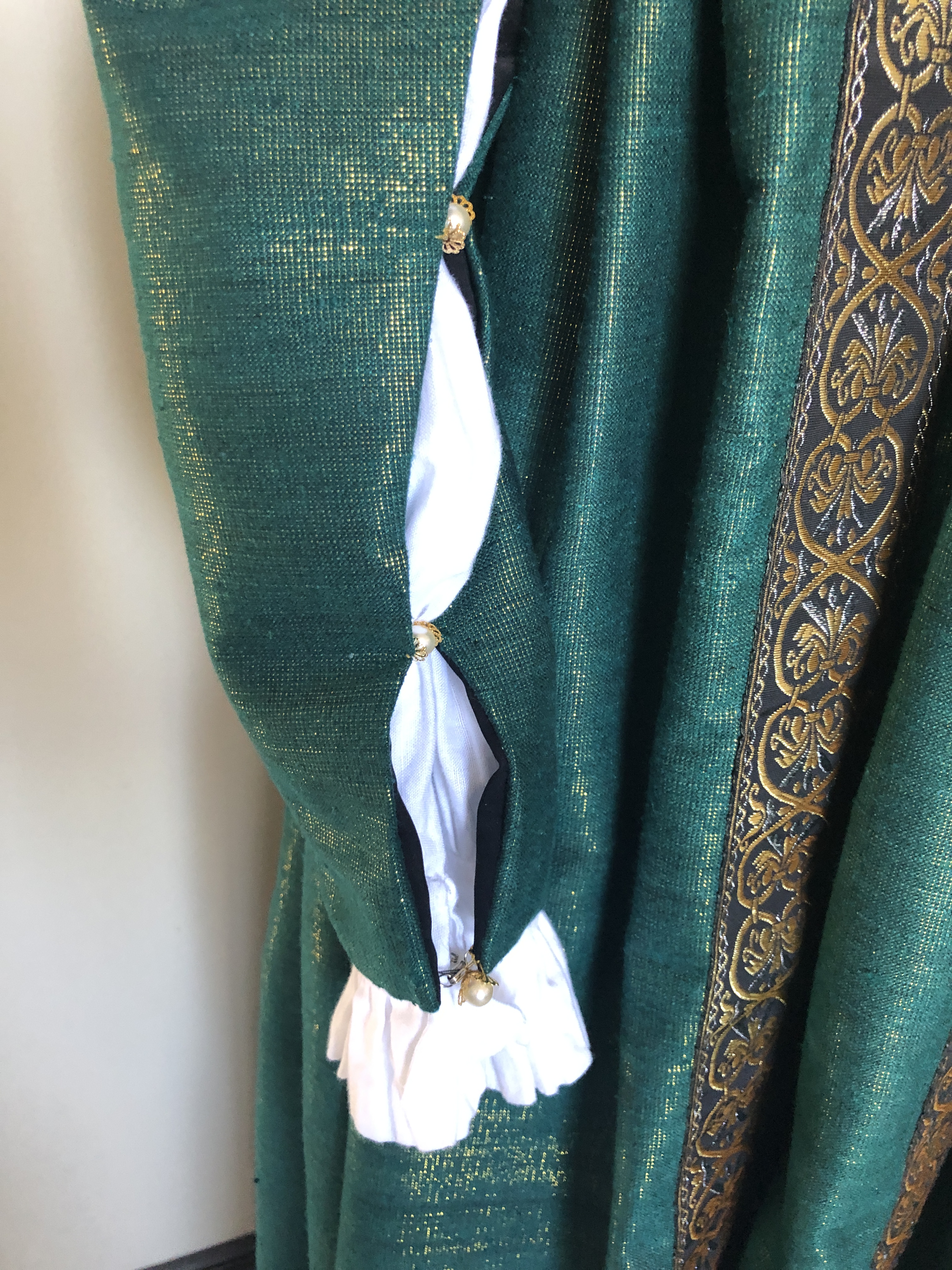
The sleeves are basic sleeve shapes but cut a little loose to allow for the chemise underneath. They are somewhat like tie-on sleeves except instead of ribbons I sewed them at the meeting points with a glass pearl and some gold bead caps.
Underneath the dress I wore a Tudor chemise because that is what I had on hand. (It was also made using a pattern from the Tudor Tailor book). However, at a later point I’d like to make a Renaissance camicia with a different neckline and much fuller sleeves to puff out through the gaps in the green sleeve.
LOKI CROWN
I bought the Loki crown as 3D printed pieces from Parton Prints on Etsy. The horns come as separate pieces for ease of shipping and I glued them on using E6000 glue. After a little sanding, I used a primer that someone recommended to me for 3D printed plastics Tamiya Gray Fine Surface Primer (Amazon affiliate link) I finished up with two coats of Rust-Oleum Metallic Spray Paint in Gold. Originally I used more E6000 to glue on a black elastic strap but decided to cut them off. Instead I used the nubs of those straps as an anchor point to sew on some gold necklace chains both as decorative dangling elements in the front and also as a visible gold band across the back to hold the crown on.
I am wearing a wavy black wig from Amazon (affiliate link) under the crown. I wish my hair was that luxurious! The necklace is a secondhand eBay find.
Winter is here and I wanted a cute and cozy accessory that was a nice shawl, but also a surprise hood and scarf! I made this out of a wool knit jersey but other soft fabrics with a bit of drape would work as well. I added some pompom trim for whimsy but that is optional; this surprise hood would work well untrimmed, or finished with decorative stitching or other touches. This was inspired by Victorian mantelets with front lappets, knit sontags, chic old Hollywood head scarves, and modern cozy.
Note: I am a member of the Janome Maker program and this project was sewn on a Janome Skyline S9. (This post is sponsored by Janome but all content and opinions are mine).
WHAT YOU WILL NEED
Soft fabric with drape (wool jersey, lightweight cable knit, rayon challis, lightweight wool suiting, etc.)
The yardage depends on how wide your fabric is. (I used 1.5 yards of a 58″ wide fabric by alternating the wide and narrow ends of the pattern pieces while cutting).
Thread, scissors, chalk, pins.
Optional: 5 yards pompom/ball fringe trim, lace, rickrack, etc.
DRAFTING THE PATTERN
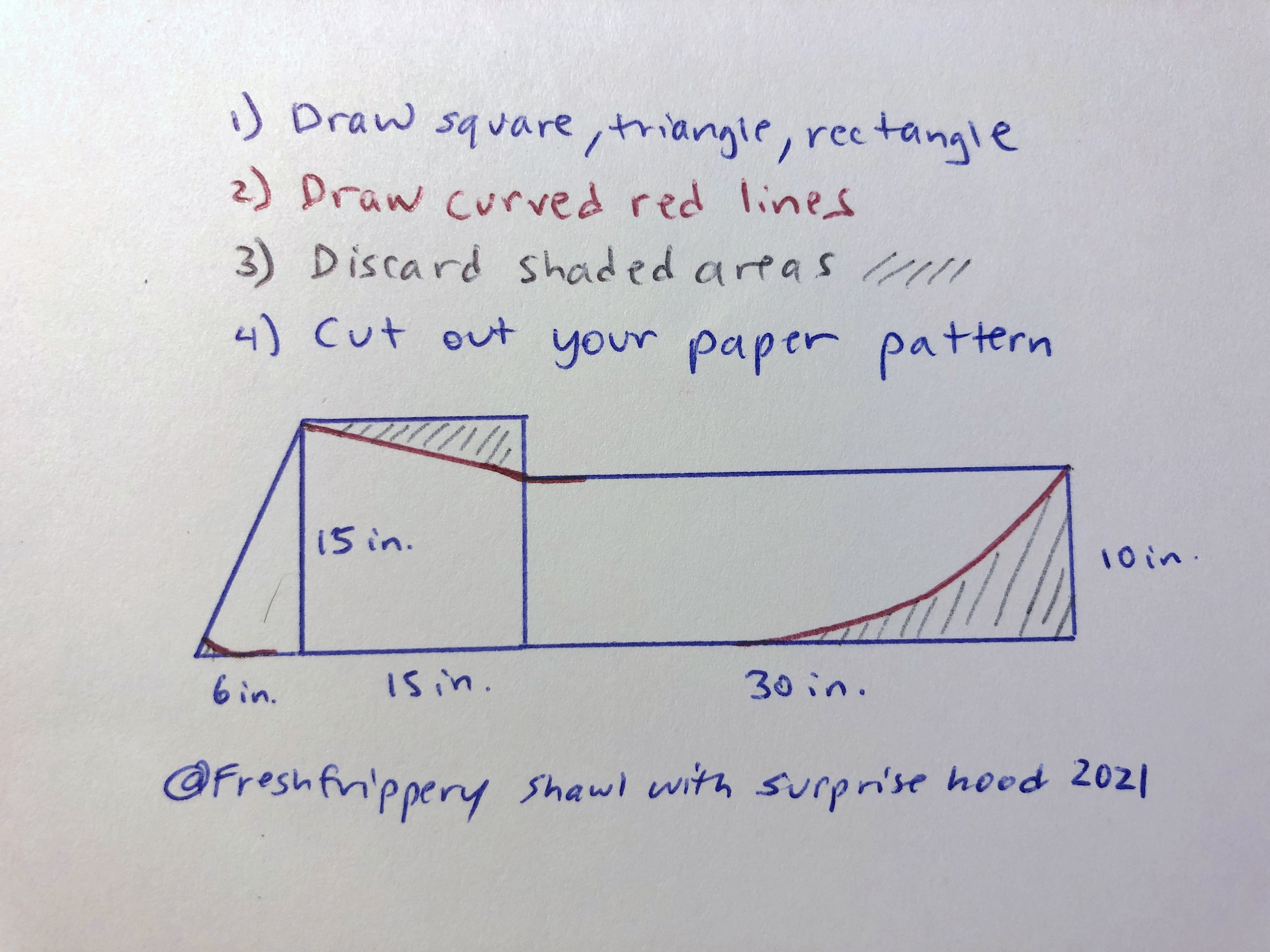
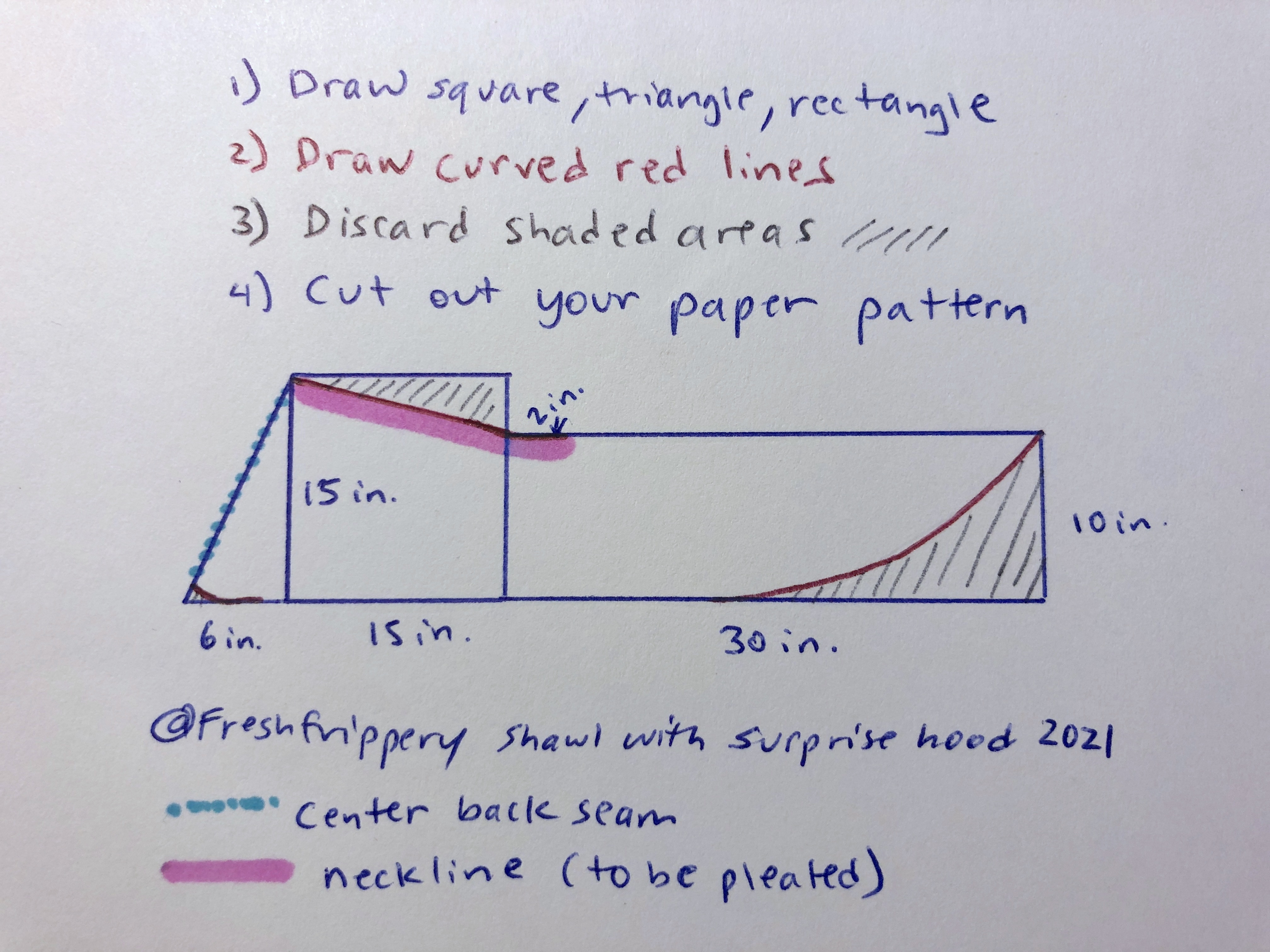
Don’t worry if you don’t have any pattern drafting experience! I’ve broken it down into squares/rectangles/triangles so if you have a ruler you can draw these shapes. Start with these basic geometric shapes; I find it is easiest to draw the square first, then the rectangle, then the triangle on a large piece of paper. (It doesn’t have to be fancy or special drafting paper; a roll of gift wrap works great).
Next, draw the curves indicated in red on the diagram. Then, discard the shaded areas.
Now you have your pattern that you can cut out of paper and use to trace onto your fabric! (This includes 1/2 inch seam allowance. You can add more when cutting out your fabric if you want your shawl a little wider or are skipping any trim).
CONSTRUCTION
Cut out 4 identical pieces of fabric. 2 will be the fashion layer and 2 will be the lining. (If you want, you can use a different fabric for the lining but then the hood will be a different fabric when flipped up).
Sew the center back seam of the 2 fashion pieces together. Repeat for the lining layer. Press the seams flat.
Put the fashion and lining layers right sides together. If you plan to use pompom trim or lace, this is the time to sandwich your trim in between the two layers as shown, with the edges flush. (This is so that the pompom balls are “inside” when sewing the edges but will be on the “outside” when the shawl is flipped right side out). You will have trim everywhere except the neckline. (If you are using rickrack, instead of sandwiching it in the layers you should sew it to the fashion layer before it is attached to the lining).
Sew all along the outer edges of the shawl, except for the neckline, as shown in the earlier image.
Turn the right sides out through the opening in the neckline, exposing the pompom trim. Fold in the raw edges of the neckline and topstitch closed.
Right now you will have a long flat piece as shown below. (The ends are folded in so I could fit everything in the photo).
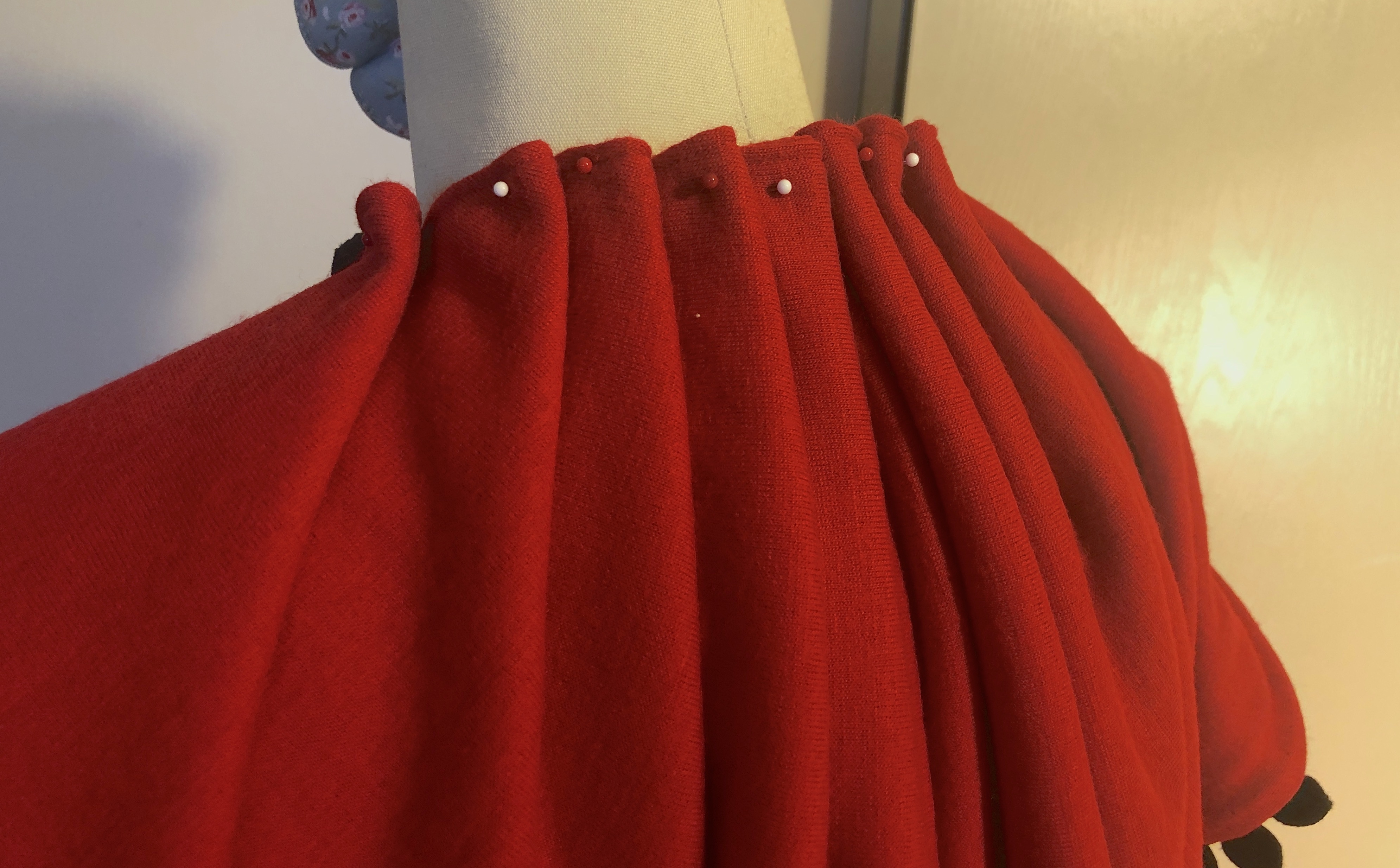
Pleat the neckline area (up to where the pompoms start) to fit the curve of your neck. The finished curved area should cover the back half of your neck. (If you have a dress form handy, an easy way to determine how to do the pleats is to pin the center back seam to the center back of the form, pin where the pompom trim starts to the shoulder point on the form, then pleat using the neck of the form as a guide). To keep the pleats in place, stitch down the pleats over the previous topstitch line either by machine or by hand.
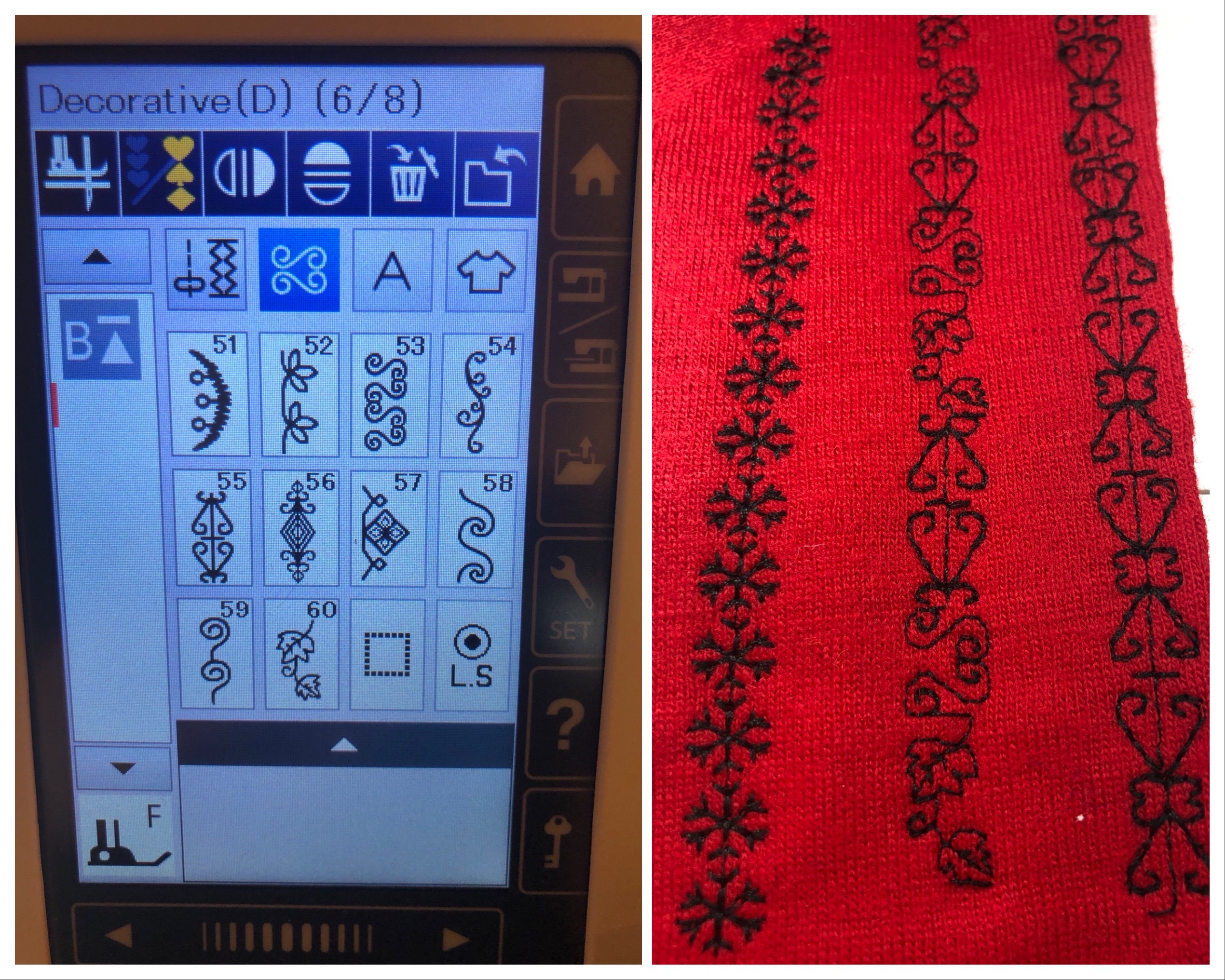
Optional: Use one of the embroidery stitches to add some extra decorative details to your shawl. Some ideas include using a continuous stitch along the edges of the shawl, or putting a monogram on the tails. You can also do a decorative stitch along the edge after the shawl is sewn, rather than using pompom trim. (These examples are under the Decorative stitch menu on my Janome Skyline S9).
HOW TO WEAR
This can be worn multiple ways!
Wear the draped back and front tails down as a shawl.
Pull up the draped back over your head as a hood (with the tails in front or pushed behind your shoulders).
Wrap one or two front tails around your neck like a scarf.
Combine 2 and 3 for a chic hooded scarf look.
Which one is your favorite?
Thank you for reading! Be sure to follow me on Instagram @freshfrippery for the first peek at any new projects!
I am happy to provide all patterns and tutorials for for free on my blog. It is absolutely optional, but if you would like to donate towards my domain registration and the data costs of hosting the many photos on my site, consider buying me a “coffee”: https://ko-fi.com/freshfrippery. Thank you!






































 Fresh Frippery