Tag Archives: costume

Mermaid Shawl for a Fantasy Ball Costume

I was invited to be a special guest at the Second Star Events Neverland Ball, a fantasy costume ball that took place in New York City in May. People were encouraged to dress as a mermaid, pirate, fairy, or other character from Peter Pan. I decided to lean into the mermaid theme and sewed an ocean-inspired shawl out of iridescent fabric to go with a sparkly dress I already in my closet from Babeyond. It was not difficult to make and I got so many compliments on it so I wanted to share how easy it is to make your own!
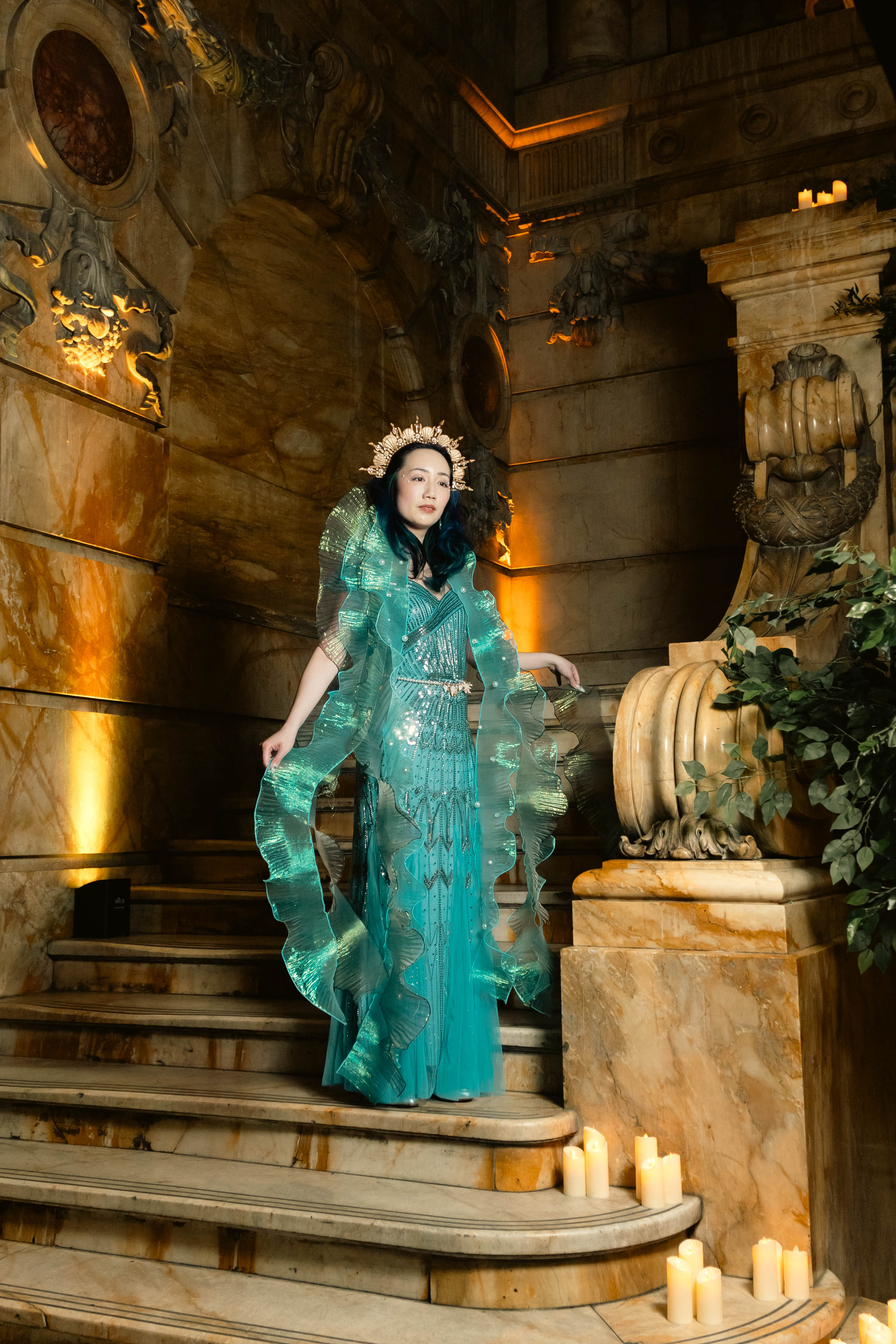
Photo by @photosfromafairy on IG

All the pretty ruffled iridescent fabric was purchased from Amazon (affiliate link) and you can get a lot of the other supplies there too. I’ll have links to all my materials and accessories summarized at the end of this post.
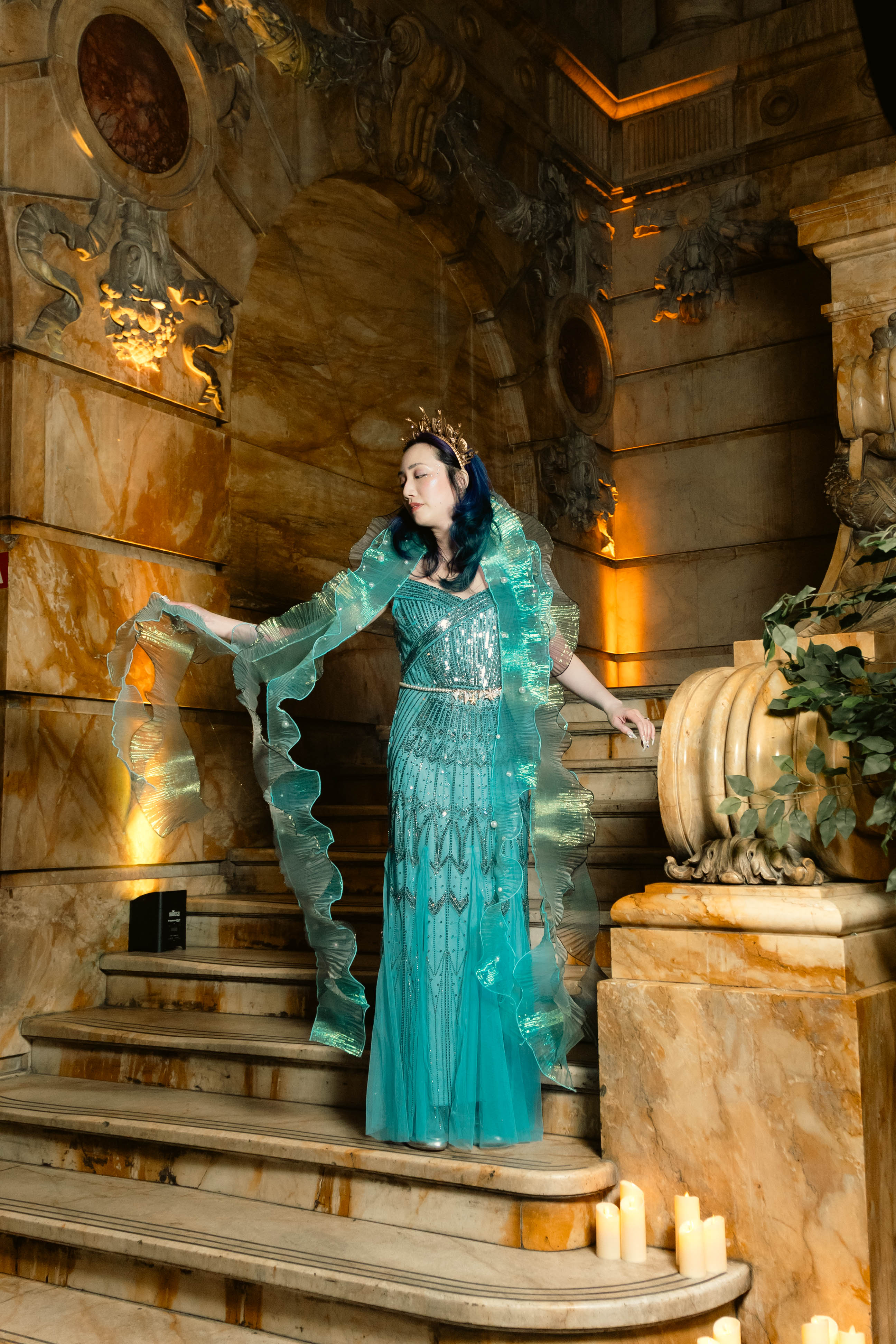
Photo by @photosfromafairy on IG

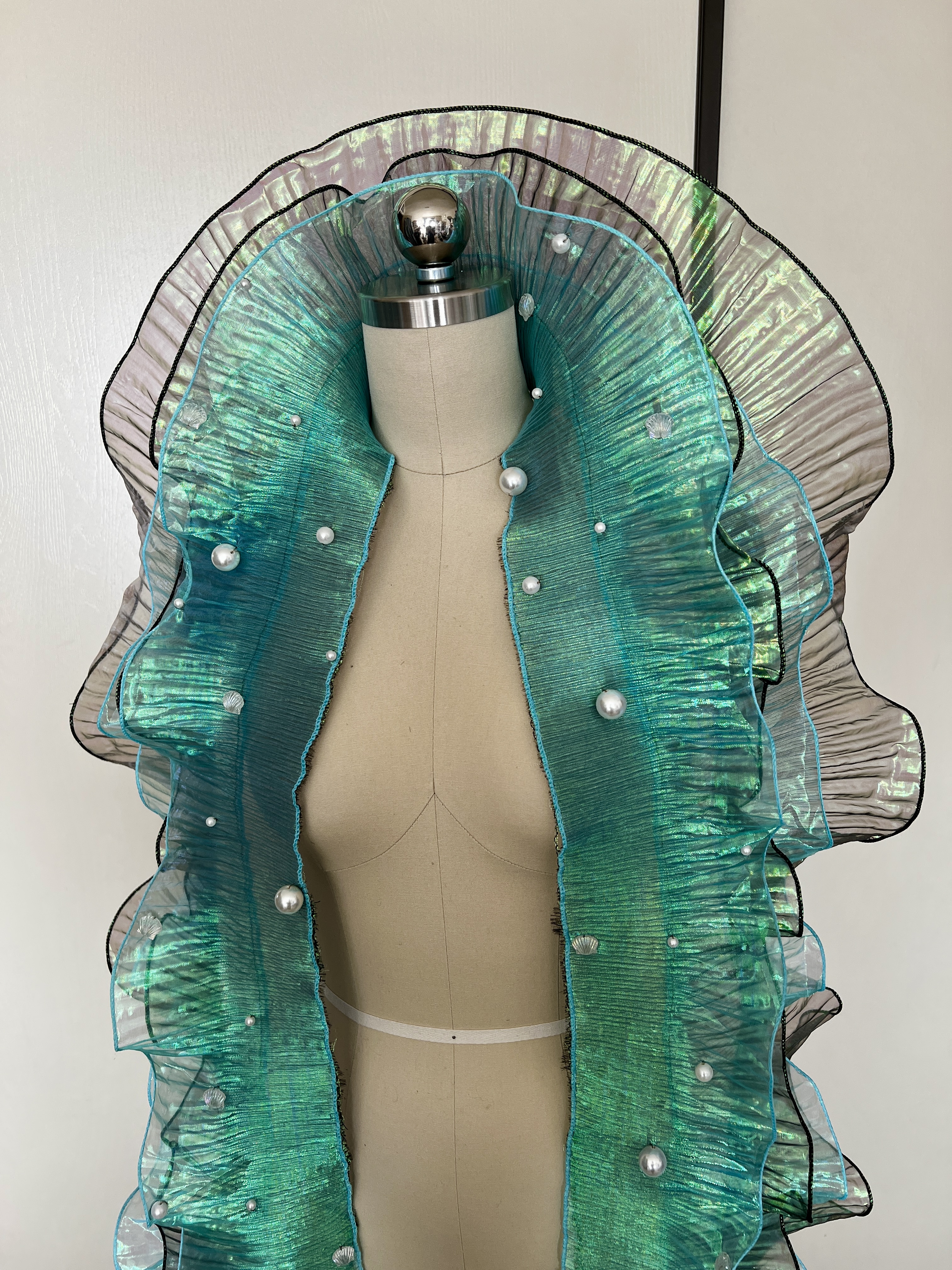
I bought two different colors (blue and green) of the ruffled iridescent fabric and layered them to add dimension. The green fabric is a little wider than the blue to add some extra interest. You can see from the side view below if we numbered the layers from left to right they would look like this:

  1. Blue with pearls and beads sewn on
  2. Green
  3. Blue
  4. Green

Each piece of fabric was about 3 yards long. I am 5’6″ so you’ll want to cut longer or shorter depending on your height. I cut 4 pieces of fabric (2 green and 2 blue).

When you sew the pieces together, they are only attached at the middle section, leaving the ends to hang free and wave about on the dance floor! This is the view from the back. I ended the stitching around waist-height.
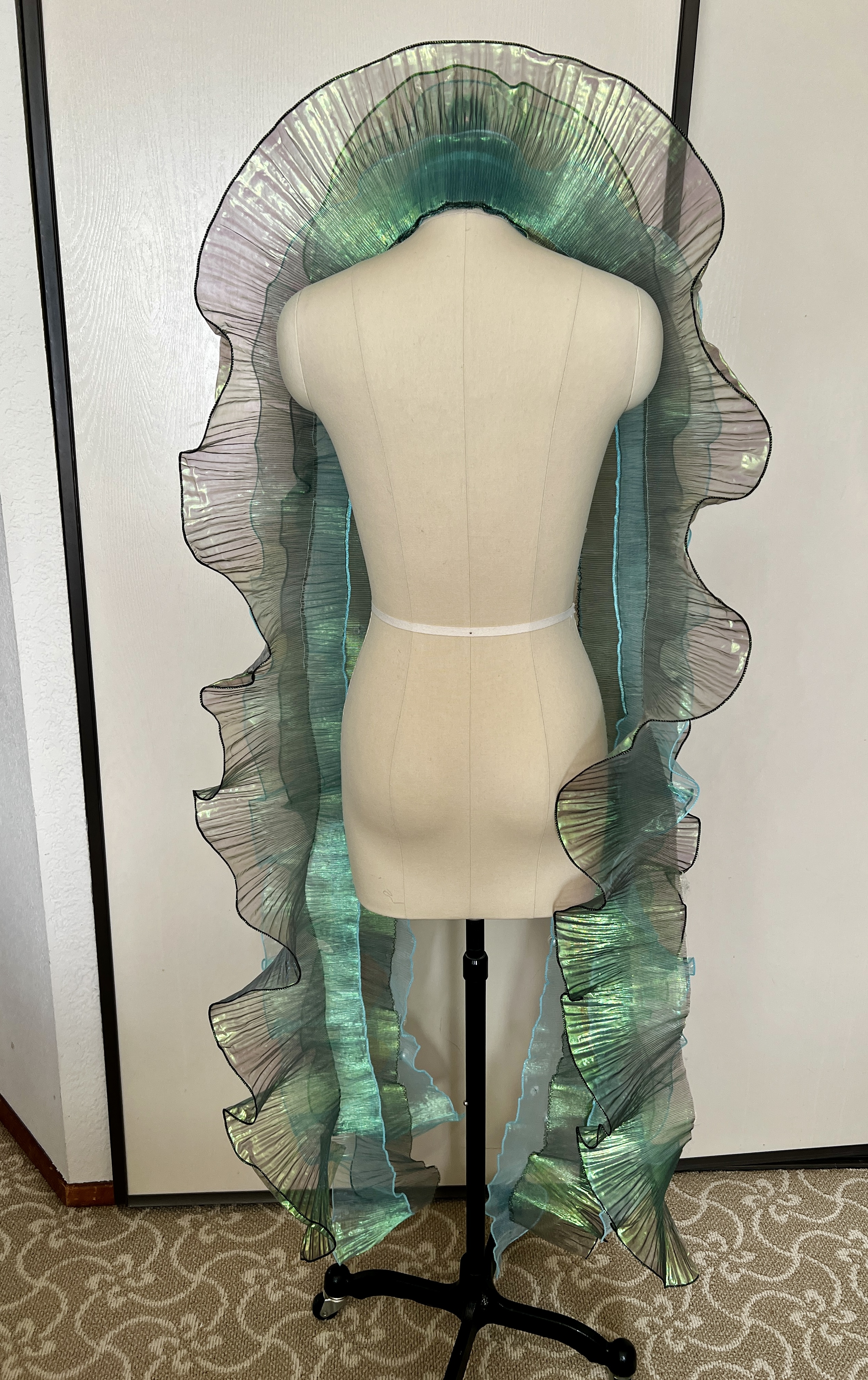
Referring to the numbered layers in the list above, this is your order of sewing:

  1. Put the edge of #4 (green) halfway under #3 (blue) and stitch down by machine. (This means you will be sewing down the center of #3).
  2. Put the edge of #3 (blue) halfway under #2 (green) and stitch down by machine. (This means you will be sewing down the center of #2).
  3. Line up the edges of #2 (green) and #1 (blue) with blue on top and stitch down at the edges by machine.
  4. Hand-sew pearls and beads onto #1 (blue).

It doesn’t matter if the ends aren’t exactly even or the layers aren’t lined up perfectly halfway because it just adds to the natural kelp-like look.
Sources:

If you want to see the mermaid costume in action here is a video on my Instagram.

If you make your own mermaid shawl please let me know!

Photo by @photosfromafairy on IG

Antique Rings for Historical Costume: Georgian, Victorian, Edwardian, and Art Deco

I enjoy sewing for many historical costume eras, as those of you who follow my blog or watch my costuming content on my Instagram know, and I always have fun considering the accessories. My biggest piece of advice for making your look complete is to consider not just the gown, but the hats, shoes, gloves, stockings and especially the jewelry! I wear many historically-inspired costume jewelry pieces that I have either made or purchased, vintage or new, but I also like to admire genuine antique pieces. (All jewelry photos in this blog post were kindly provided by Antique Ring Boutique, who sponsored this post, but allowed me to write whatever I wish).

I thought it would be fun to share in this post a few eras I like to costume from, some inspirational images, and of course some beautiful genuine antique jewelry!

Whether you are a new historical costumer looking for an overview, or an experienced maker wanting to gaze at some lovely shiny things, I hope this post gives you some inspiration.

For each ring I’ve included a main image plus a link to a page where you can see even more photos of different views, and read about the piece.

Georgian (1714-1837)

The Georgian era is named after the start of the reign of King George I in 1714 and includes the end of the reign of King George IV in 1830 and the regency period of William IV in 1837. 

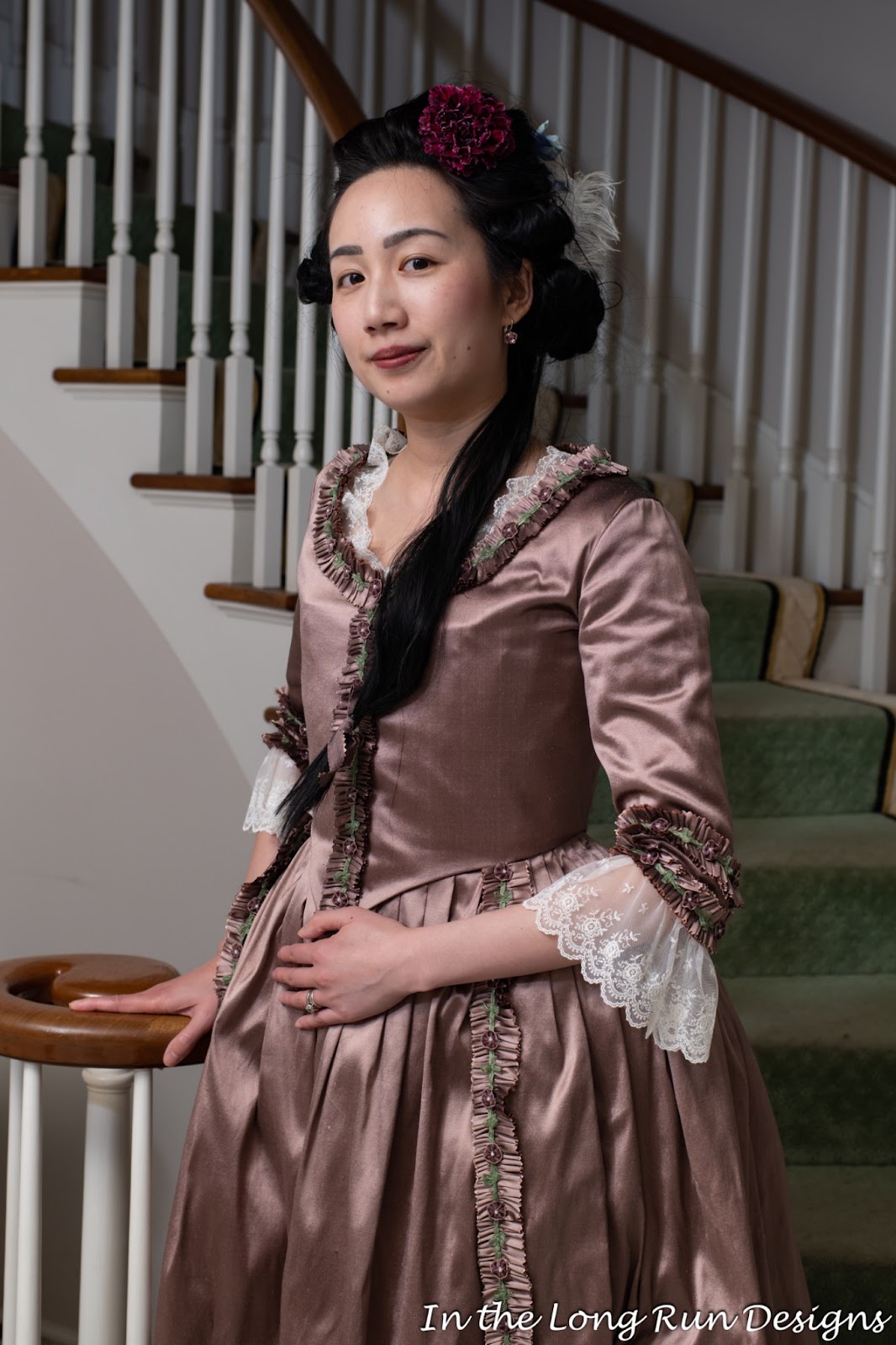
I love costuming from the 18th and early 19th century, and have made a number of outfits from this time. This mauve silk dress is a favorite (photo by In the Long Run Designs). 

The 18th century brings to mind Marie Antoinette, silk gowns, panniers, and big hair! Extravagant jewelry, especially with foil-backed stones, glittered under candlelight at court. Rose gold, yellow gold, and silver were popular metals for rings.

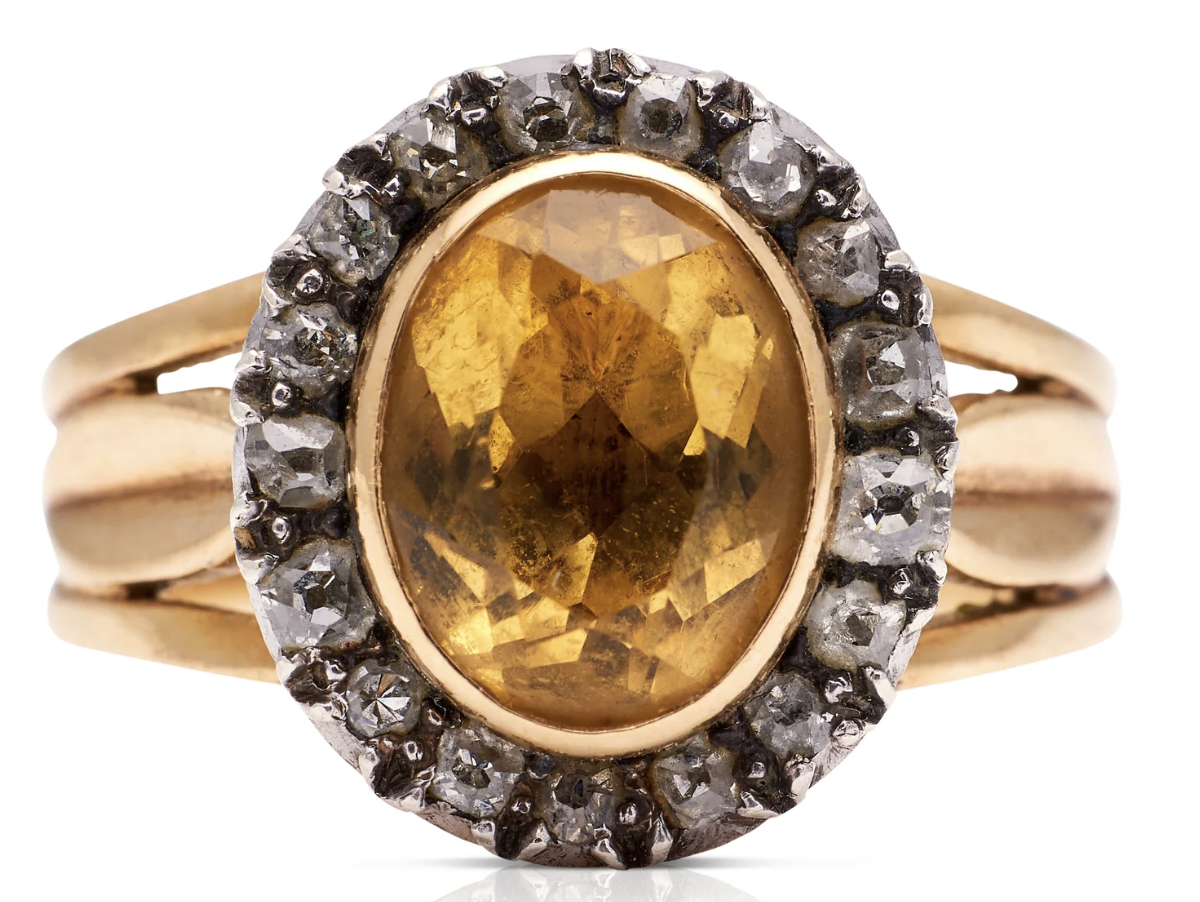
This antique citrine and diamond cocktail cluster ring would have looked amazing with a pretty yellow gown.

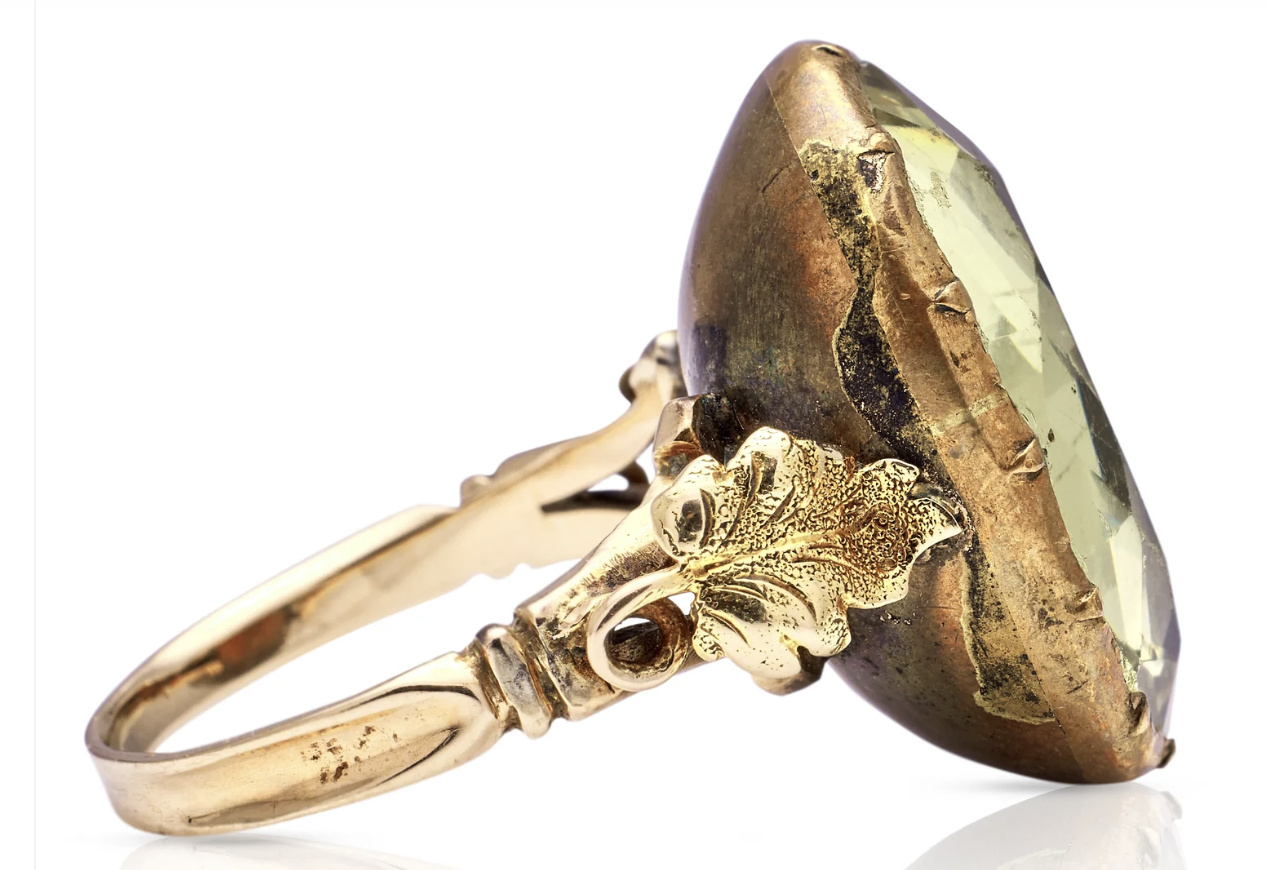
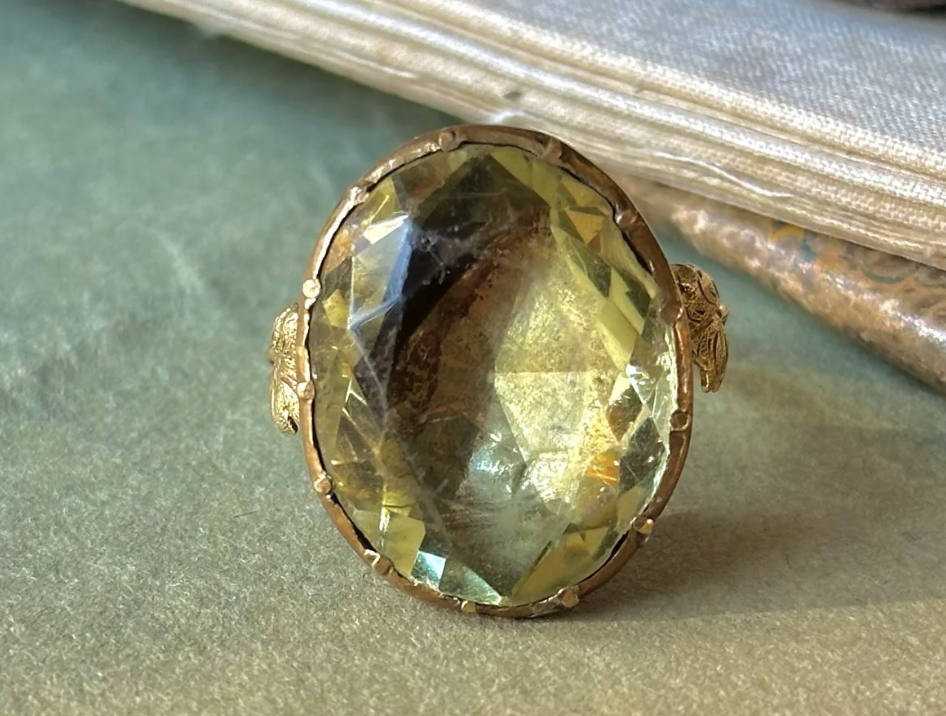
Paste stones (imitation gems) were also very popular in the 18th century, as seen in this eye-catching large green foiled paste stone ring.

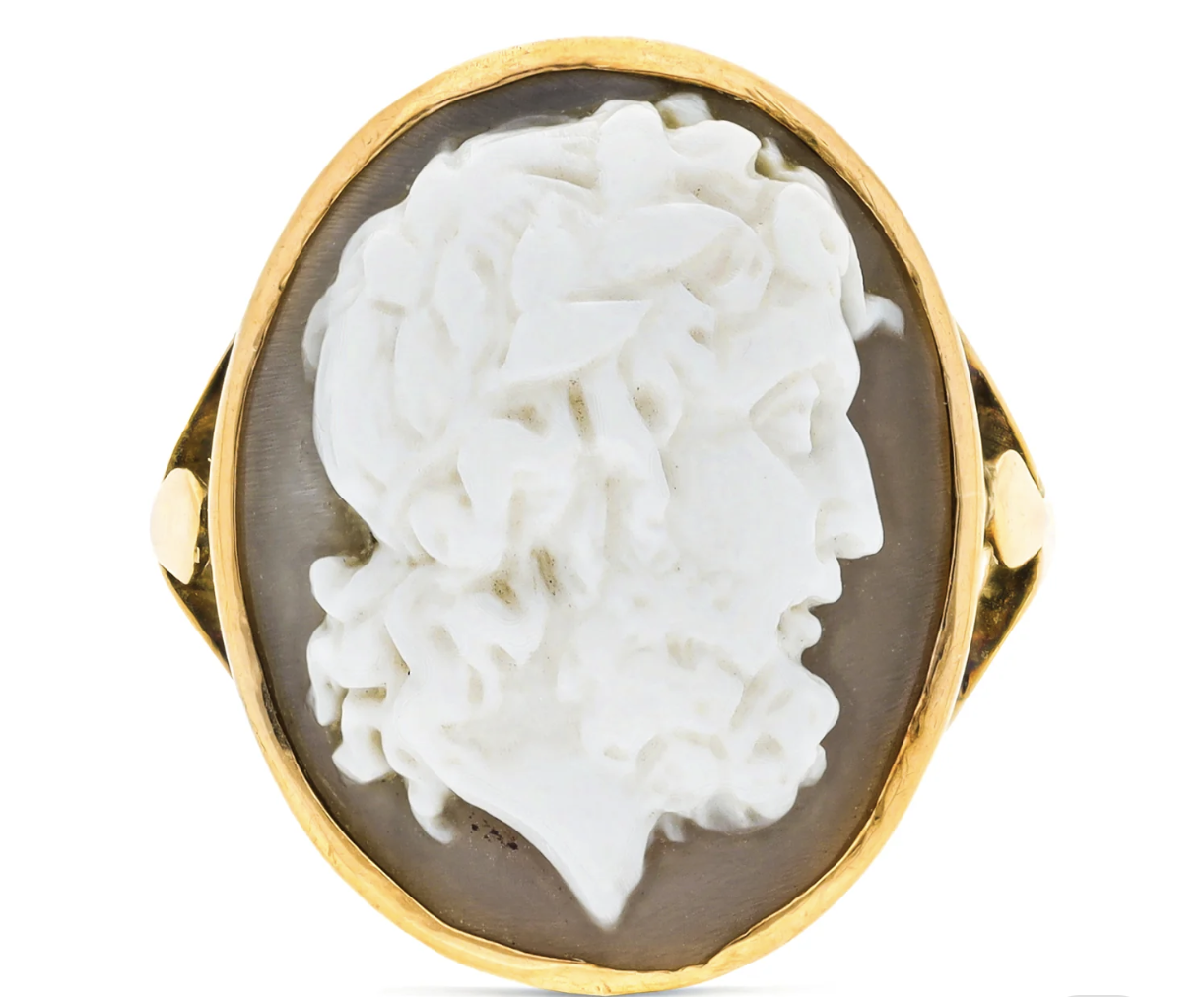
And finally, cameo jewelry was also quite popular (and still popular today!) This intaglio ring is a fine example.

Victorian (1837-1901)

The Victorian period was named after long-reigning monarch Queen Victoria of England. Since the period was so long, there were many silhouettes, including the full short dresses of the 1830s, the hoop skirts of the 1850s, and bustle dresses of the 1870s and 1880s. I am particularly fond of bustle dresses like this one I wore to a museum event. (Photo by John Carey Photographic). 

During the Victorian era, diamond rings were very popular. Different materials such as amethyst, emeralds, agate, pearls, and even hair! (often found in mourning jewelry) were used.  Carved cameo and intaglio jewelry continued to be popular, such as this lapis lazuli ring.

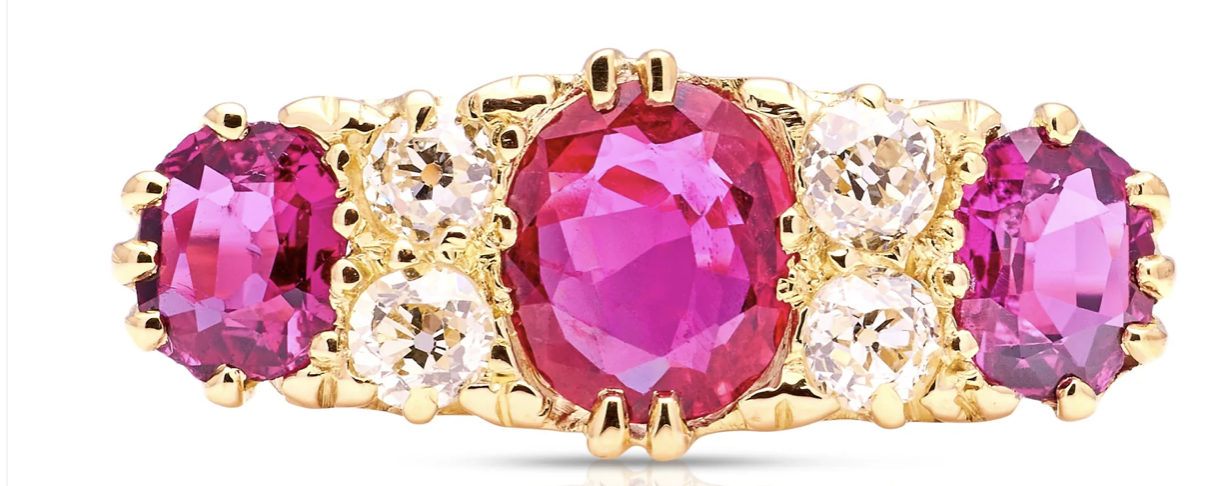
I think this ruby and diamond 3 stone ring would go great with a pink bustle dress!

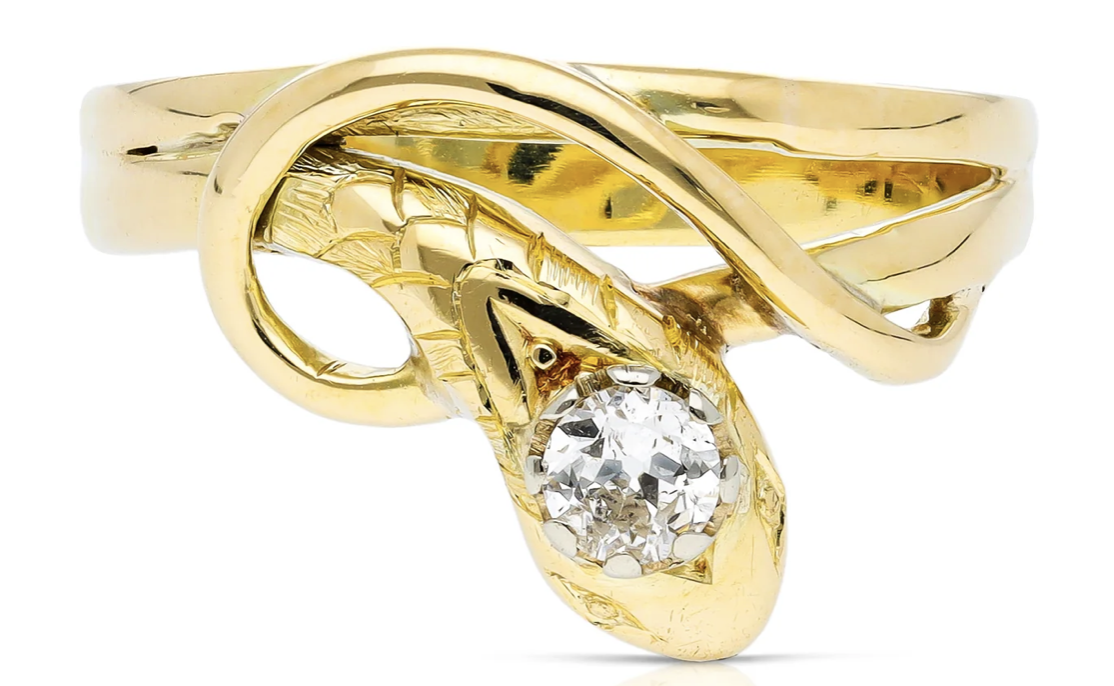
This diamond snake ring looks so modern!

Edwardian (1901-1910)

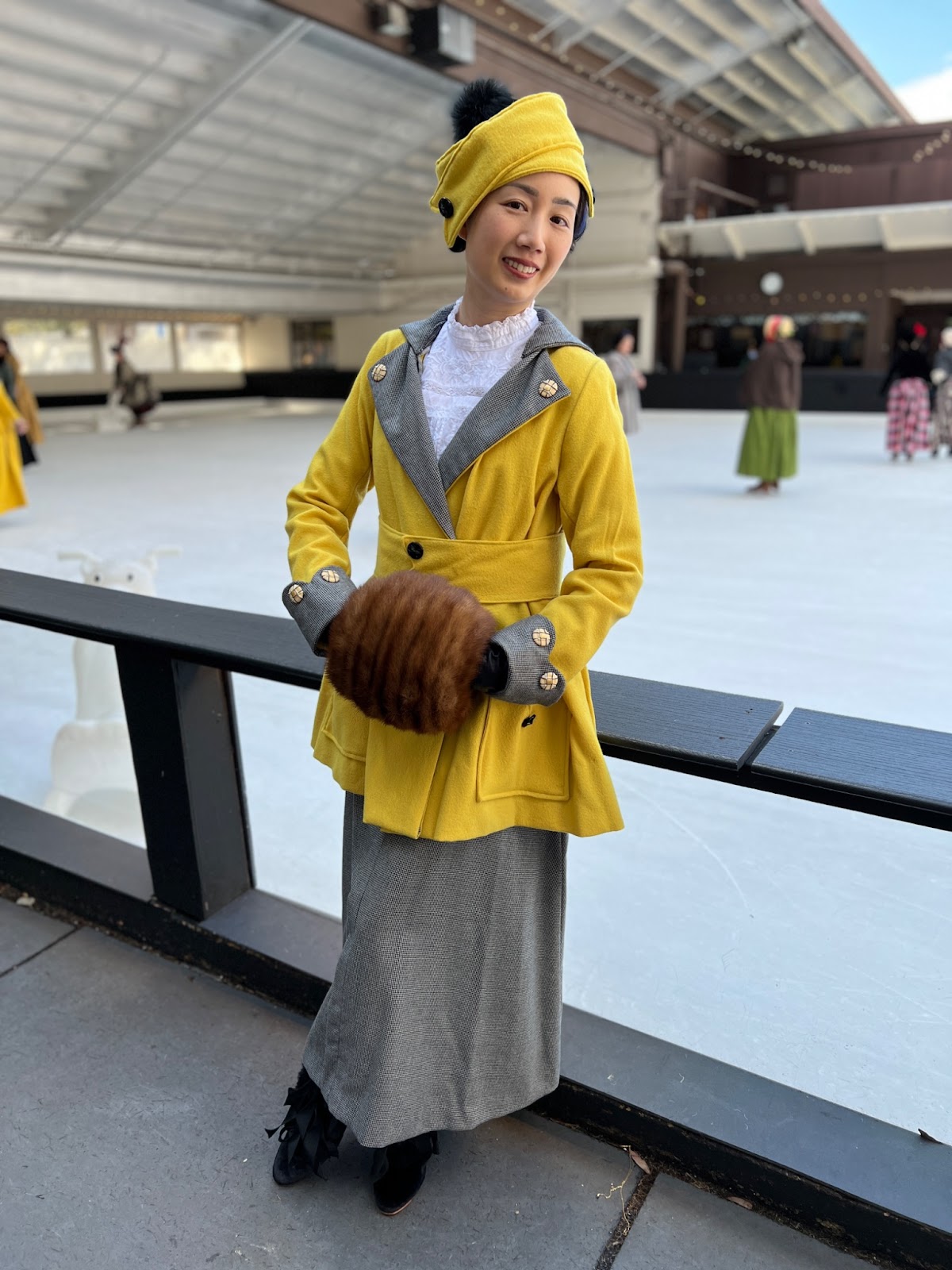
The Edwardian period was named after King Edward VII, and the time of some very elegant designs. The blouse and walking skirt combination was common for daywear, and an easy way to get into historical costuming. Suits and stylish jackets were also common, and we also saw women’s sportswear. This wool suit I made and wore to a historical ice-skating party.

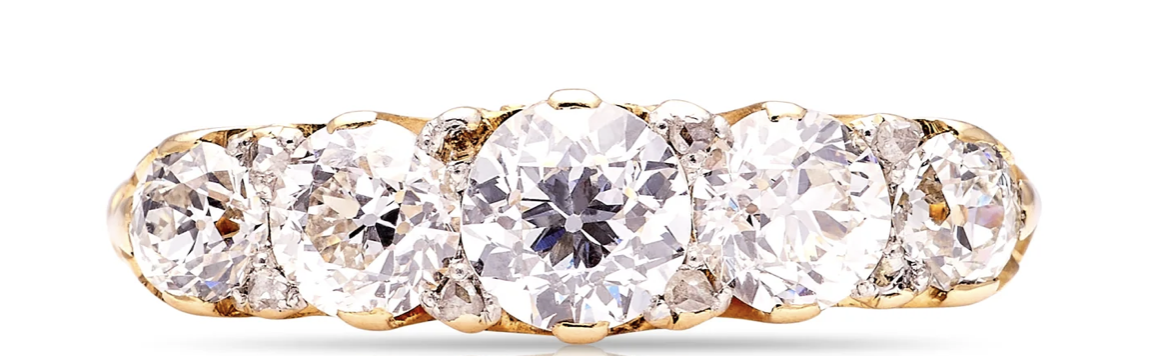
The Edwardian era includes part of the Belle Epoque and Art Nouveau eras, and some designs that are still very wearable today, such as this five stone diamond ring:

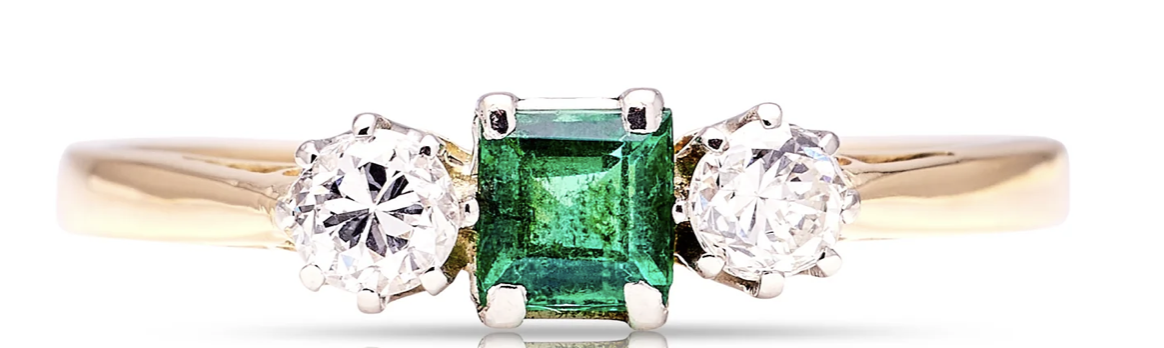
This emerald and diamond two stone ring is striking.

I would gladly wear this pearl and diamond ring!

I’m also partial to this diamond daisy cluster ring because it reminds me of my own engagement ring.

Art Deco (1920s/1930s)

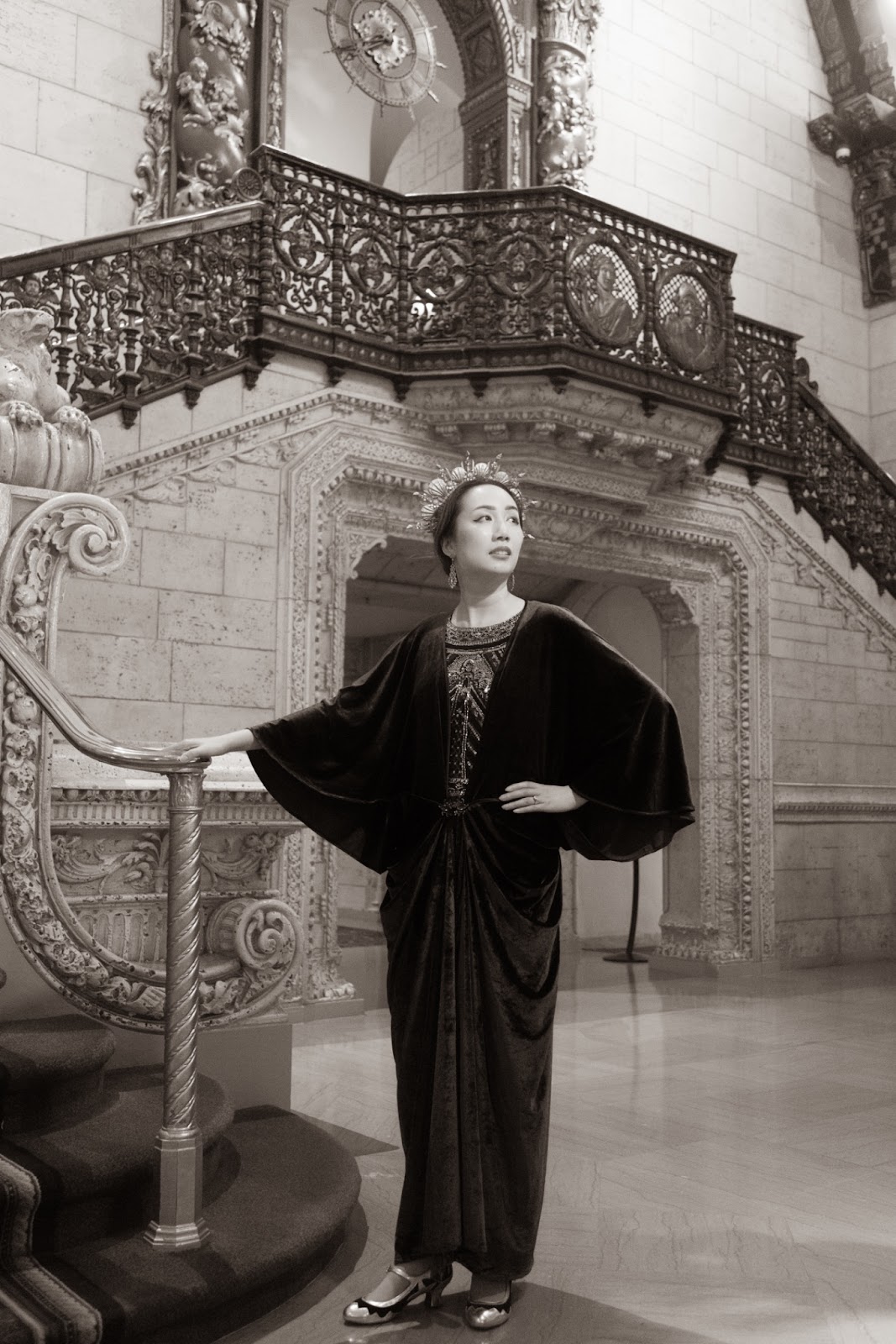
If you love Old Hollywood glamor or flapper dresses, the Art Deco era is for you! I own a number of 20s-inspired dresses, but my heart also lies with the long gowns of the 1930s. I do pull inspiration from each. This photo was taken at the historic Biltmore Hotel in LA by Jason Holmes Photography.

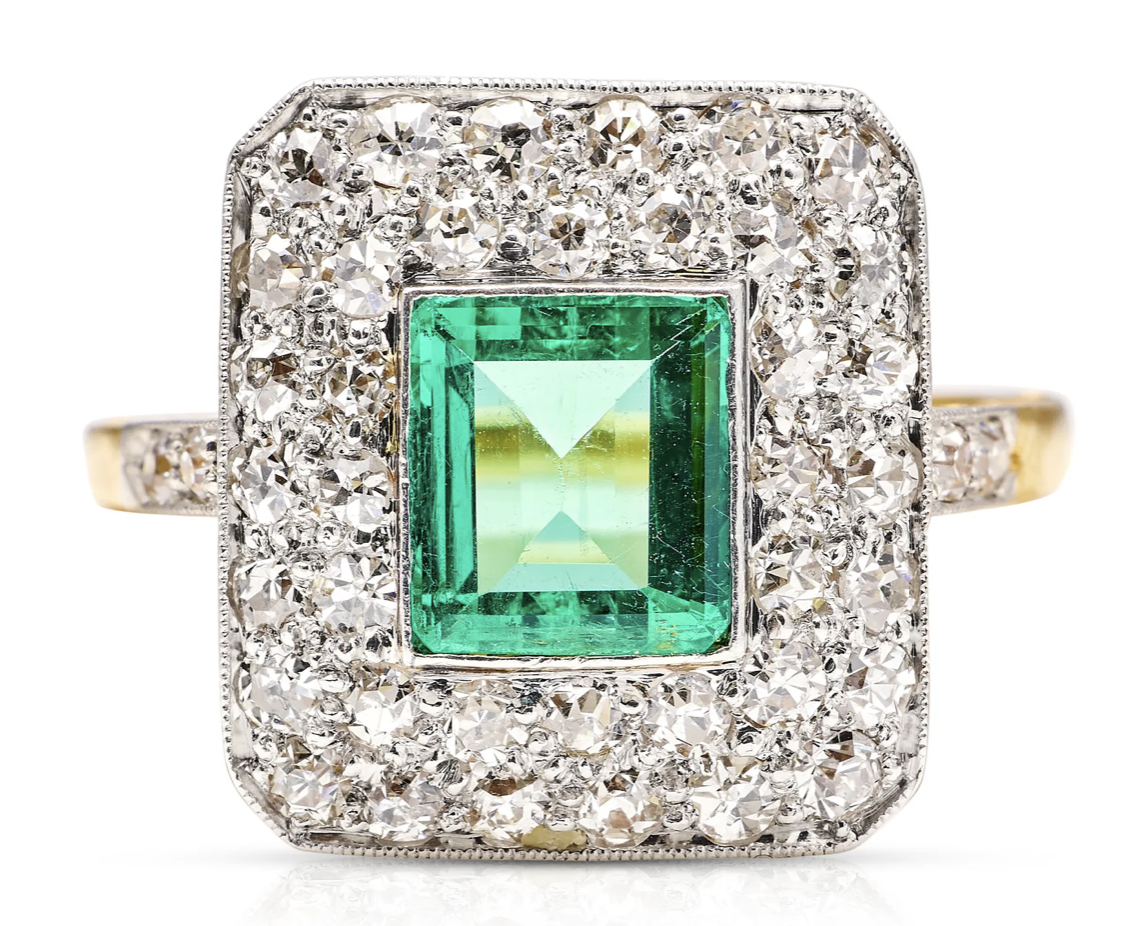
This Art Deco emerald and diamond ring is such a stunner!

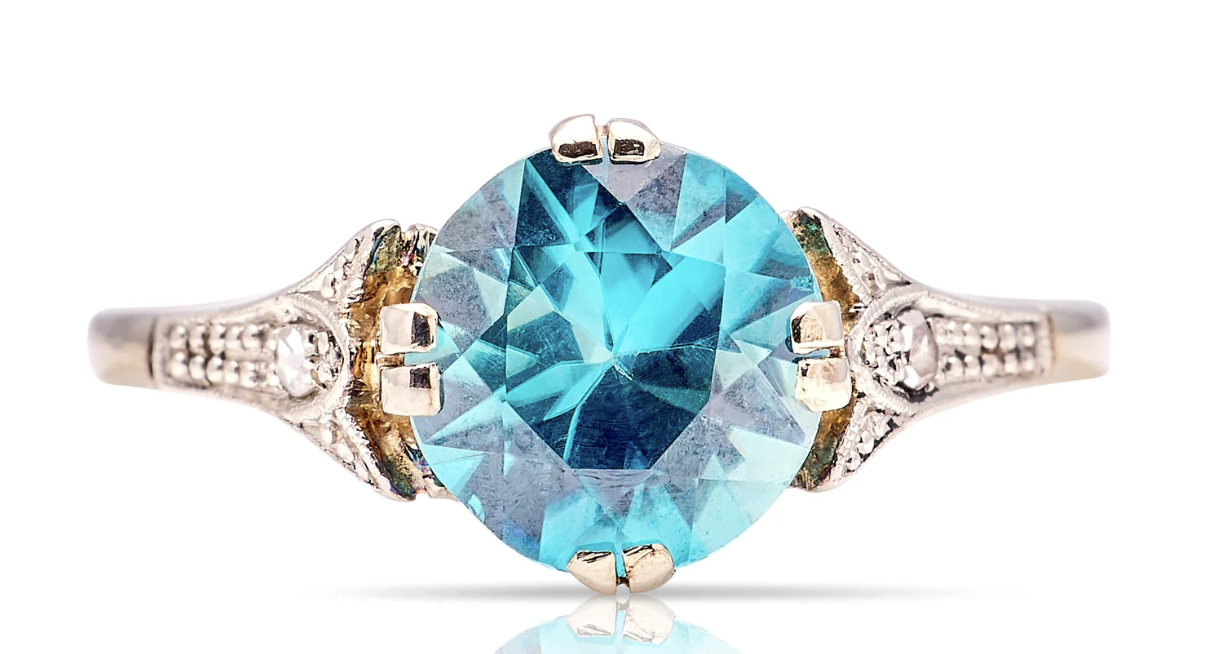
This blue zircon and diamond ring from about 1925 is such a pretty thing.

This Art Deco diamond cluster engagement ring reminds me of the Edwardian daisy cluster ring from earlier in thist post.

I hope you’ve enjoyed looking at these rings. If you have a favorite, either from the ones I’ve shown you or from the Antique Ring Boutique site, let me know! (Or you might let someone in your life know you deserve a sparkly treasure for the holidays).

Recommended Sewing, Historical Costume, and Cosplay Books

This list was created by Vivien Lee of Fresh Frippery and Becky Lee Evans of Going Ape Costume for the panel “Make it Faster or Easier? Cosplay and Historical Costume Shortcuts that Work (and Some That Don’t)” at Elko Pop Con on August 9, 2024.

Note: Some of the links may be affiliate links. As an Amazon Associate I earn from qualifying purchases. This means I get a small cut out of what you buy that goes towards my domain registration fees.

GENERAL SEWING:

GENERAL COSPLAY OR COSTUME:

TUDOR AND ELIZABETHAN:

  • The Tudor Tailor: Reconstructing 16th-Century Dress – Ninya Mikhaila & Jane Malcolm-Davies
  • The Queen’s Servants : Gentlewomen’s Dress at the Accession of Henry VIII (Tudor Tailor Case Studies) – Caroline Johnson
  • The Typical Tudor: Reconstructing Everyday 16th Century Dress – Ninya Mikhaila & Jane Malcolm-Davies

17TH CENTURY:

18TH CENTURY:

VICTORIAN:

EDWARDIAN:

My 17th Century Masquerade Dress (Plus 10 Tips/Tricks for Sewing Costumes)

Years ago I made a black 1660s dress but wanted a more colorful one. I finally got my excuse to make one when my local costume guild decided to put on an event called “DuMasquerade,” a dinner event celebrating the works of Alexander Dumas. I made a dress out of purple taffeta and wore a dragon mask perched upon my head.

In this post I’ll show you the dress I wore, plus some tips/tricks to make your sewing faster and/or more polished. I only had a few weeks to make this dress so I definitely took some shortcuts!

I used the Nehelenia 1660s dress pattern since I was familiar with it, having used it before. This style of dress features a long skirt, a fully boned bodice with a pointed center front, and puffy sleeves, made of a purple taffeta fabric. I am happy to brag that I made this dress for less than $25! A friend found the fabric for $2.50/yard at a local shop, and I got the fancy trim on clearance for $1/yard. The ruffles are made from a cotton organdy curtain I got for free. The lining uses scraps from a previous project and the boning is 4 different colors/lengths of zip ties and boning bits I found around the house or was given to me from someone destashing. The bum roll uses scraps from another finished dress. I already owned the pattern, shoes, wig, and petticoats from previous costumes. I was so under budget for this dress I decided to buy those pearly bodice decorations from an Etsy shop called Recycled Rockstah. The dragon mask is a kid’s Halloween mask that I painted and attached to a headband. Some of my costume projects can get pricey but every so often I like to challenge myself to make something for a low cost, to remind myself of how I started costuming, and to let others know that with a little luck and patience (and keeping a stash!) it’s possible to look fancy for less. Yes, I had the privilege of time and experience, but I firmly believe costuming is for everyone and every budget. You don’t have to have silk to be valid.

TIPS/TRICKS

Tip/trick #1: Instead of making a corset as a separate garment, make your bodice fully boned. To do this you will cut out two linings and stitch them together with a series of parallel lines to make channels for your boning! Then you will cover this boned lining layer with your fashion fabric layer.

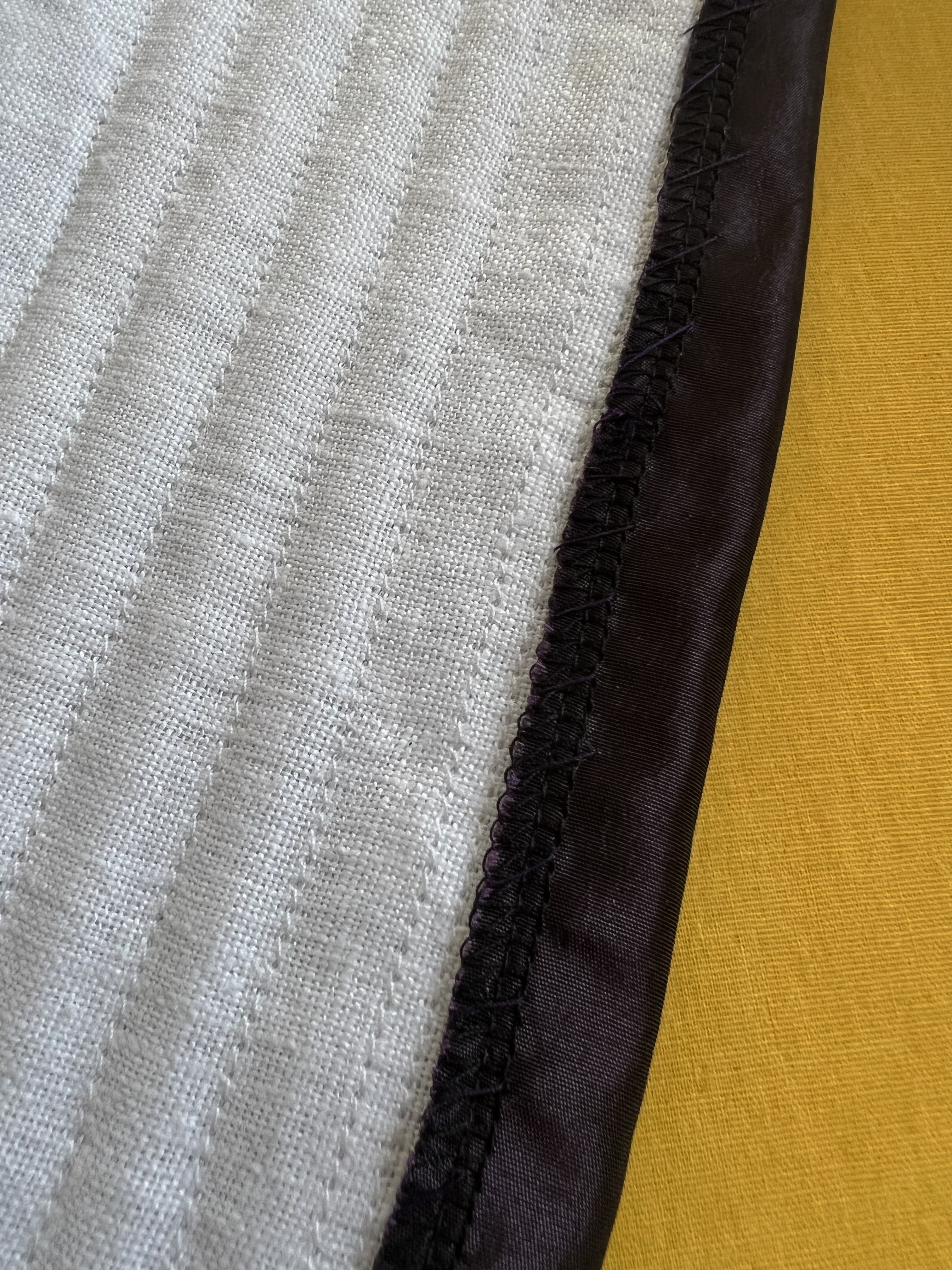
Tip/trick #2: When you cut out your bodice fashion fabric pattern pieces, extend the sides of the pieces that will make up the neckline, back closure, and bottom edge by about an inch. After you assemble the bodice fashion layer you can serge the raw edges, fold them over, and then whipstitch them to the lining. This way your linings won’t show when worn and you can skip making facings.

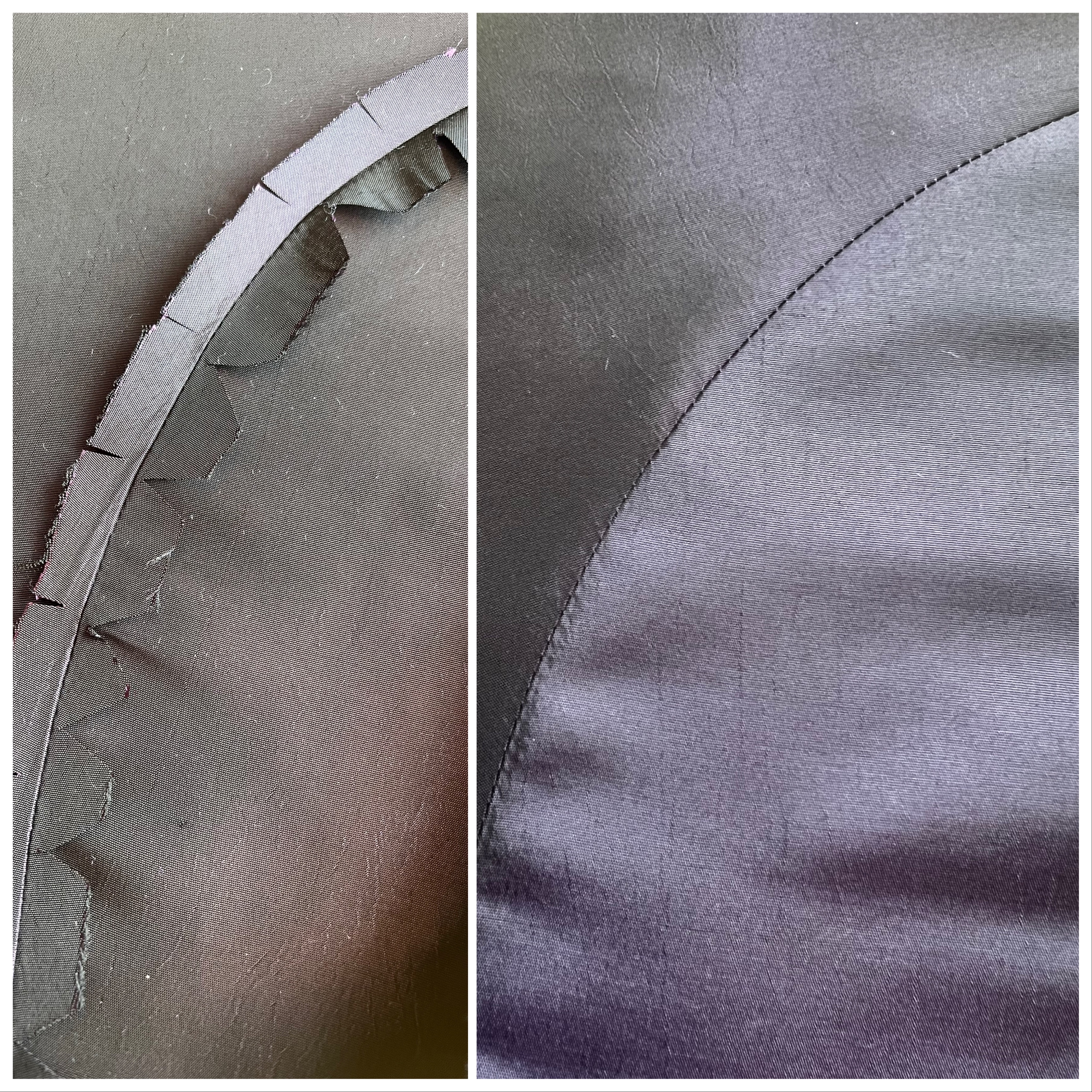
Tip/trick #3: To make your curved seams nice and smooth, you will want to clip after sewing. Iron your seam allowances open. Cut notches in the inner curve of the seam allowance and snip or cut notches in the outer curve of the seam allowance. Iron again on the right side of the fabric to make a very neat seam.

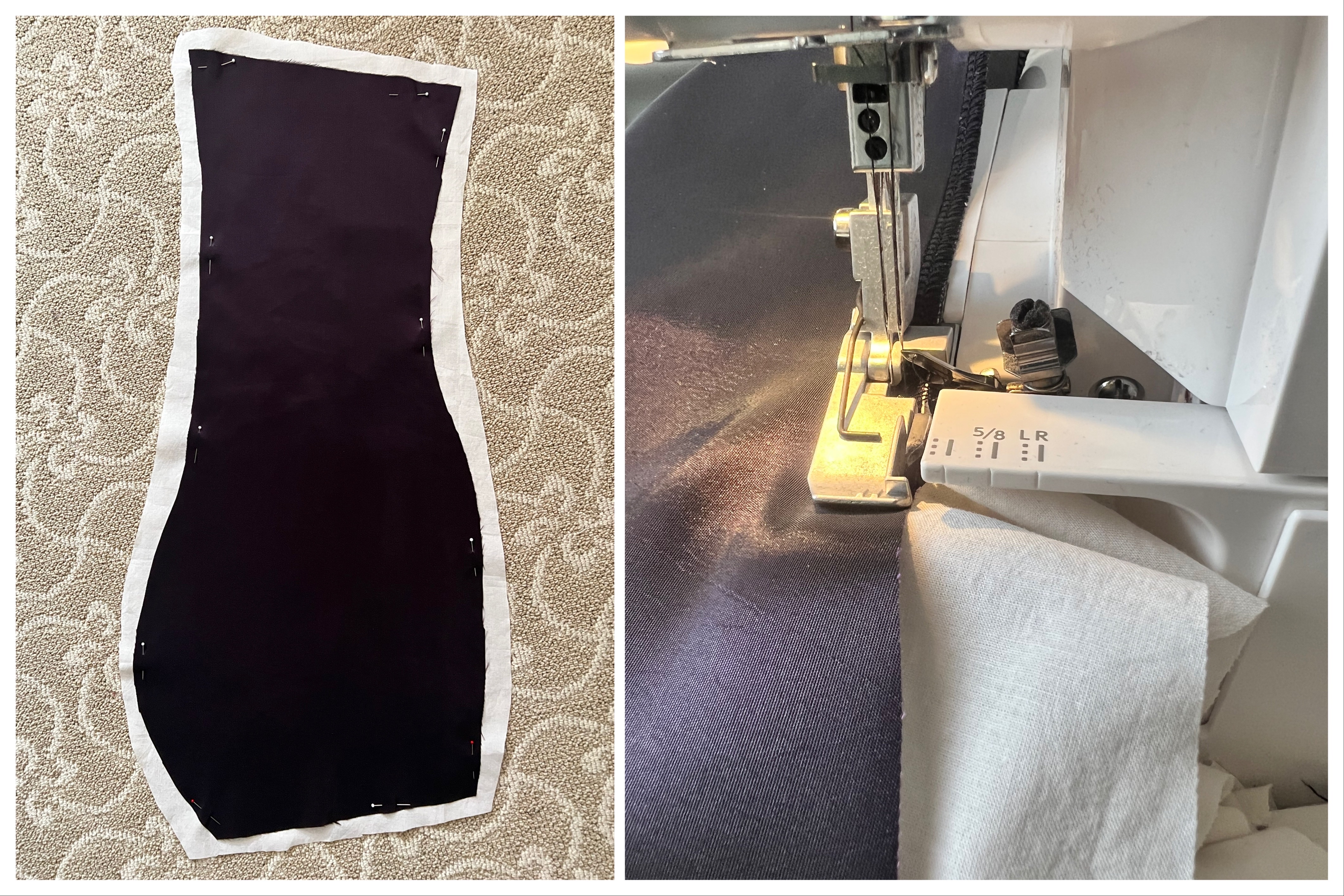
Tip/trick #4: To add extra body to thin fabric, flat-line it by adding an extra layer of fabric. However, to save time on cutting your pattern piece out twice, only cut out one layer and put it on the second. Use your serger to sew the pieces together and trim the excess at the same time!

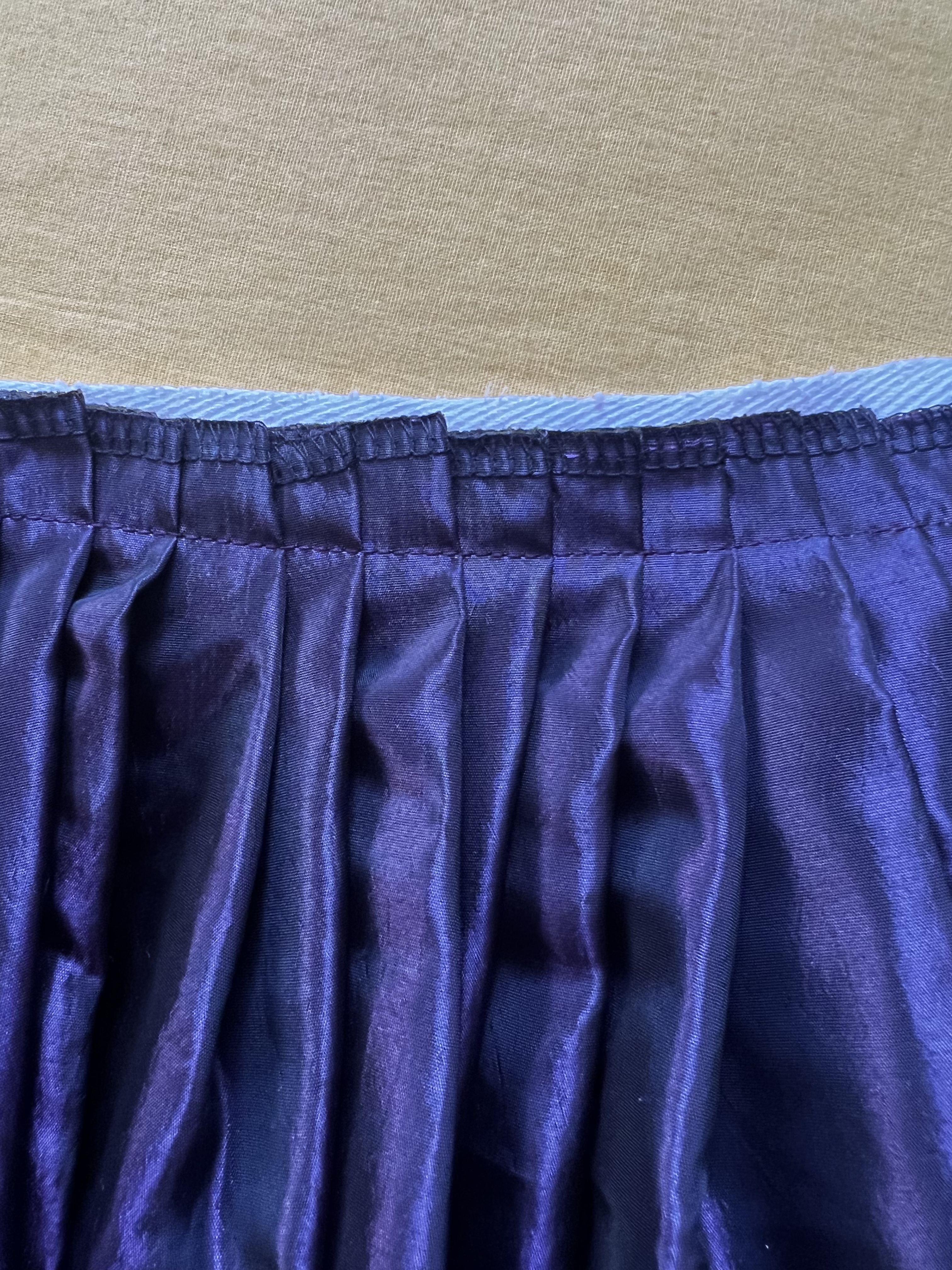
Tip/trick #5: Use knife pleats instead of cartridge pleats. Historically many gowns of this type used cartridge pleating to gather up the skirt. However, this is time-consuming and uses hand-sewing so I prefer knife pleats when I want to make the costume quickly. First serge the raw edges of the top edge of your skirt, then pleat, then stitch down the pleats. 

Tip/trick #6: If you want to skip making a waistband for the skirt, and have the convenience of a one-piece dress instead of a separate bodice and skirt, when you stitch down your skirt pleats sew them to a piece of twill tape. Then you will whip-stitch your twill tape to the bodice. 

Tip/trick #7: If you are trying to sew thing tubular like a sleeve or cuff, remember you can remove the flatbed/storage tray of your Janome to turn it into a free arm machine, making it easier to maneuver your sewing project. 

Tip/trick #8: To save time installing metal eyelets or sewing thread eyelets by hand, use the automatic eyelet stitch under your buttonhole menu. After sewing, use an awl to open the holes and put your lacing through. (My dress closes in the back with adjustable lacing).

Tip/trick #9: To save time doing math, use an expandable sewing gauge to mark out where your evenly spaced eyelets should be. This also works for measuring out buttonholes and pleats.

Tip/trick #10: To avoid having an obvious machine-sewn hem, but not have to go through the effort of hemming your skirt by hand, you can cover your machine-sewn hem with a pretty trim. For this hem I serged the raw edge, folded it up inside the skirt, stitched it down, pinned on trim, and then sewed down both edges of the trim using a matching thread.

Thank you for reading and I hope this helps you with your costumes!

Photo by Daisy Rose Coby of Memento Moda. With my friend Sara of La Dauphine Costuming.

Making a Hobbit Dress to Watch the Rings of Power

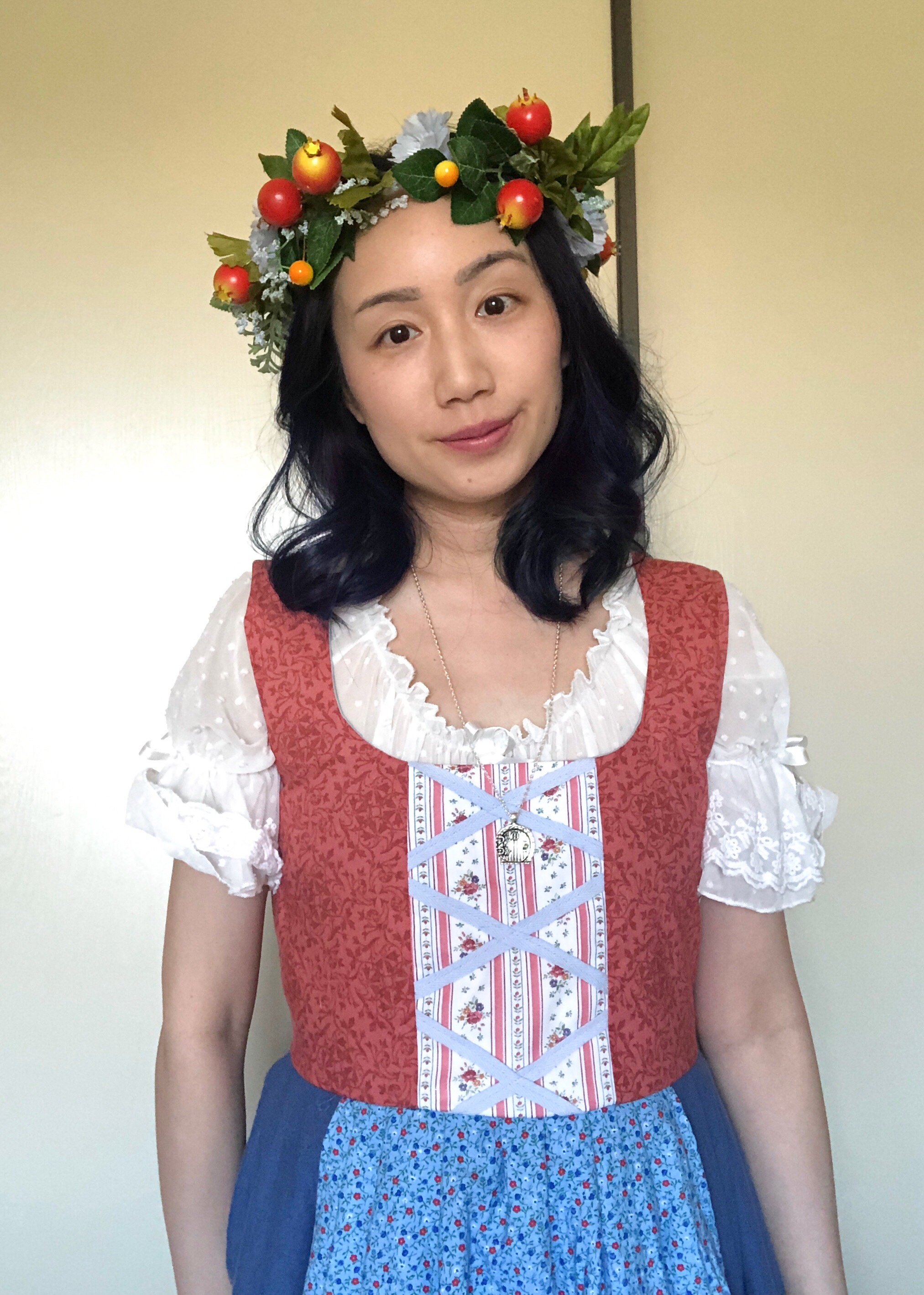
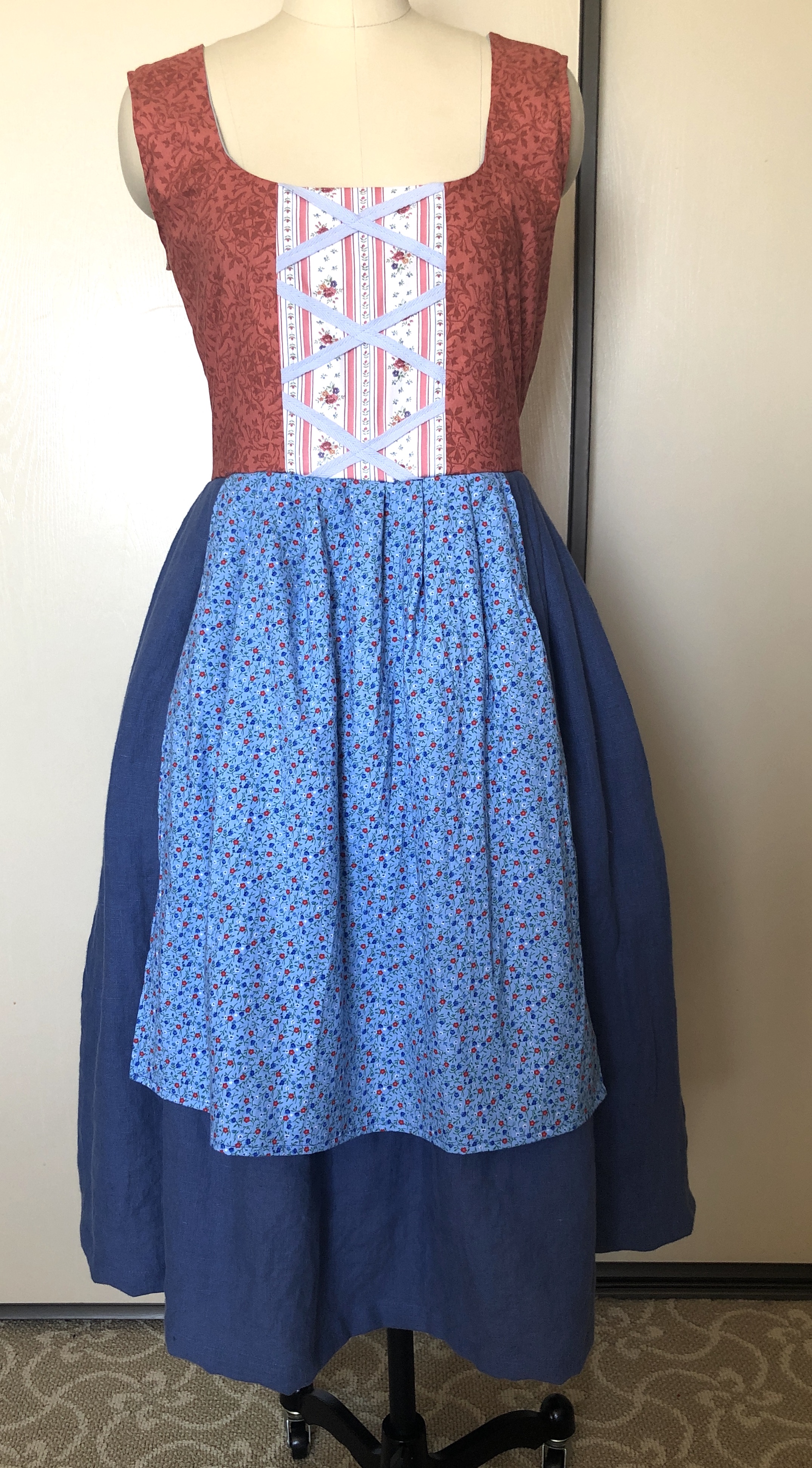
If you are a fan of the Lord of the Rings books or movies, you’re probably a fan of hobbits, those charming folks whose ladies wear very cute pastoral outfits. With the new Rings of Power show coming out soon I thought this would be a good time to show you an easy hobbit lady outfit. Many of the hobbit women wear a 4 separate garments: a blouse, a bodice that laces up the back, a skirt, and an apron. To simplify the sewing and getting dressed, I decided to turn the last 3 items into one zippered dress. This dress also works great for a trendy cottage core look, and is a wonderful stash-buster for combining all those various fabric scraps you have that aren’t enough to make up a full garment by themselves.

Note: I am a member of the Janome Maker program and this skirt is sewn on a Janome Skyline S9 and a Janome FA4 serger. (This post is sponsored by Janome but all content and opinions are mine).

Materials needed:

  • 2 yards fabric for skirt (I used 58″ wide blue linen)
  • 1 yard fabric for apron (I used a floral print; you can use a lace fabric too)
  • 1 yard fabric for bodice
  • 1 yard fabric for bodice lining
  • Fabric scrap for center front bodice
  • 1-2 yards colored twill tape or ribbon
  • 1 zipper plus various matching threads

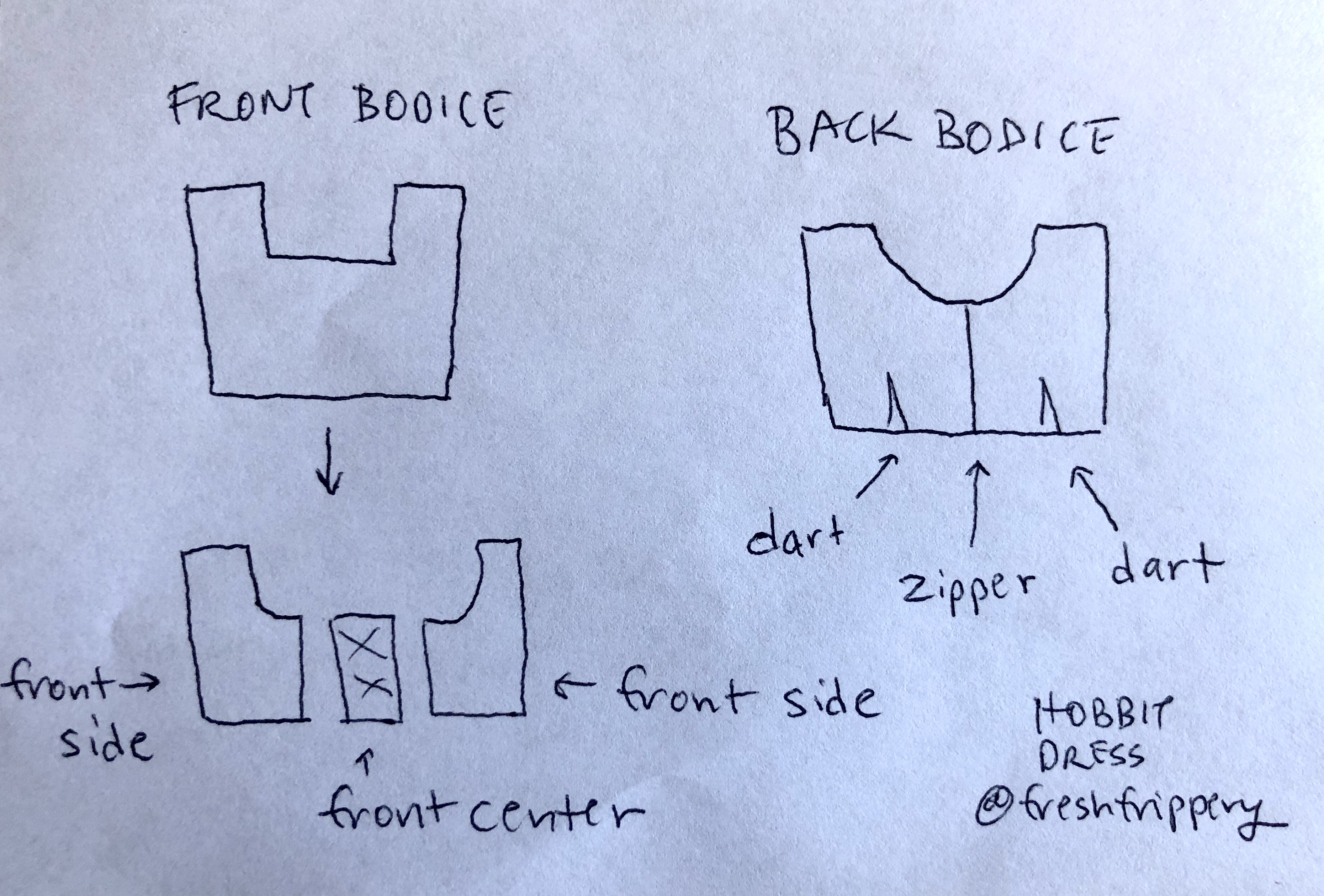
I self-drafted my own pattern (with the basic shapes shown below) but you can start with any square-necked basic bodice, or a dirndl-style dress that fits you. You will take your pattern and slice the front bodice into 3 parts (a front center and 2 front sides). The front center is going to be a different color of fabric that we will add criss-crossed twill tape or ribbons to. The width of your front center will depend on your body measurement, but for reference I cut a 6″ wide panel (for a 5″ finished panel with seam allowance) for a 34″ bust.

The first thing you will make is the front center panel. Put down strips of twill tape or ribbon in a criss-cross pattern on your rectangle and stitch them down. The raw edges will get trimmed and then sewn to the front side pattern pieces. (If your decorative fabric is thin like mine, then you will want to back it with a second piece of fabric).

Once you have the front center prepped you’ll sew it to the front sides, then sew the bodice backs to the front sides, and also join the shoulder seams according to your dress pattern. For the bodice lining you’ll do similar construction except you’ll skip making a decorative front center panel. Don’t forget to put darts in your back panels if your pattern calls for them.

Stitch the fashion and lining layers right sides together at the necklines and flip right side out, creating a clean edge at the neckline. For the armholes fold the raw edges in, pin in place, and top-stitch. For the center back where the zipper will go, serge the raw edges.

To make the skirt I used 2 rectangular panels of 58″ wide fabric cut to a length of 30″ but the length can vary based on your preference for a longer or shorter skirt. (I am 5’6″ and after some length is taken up through construction and hemming the skirt falls a few inches below my knee).

Optional: If you want a pocket you can cut a strip from one of the skirt panels and use that to cut out pocket pieces. I like to use my cell phone and hands as guides for how big the pocket should be. Serge all the raw edges of the skirt and pocket pieces first. Stitch one pocket piece to one skirt panel at the edge, right sides together. Put the right sides of the skirt panels together with the pocket pieces flipped out to be right sides together as well. Sew down the skirt side seams and around the pocket as shown by the pins, leaving an opening for your hand to reach in.

For the apron I cut out a 22″ wide and 20″ long rectangle (with the exact size according to your preference). You will want to hem the sides and bottom of the apron to finish the edges before pinning it to the center of the front skirt panel at the top edge and then serging the raw edge of the top of the skirt.

Split the back skirt panel down the middle to allow for a zipper and serge the new raw edges.

Pleat the top of the skirt to fit your bodice, matching up the side seams of each. Sew the bodice to the skirt and press the waist seam open and flat.

Insert a zipper down the center back from the bodice to part way down the skirt, then finish the rest of the back skirt seam.

Hem the bottom of the skirt by folding it up twice to your desired length, and your hobbit dress is done! Pair it with a cute blouse and a floral headdress and you will fit right in at the Shire!

Thank you for reading!

My Historical Loki Variant Cosplay (Borgias-Inspired Renaissance Dress Costume)

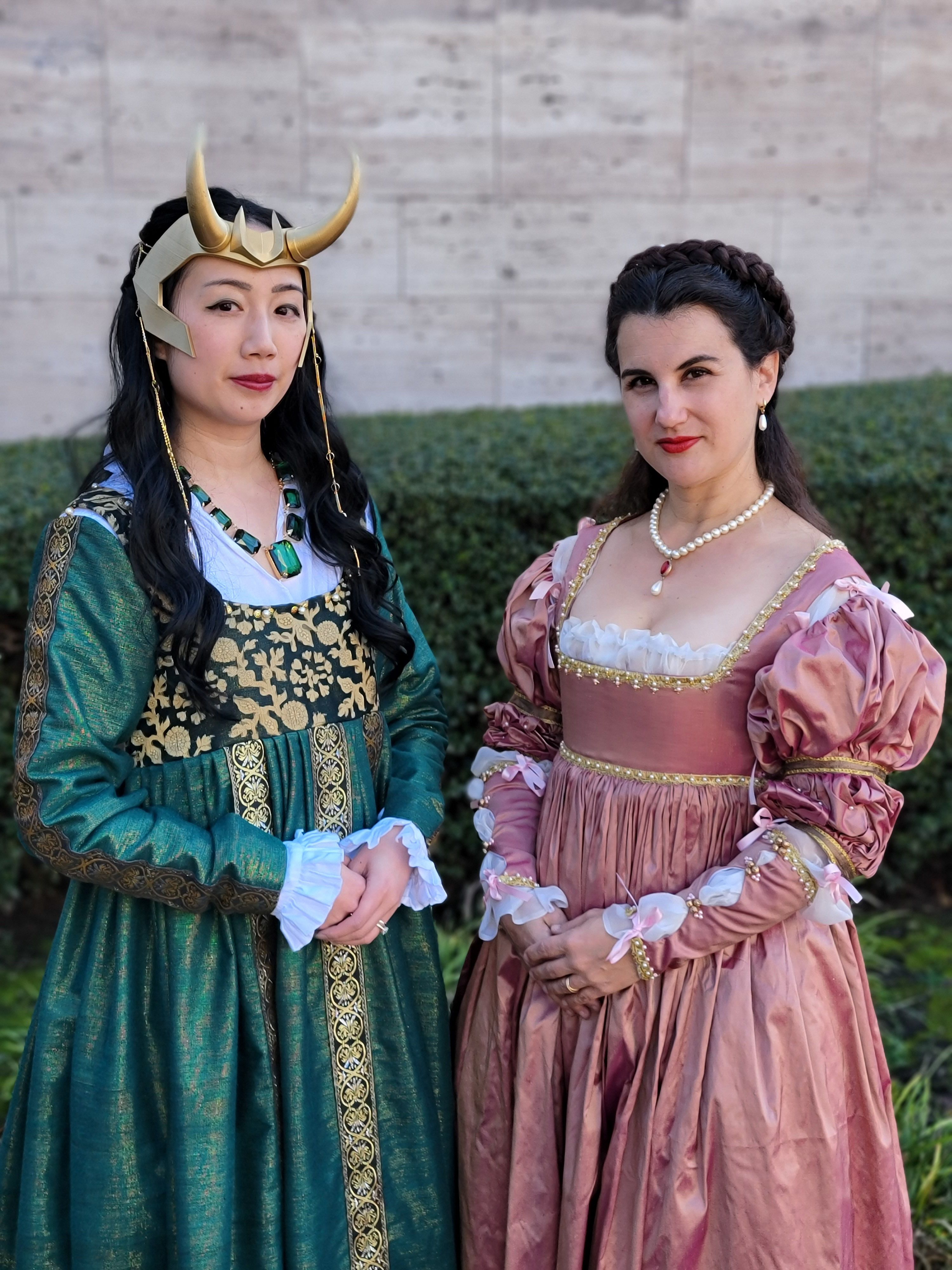
I was making a Borgias-inspired Renaissance dress and decided to lean into to the green gold color scheme and make it a historical Loki variant costume. I wanted a Renaissance gown but being shiny and pretty was more important to me than historical accuracy so this isn’t pegged to a specific decade, but rather a look inspired by both the Borgias HBO show and the character Loki from the Marvel Cinematic Universe.

The dress is made from beautiful green and gold shot raw silk suiting. The bodice uses the same fabric but with a silk/rayon organza burnout overlay, and the lining is a black cotton canvas for structure.

Rather than using a commercial pattern I Frankensteined together math and modified pattern bits from previous costumes I made. The bodice is a shorted version of the kirtle I previously made using help from the Tudor Tailor book (Amazon affiliate link). I widened the shoulder straps and added some more seam allowance but it is otherwise generally the same.

The skirt is made of pleated rectangular panels. Each of the front and back are 1.5 panels wide, with the seam hidden under the metallic jacquard trim.

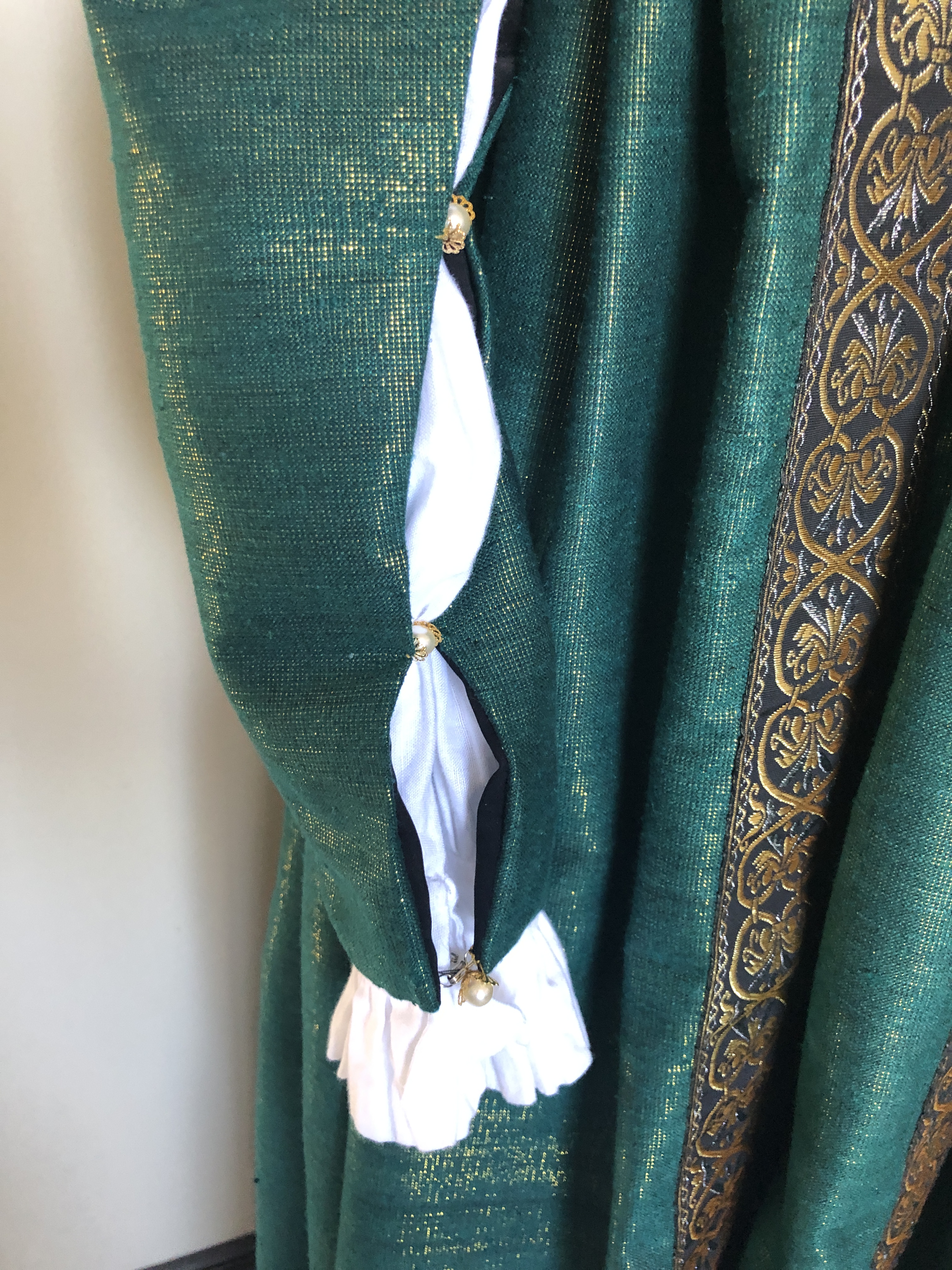
The sleeves are basic sleeve shapes but cut a little loose to allow for the chemise underneath. They are somewhat like tie-on sleeves except instead of ribbons I sewed them at the meeting points with a glass pearl and some gold bead caps.

Underneath the dress I wore a Tudor chemise because that is what I had on hand. (It was also made using a pattern from the Tudor Tailor book). However, at a later point I’d like to make a Renaissance camicia with a different neckline and much fuller sleeves to puff out through the gaps in the green sleeve.

LOKI CROWN

I bought the Loki crown as 3D printed pieces from Parton Prints on Etsy. The horns come as separate pieces for ease of shipping and I glued them on using E6000 glue. After a little sanding, I used a primer that someone recommended to me for 3D printed plastics Tamiya Gray Fine Surface Primer (Amazon affiliate link) I finished up with two coats of Rust-Oleum Metallic Spray Paint in Gold. Originally I used more E6000 to glue on a black elastic strap but decided to cut them off. Instead I used the nubs of those straps as an anchor point to sew on some gold necklace chains both as decorative dangling elements in the front and also as a visible gold band across the back to hold the crown on.

I am wearing a wavy black wig from Amazon (affiliate link) under the crown. I wish my hair was that luxurious! The necklace is a secondhand eBay find.

And here is a video of the dress in action!

I had so much fun pretending to be a villain. Here are a few of the fun TikTok videos I made as Lokizia Borgia:

  1. Transforming into Lokizia Borgia:

2. Asking you to join me in ruling the galaxy:

3. Starting my villain arc:

MATERIALS

  • 5 yards green/gold raw silk suiting from Fabricmartfabrics.com: $52.50 + $9.99 shipping (some left over)
  • 2 yards organza burnout from Fabricmartfabrics.com: $16.10 (shipped with silk suiting, a lot left over)
  • 10 yards metallic jacquard trim from Aliexpress store Lucky Zakka: $9.42
  • Thread, hooks/eyes, glass pearls, lining scraps, paint, glue, etc. from stash/left over from other projects: ~$5
  • Package of 9 mm gold-colored bead caps: $5.90 from Amazon (affiliate link); I have many left out of that 100 pack.
  • Gold chains: $0 (gifted from someone’s destash)
  • 3D printed Loki crown pieces: $32.12 including shipping from Parton Prints on Etsy

Total cost: $131.03 (with about $100 of that in the dress itself).

OTHER RESOURCES MENTIONED IN THE POST (Amazon affiliate links below):

I had a lovely time wearing this to a Sistine Chapel art exhibit with my lovely friend Sara, who took a number of the pictures in this post.

Thank you for reading!

Elven/ Moon Goddess/ Medieval Fantasy Dress

I made this fantasy costume back at the start of the year and realized I never wrote up a post! With the 20th anniversary of the Lord of the Rings films coming up, this is a good time to finally blog about this dress with elven vibes. I had fun walking around in nature, pretending to be regal, and hope to wear it to an actual event some time!

I made the main body of the dress using an embossed navy blue velvet, and the cape is a sheer netting with silver glitter stars.

I created moon phase appliqués out of silver glitter heat transfer vinyl with my Silhouette machine to decorate the front of the dress. (If you’re not familiar with HTV, the material is on a plastic backing. You iron on the appliqué and then peel off the plastic backing, revealing your design).

@freshfrippery

How I made the moon phase decals for my moon goddess costume #learnontitkok #crafty

♬ sonido original – xsunix

I glued crystals around the moons using E6000 Fabri Fuse (which is not the same as regular E6000). I glued larger crystals onto a piece of grosgrain ribbon to make the belt.

The pattern I used is Butterick B4827. It is a princess-seamed fantasy dress and I made very few modifications. I turned the lace-up back into a zipper back, and I added the cape. The cape is a long rectangle, pleated into the back neckline, with a cut open center slit part way down the back to access the zipper.

The front of the cape is sandwiched into part of the armscye shoulder seam, with excess removed, as explained in this video.

@freshfrippery

Reply to @sunflowerstardust how I put the cape on my moon goddess dress. #sewing #costume #learnontiktok

♬ original sound – freshfrippery

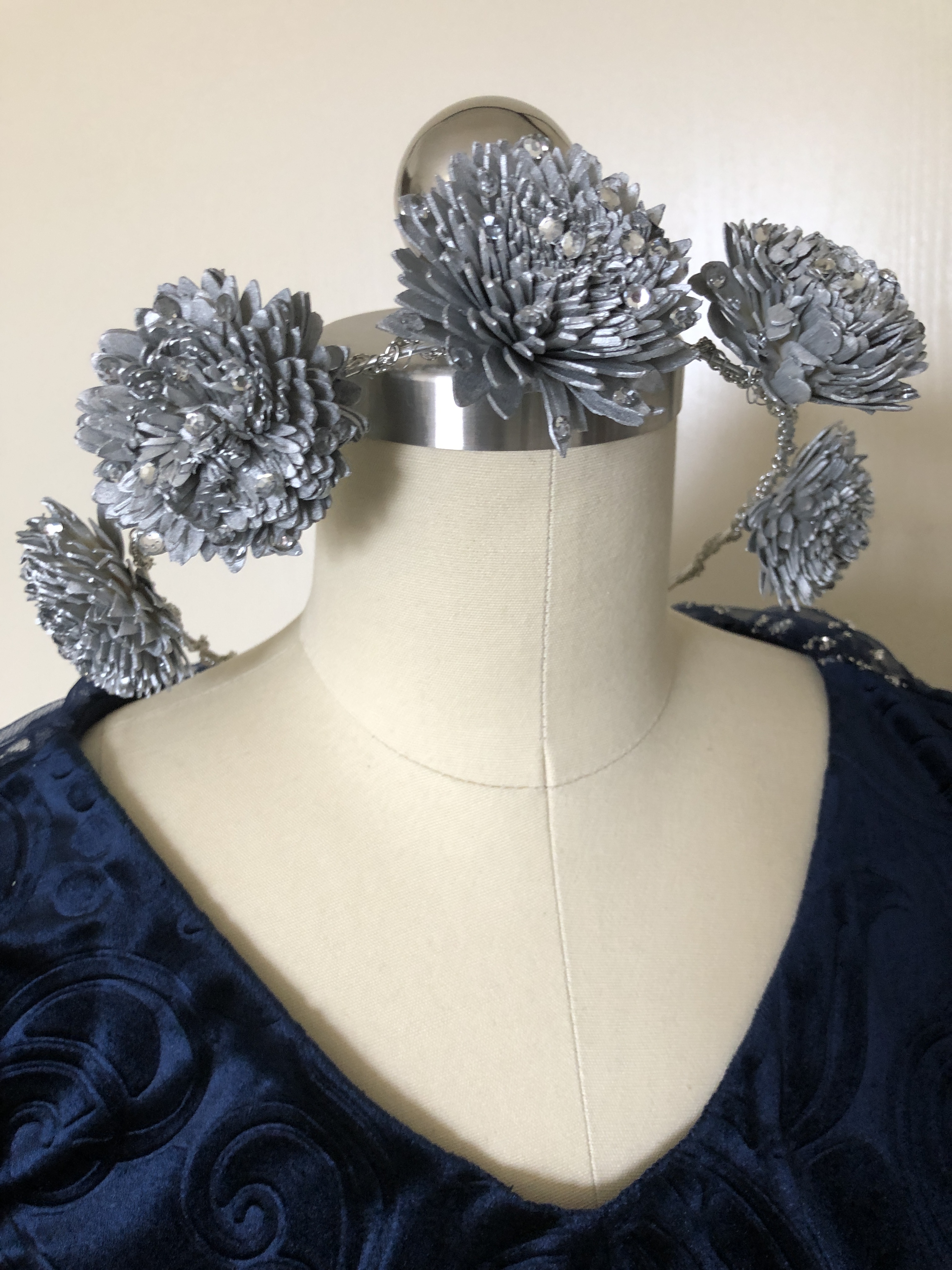
I made my flower crown by spray-painting sola wood flowers with Rustoleum silver spray paint. The base of the circlet is silver floral wire, and the flowers and a necklace are attached to the base using 26 gauge wire. I also glued crystals onto the petals using E600 Fabri Fuse. This video shows the process:

I have a few scraps left of the velvet and I am planning to make a pouch for carrying items. In my haste to whip up the long seams of this dress quickly, I serged all the panels together and forgot to add pockets!

Materials used:

  • 4 yards embossed navy velvet: $52.59 including tax and shipping from Amazon. The blue is sold out but there are other colors like black and ivory still available from Amazon (affiliate link). You can also find it at Fabric.com
  • 2 meters glitter star fabric: $19.84 including shipping from Aliexpress
  • Butterick B4827: $0 (previously used for another medieval princess project). However, I originally purchased it for $7.99 from Amazon (affiliate link).
  • Crystals, glue, flowers, thread, ribbon, wire, paint, etc. were items I already owned and mostly left over from other projects, but I’d estimate if I had to go buy that all new from a craft store I’d spend ~$20.

Total cost: $72.43 out of pocket plus miscellaneous stash items.

Thank you for reading! I took these photos on a cloudy day. Maybe one day I’ll get a chance to take some atmospheric night time photos!

A Hobbit Lady Costume for a Picnic

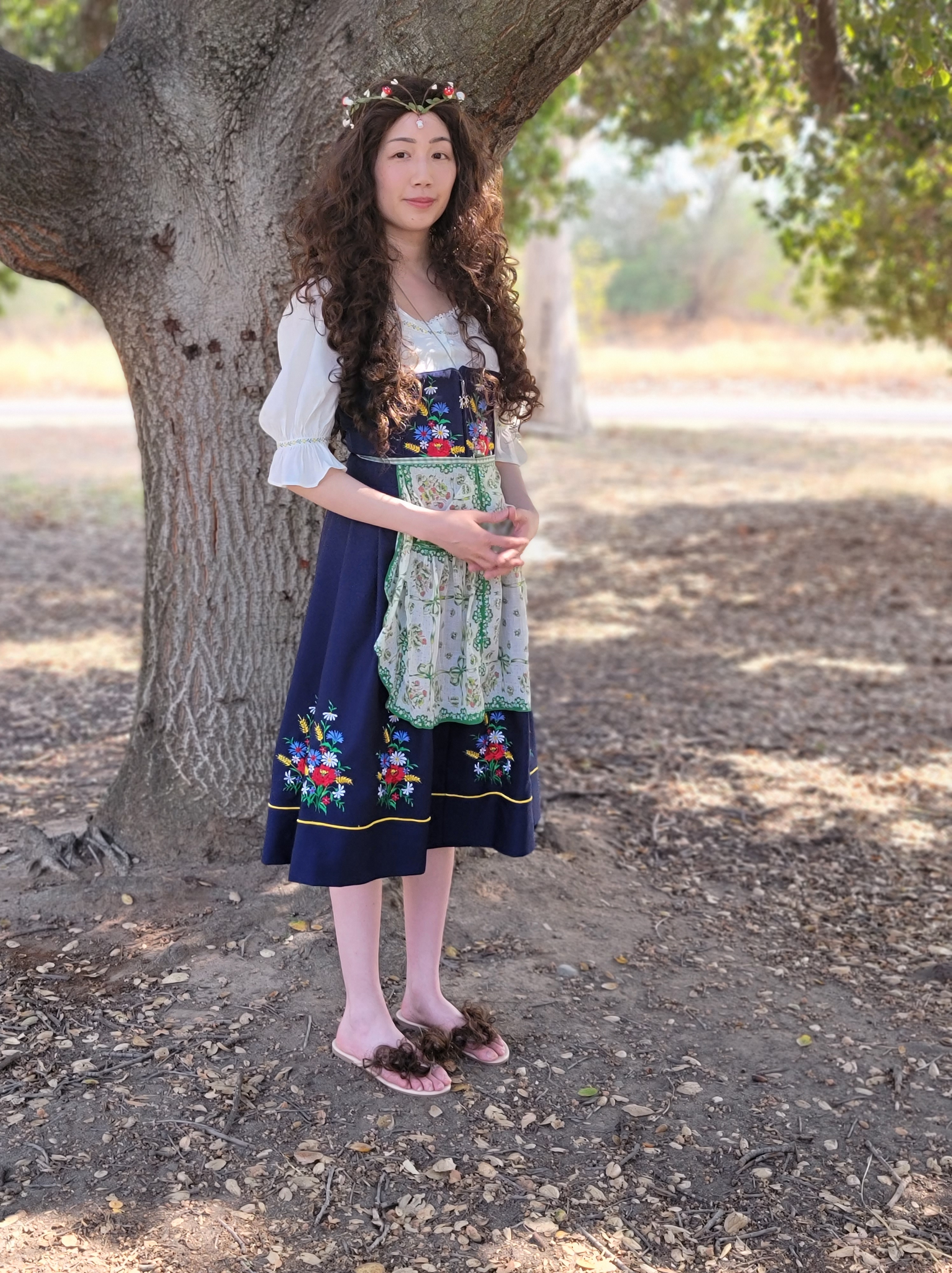
Last weekend I was invited to a hobbit picnic full of food, friends, and hairy hobbit feet! I didn’t have time to make a dress so I put together an outfit using items mostly from my closet. I’ve gotten questions about where I got my items so I will list my sources so you can put together your own hobbit costume!

My dress is an embroidered dirndl that I bought secondhand from eBay, but it was originally made by a company called Ernst Licht, an Oktoberfest/Tracht supplier.

My blouse is originally an Amazon one that I modified. It is called the “Floerns Women’s Square Neck Puff Sleeve Button Lace Elegant Top Blouse” (affiliate link). I removed the wide ruffled lace because it was a bit stiff and scratchy, and replaced it with a cheerful floral yellow trim. I used the same trim on the sleeves. (The elastic in the sleeves was a little tight so I removed some and covered it with the trim).

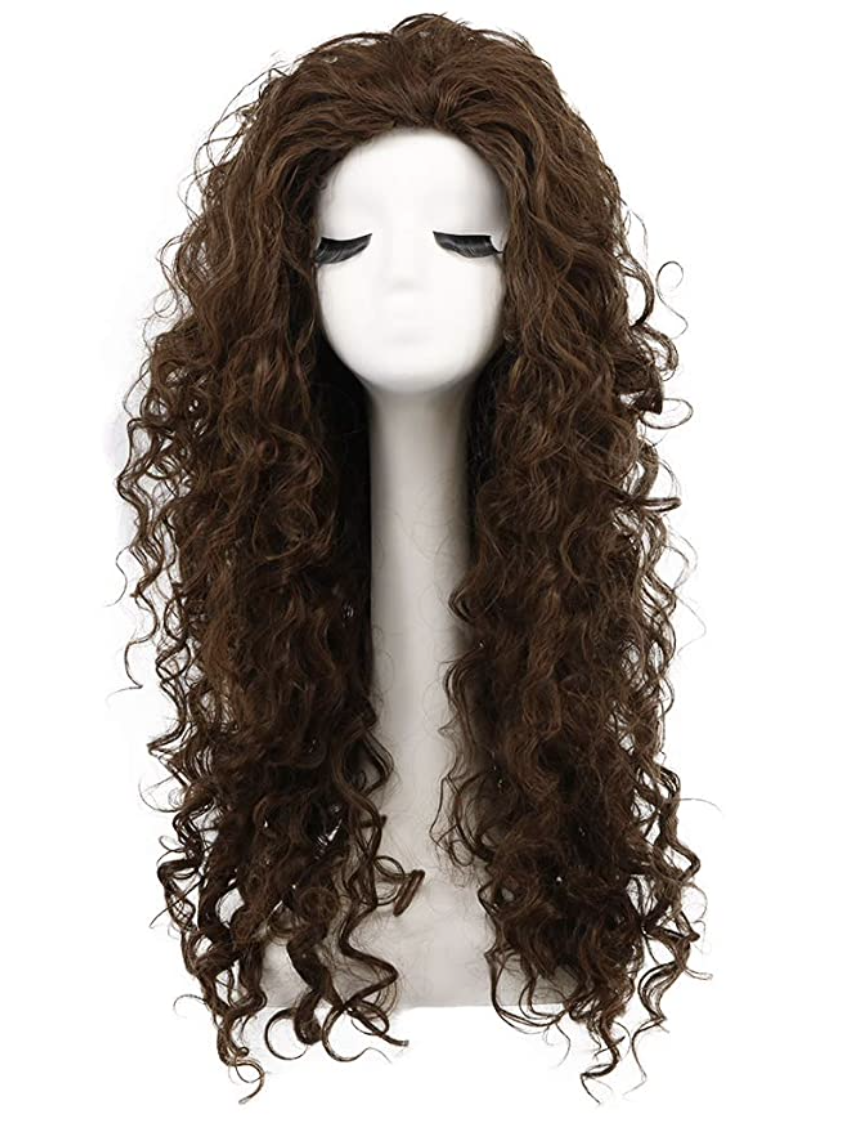
My wig is also from Amazon. It is called the “Karlery Women’s Fluffy Curly Dark Brown wig Halloween Cosplay Wig Anime Costume Party Wig” (affiliate link) and I thought it was very nice for $26.98! It was incredibly full and fluffy and a very natural-looking color and texture.

If you prefer a shorter wig with more defined curls, Arda makes a “Rosie Classic” that works well for hobbit costumes and some of my friends were wearing that wig at the picnic.

The mushroom crown was a birthday present from friends so I’m not sure where it was originally from, but if you search “mushroom tiara” on Etsy you’ll see items with a similar aesthetic.

For the hairy hobbit feet I hot-glued hair to a pair of nude sandals. (My wig was so full I was able to cut some curls from it without making a difference in the way it looked). You can get the same sandals “Shoe Land Falema Women’s Flip Flops Casual Thong flat sandals Comfort Slides” from Amazon (affiliate link) and I found them to true to my usual size.

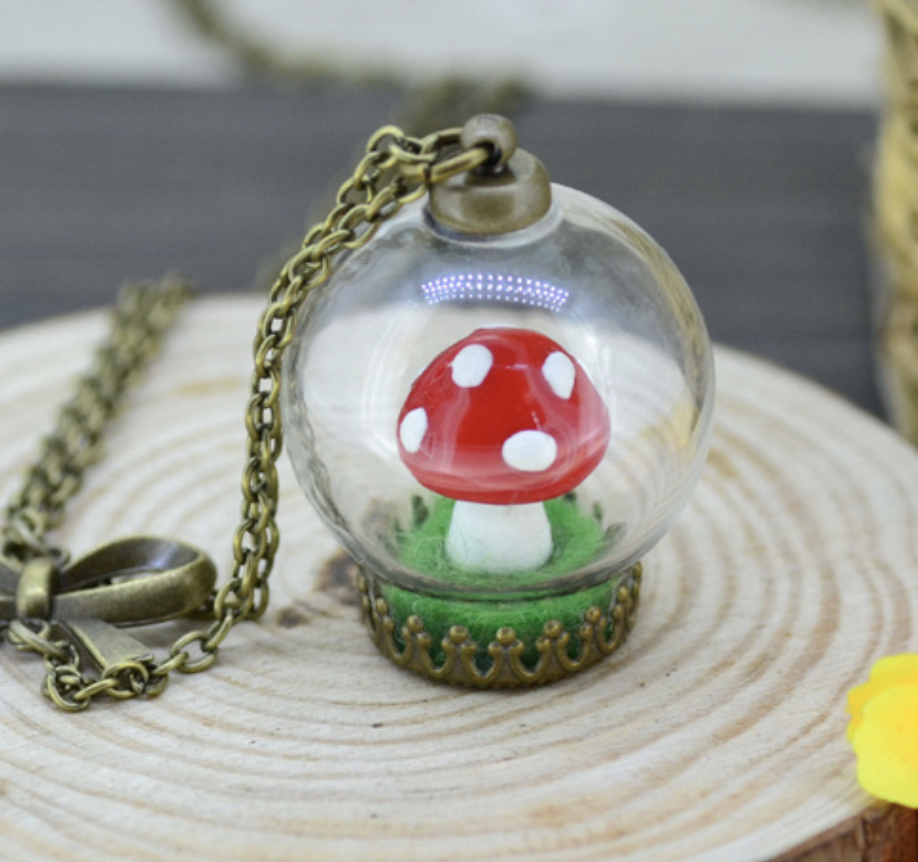
I wore a mushroom in a glass dome necklace I bought on eBay many years ago. It’s no longer available there but I’ve seen some very cute ones if you search for “mushroom terrarium necklace.”

The apron I wore is a vintage one gifted by a friend. It is made from cute printed handkerchiefs! You could make your own by sewing together some handkerchiefs, or make a simple apron by just gathering up a rectangle of colorful fabric and adding waist ties.

I hope this post was helpful to you for putting together your own hobbit costume!

(Thanks La Dauphine Costuming for taking photos of me!)

Victorian/Edwardian Pumpkin Witch Costume

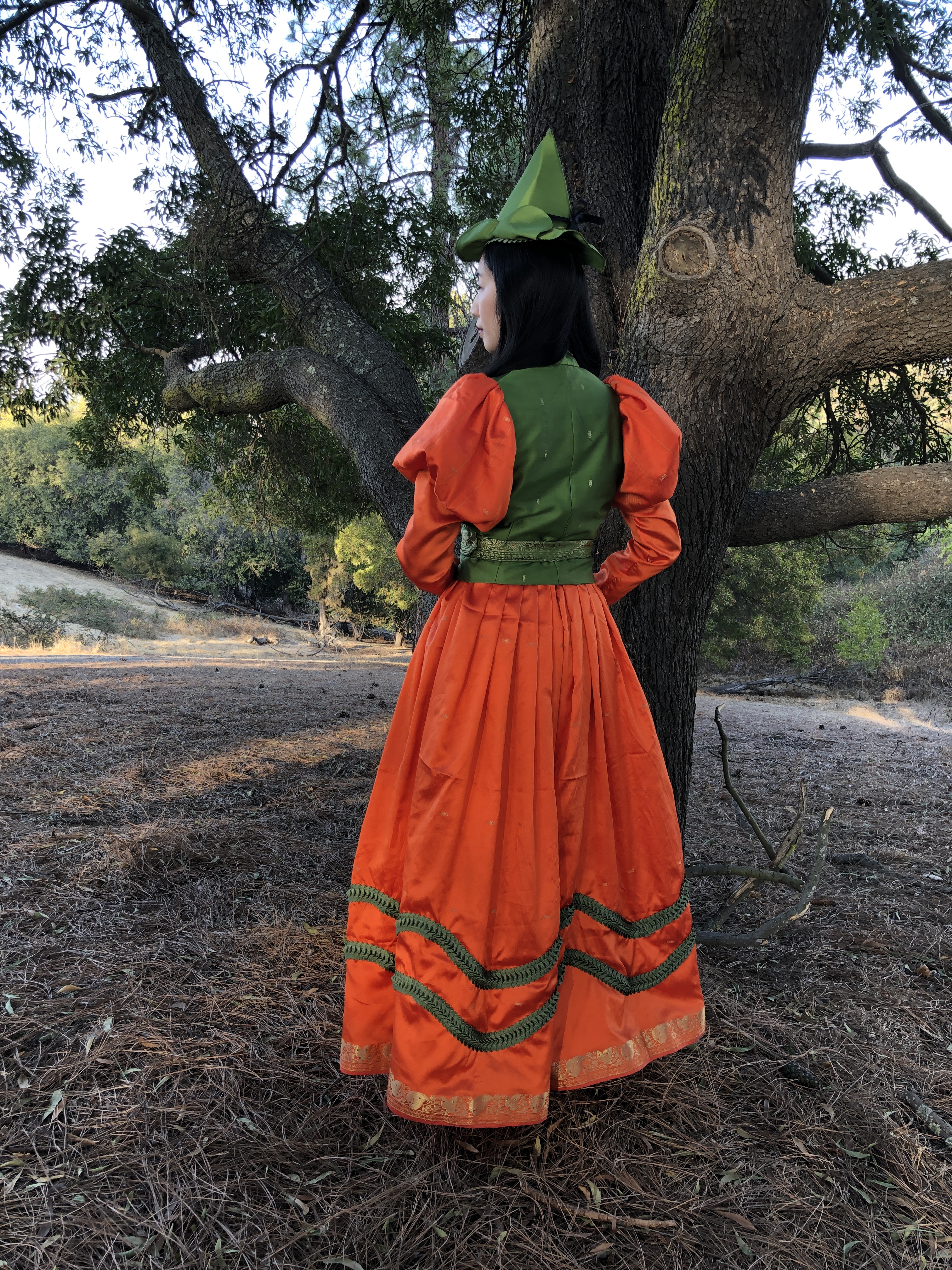
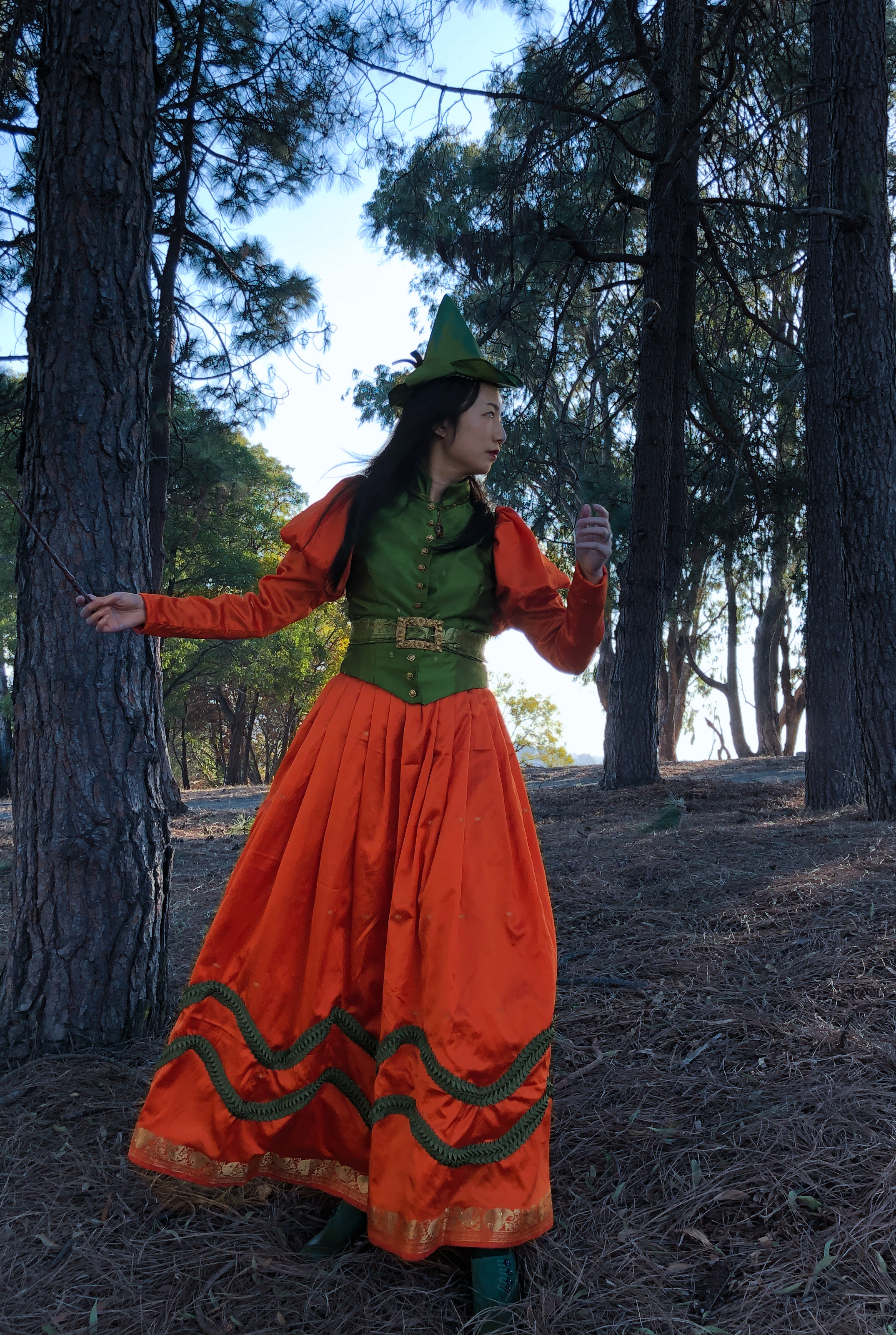
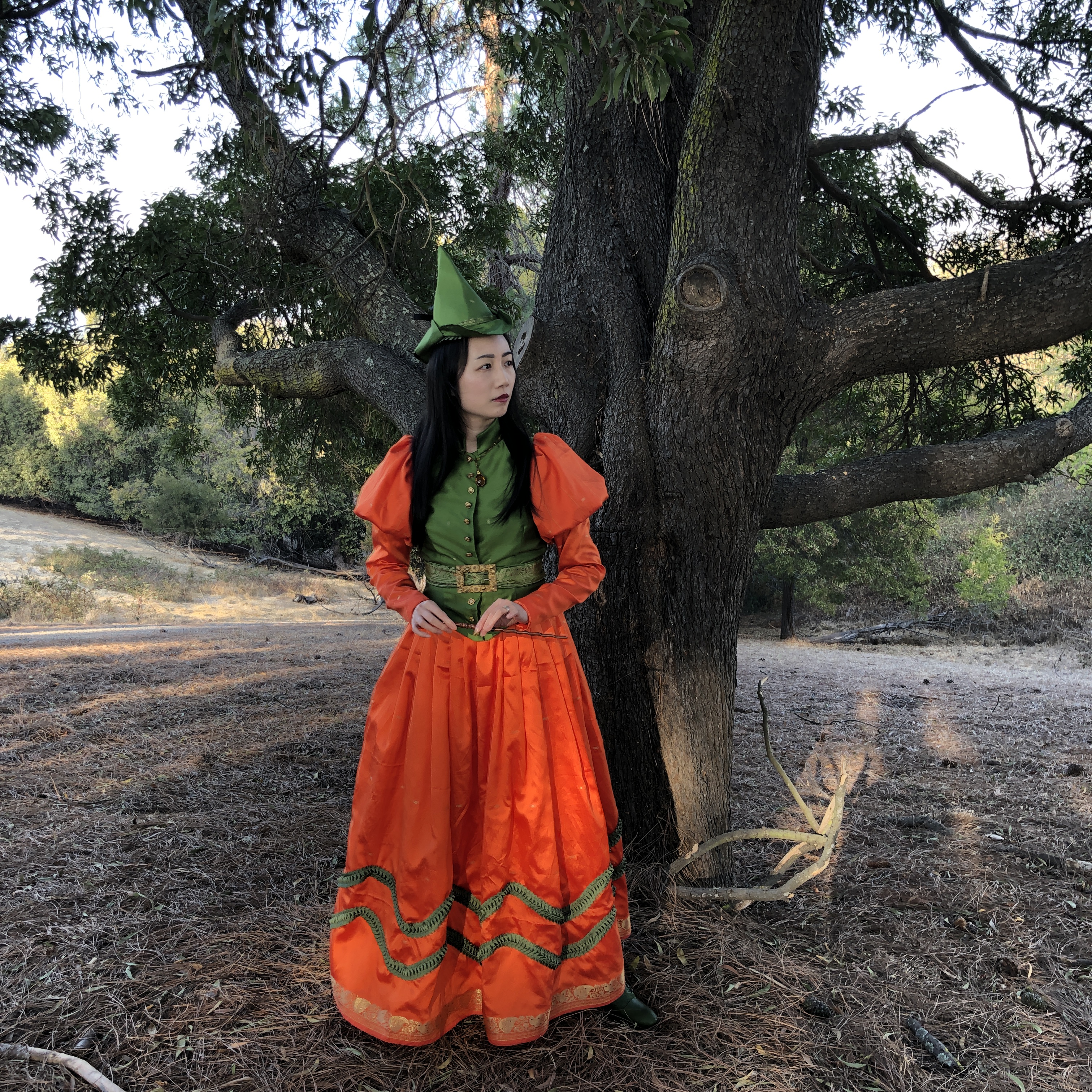
For Halloween I made myself a Victorian/Edwardian-inspired mashup witch costume. I got large amounts of sari fabrics rather cheaply from a local person after they were used as party decorations, and even after distributing most of it to friends I still had a lot left over, and decided they were perfect for a bright Halloween witch. Since this was a costume I didn’t worry about combining details from various decades.BZWR0824

The skirt is a basic pleated two-panel skirt with seams on the sides. One seam has a pocket and the other has an invisible zipper. Since the sari is thin and I had so much of it I flat-lined it with more of the same.IMG_3705

The blouse and vest patterns are both from Black Snail Patterns on Etsy. They are the 1890s Late Victorian Day Blouse/Bodice and 1890s Edwardian Ladies’ Vest. Because this was meant to be a Halloween costume I took a “theatrical” approach to the construction and skipped a lot of the detailed and historically accurate instructions in the patterns such as creating facings, boning, etc. so I cannot comment on those. As usual, I did find the pattern pieces to be well-drafted and needed very little adjustment.  My biggest cheat is I sewed the sleeves from the blouse pattern directly to the vest to make one garment. This saved me a lot of time, and also made the costume less warm with less layers!XWJE4219

Instead of making lots of buttonholes for my small gold buttons I did hidden hooks and bars down the front of the bodice and the buttons are decorative. WRIE9403

The belt is made from a scrap of the green sari fabric, paired with a vintage belt buckle. The buckle is actually plastic painted gold but looks pretty good from a distance!IMG_3471

The green pleated grosgrain trim was purchased pre-made from Amazon (affiliate link) and comes in other colors. I used the olive color this time but you may recognize that I used a baby blue version for my pink striped bustle dress!IMG_3526

The hat was made using my own pattern for a Professor McGonagall-inspired deerstalker witch hat, and you can find the instructions on a previous post.OOMF7987

I’m afraid I didn’t do a great job tracking the yardage since I had basically unlimited fabric, but I would estimate that I used 3 orange saris (since everything was 2 layers) and one green one. The saris I got were used and pre-cut and were 3-5 meters each. Thus, my rough estimates for project costs are as follows:

  • 4 saris: ~$20 (yeah I got a great deal!)
  • 25 yard roll of pleated grosgrain trim: $9.50 from Amazon, and I have a lot left. (The trim usually runs about $40 a roll but I’ve bought other colors through random price drops).
  • Gold buttons: free from a friend
  • Vintage buckle: ~$10? (I don’t remember).
  • Thread, hooks and eyes, collar interfacing, lining: ~$5 (stash and scraps from other projects)
  • Bodice pattern: $8.60
  • Vest pattern: $7.37
  • Printing costs: $5.56 plus shipping (I had my A0 patterns printed by PDFplotting.com and the shipping was bundled with other things)

Total: ~$45 for materials and ~$25 for patterns I will reuse

Some final thoughts:

This project was all polyester. The fabric was pretty enough it didn’t “matter” if it was silk and I hope this a reminder that costumes don’t need to be expensive.

Did you notice that I pleated the front of the skirt differently than I did the back? I didn’t until I put the waistband and zipper on, and I didn’t care to redo it! Here’s a reminder that maybe “mistakes” aren’t really that big of a deal and probably most people won’t notice. 

I did some cheats to simplify construction.  What works for you is what works for you, whether it is historically accurate, historically appropriate, historically adequate, or historically adjacent!

Thank you for reading!IMG_3821

My necklace is antique glass and brass from the 1930s and my shoes are from American Duchess.IMG_3526

2019 Costuming Year in Review

Oh it’s already February! I feel like the winter holidays happened recently but it’s already past the time I should be tallying up my 2019 costuming year in review! Each year I’m pleasantly surprised at the amount I’ve been able to make; I attribute a lot of this to the fact that if I can machine-sew or serge I will to save time!
First up, I made an Edwardian dress to wear to a Monet exhibit.IMG_7850

I wore a cotton 1830s dress to a summer picnic. (The bonnet and pelerine were reused from my winter 1830s silk dress).IMG_8621

For a wedding at a science museum I made a space dress with battery-operated twinkling lights!JJPQ1221IMG_0093

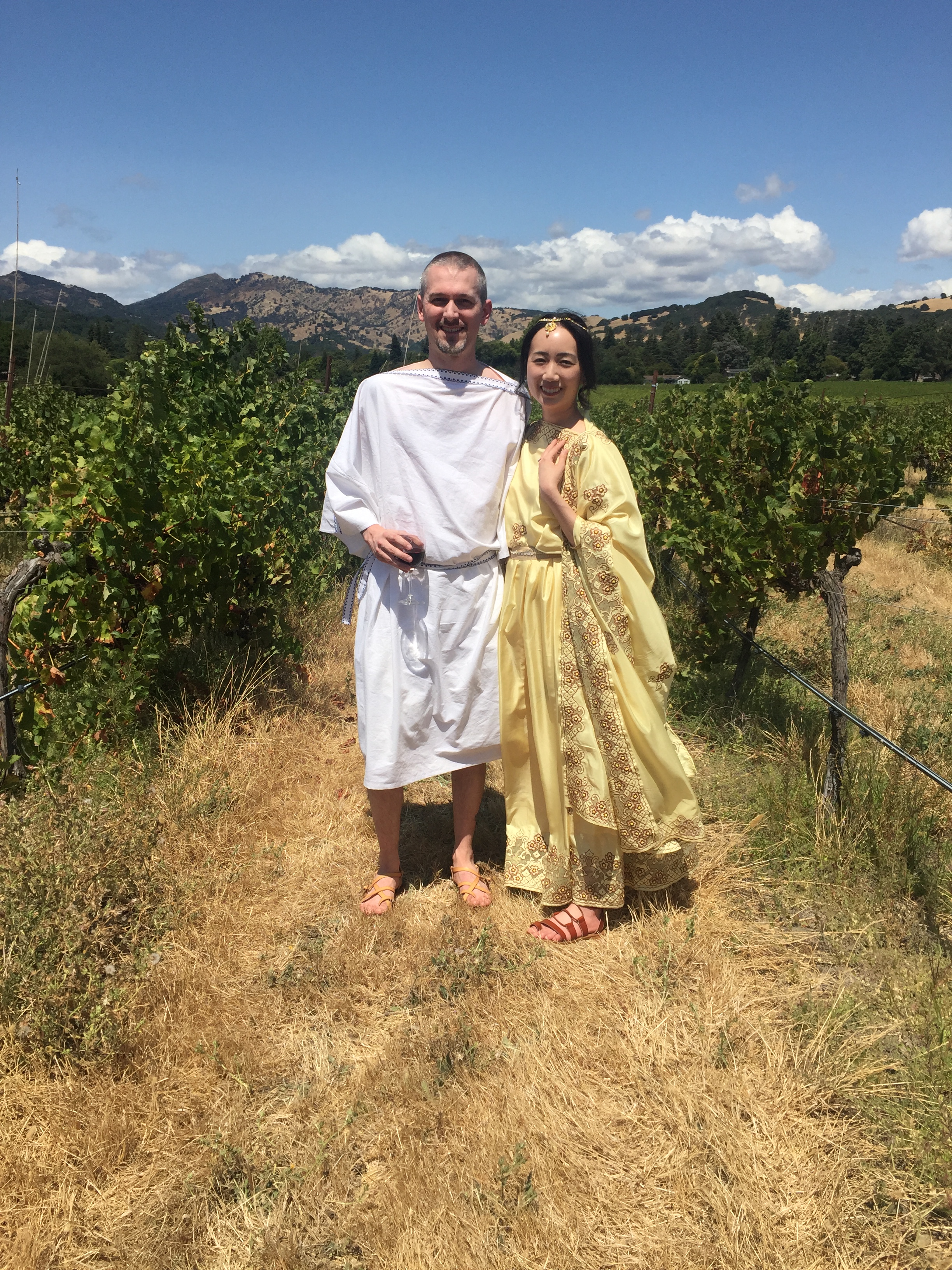
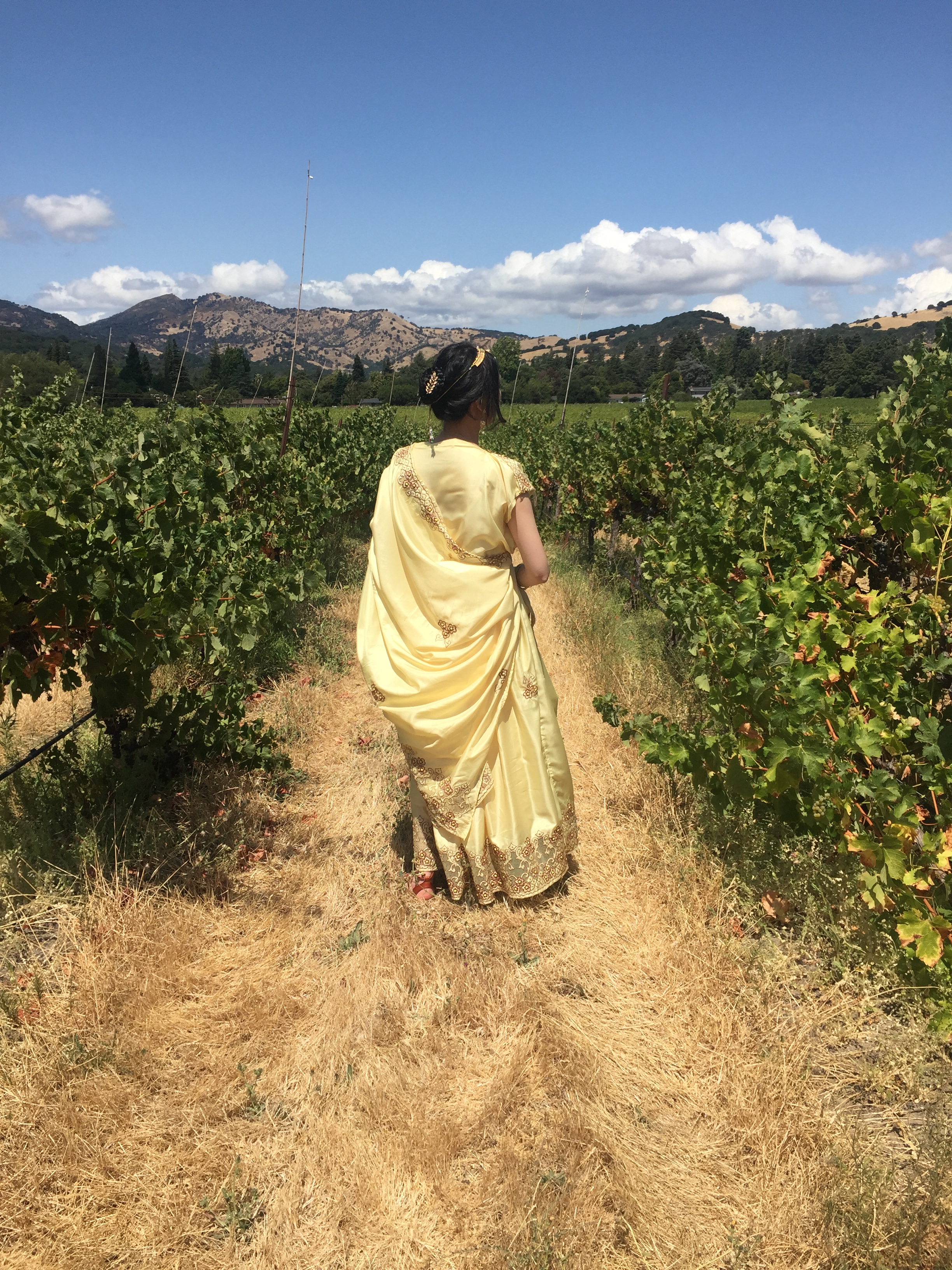
I made his and hers Roman-inspired costumes for a wine-tasting party. IMG_1198IMG_1244

For a late summer tea party I made some 1930s linen beach pajamas from a Decades of Style pattern.IMG_2109IMG_2115

I made an 1890s sweater, a wool skirt, and a Professor McGonagall-inspired deerstalker witch hat.IMG_3336

I have a tutorial for the 1890s sweater (no knitting needed!)WCIH9664

Plus a pattern for the witch hat!IMG_3350

In the fall I went to an 18th century-themed weekend getaway, where I put together a shepherdess costume (with stays by Redthreaded) and added trimming to finish a previously worn silk dress.

48867352163_323dd5c8f8_o

Photo by Gloria and Mike of In the Long Run Designs

wagner-house_48829563677_o

Photo by Gloria and Mike of In the Long Run Designs

For Rebel Legion I made a generic Jedi costume that consisted of an inner tunic, outer tunic, tabards, obi, pants, and hooded robe.

Miss Vivien_s Con-Ex-4

Photo by Ribidib

hoodfront

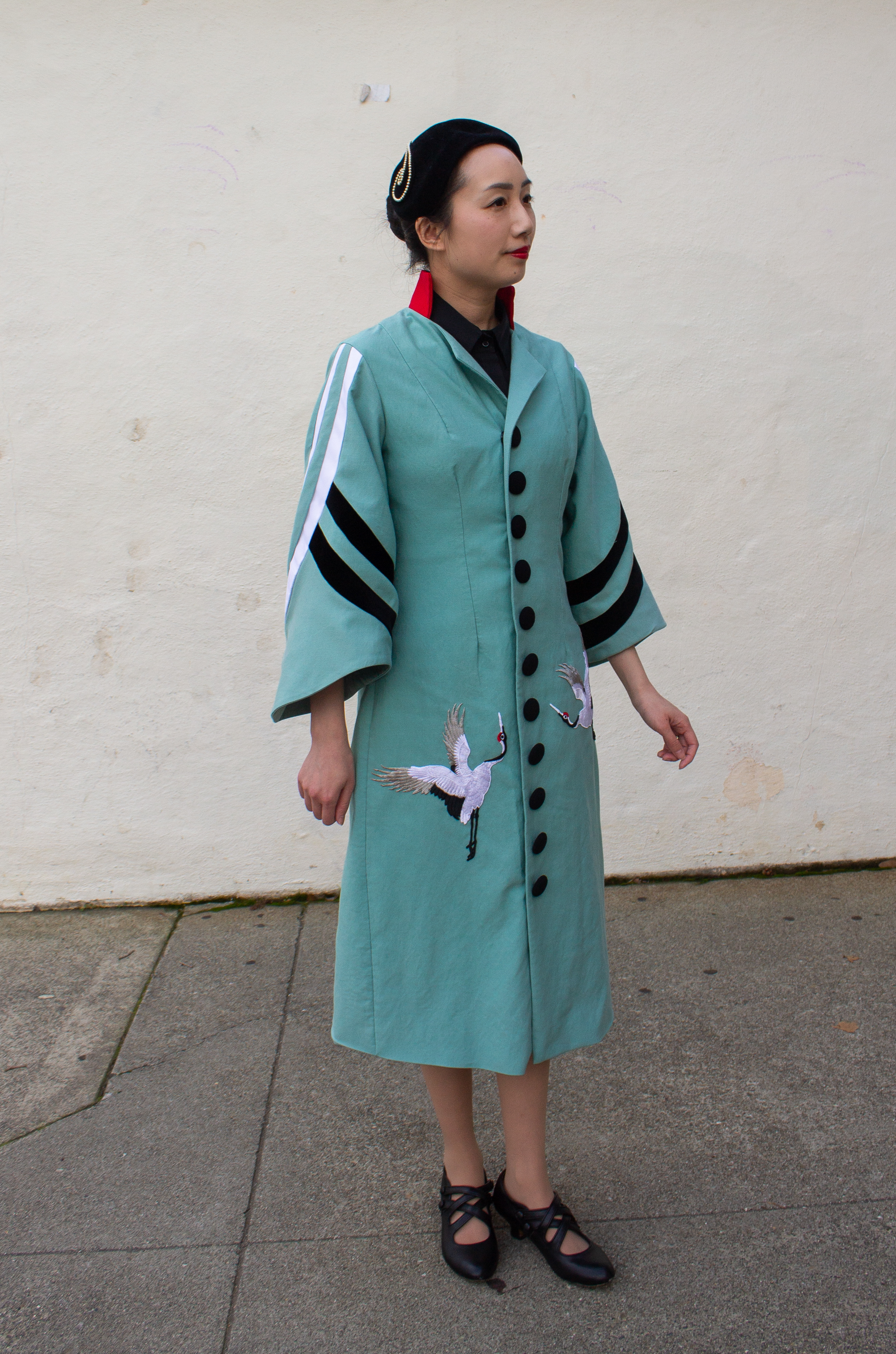
My last project of 2019 (not worn until early 2020 was the 1930s crane coat dress made from a Decades of Style pattern.20200125-IMG_3624

Once again that was more than I expected! I hope you had a productive 2019 and am looking forward to 2020!