Tag Archives: 18th century

2015 Year in Review

I don’t usually do an end-of-year review, but I finished more than I thought this year, so here we go! (My plans for 2016 are at the end of this post).

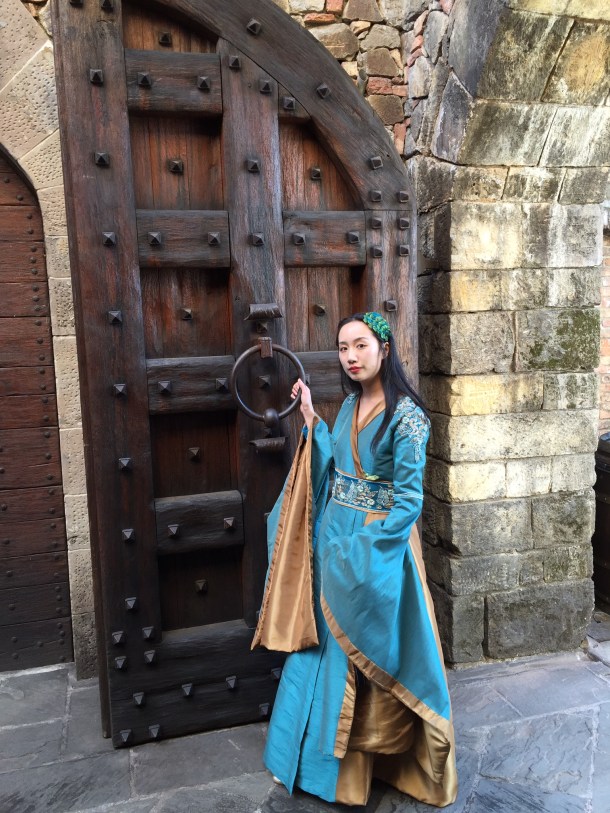
I made a Game of Thrones Kings Landing gown for myself, and an Oberyn
Martell-inspired costume for my husband.

IMG_1707

DSCN1478

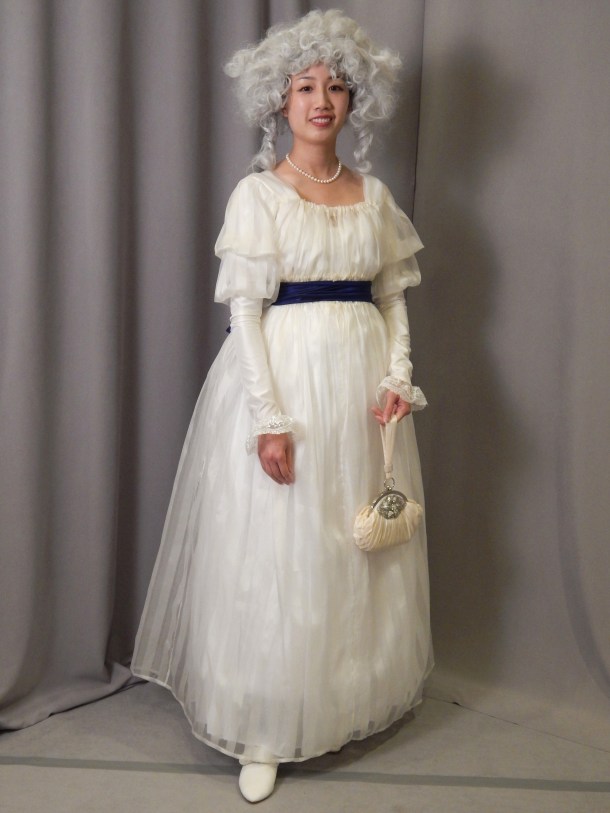
I made two chemise a la reines (one cotton and one made of sheer
striped silk) and wore them together to a few events.DSCN1814

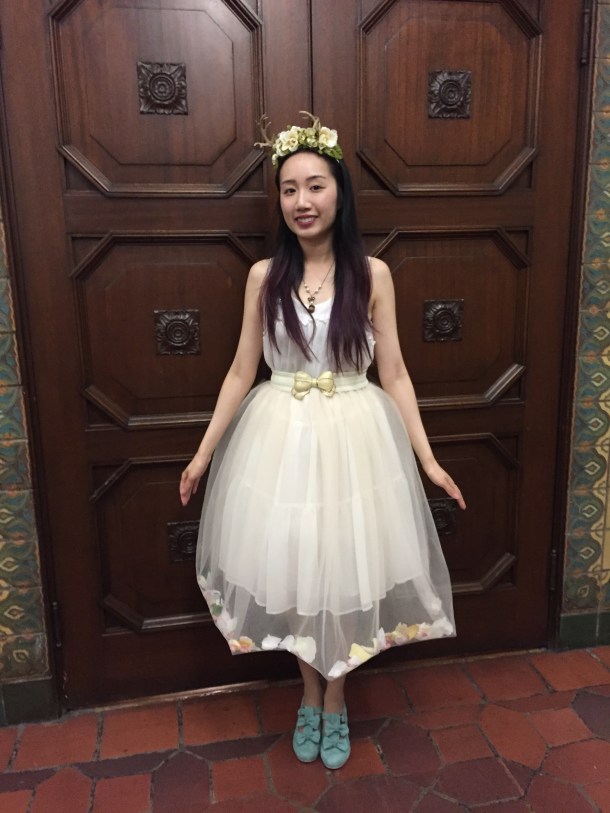
I had fun frolicking in a tulle fairy tale skirt.IMG_4895

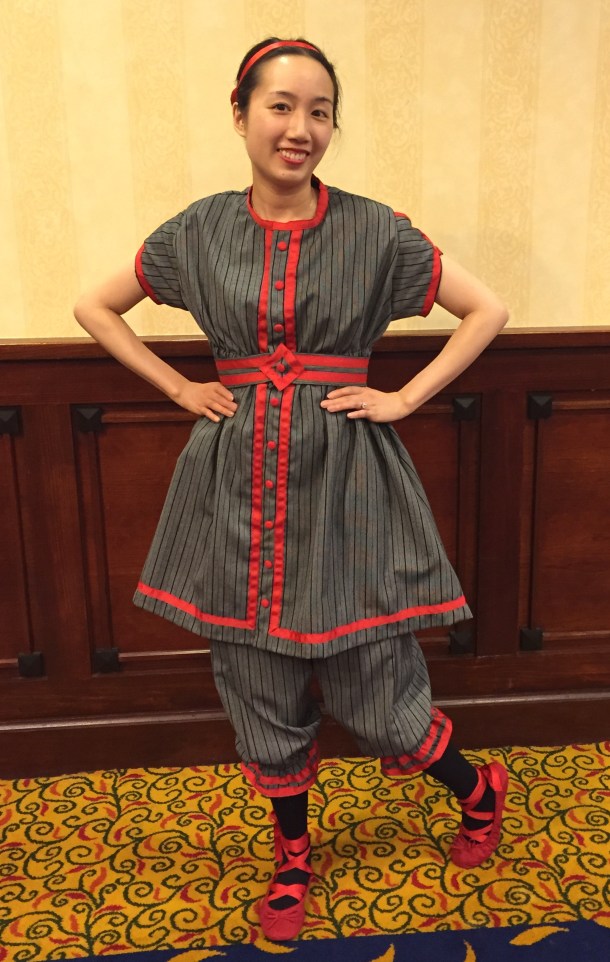
I made a wool-blend Victorian bathing suit.
IMG_5038

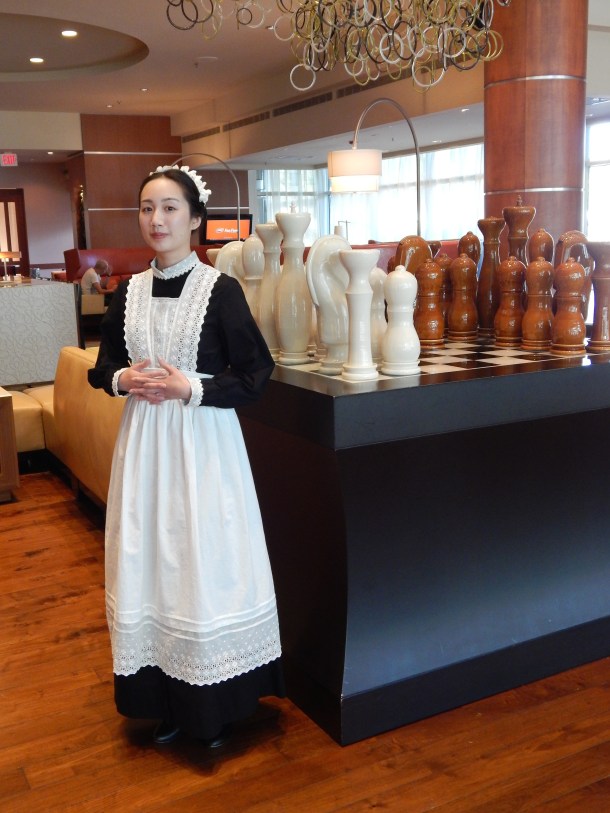
I was a maid from Downton Abbey.
DSCN1616

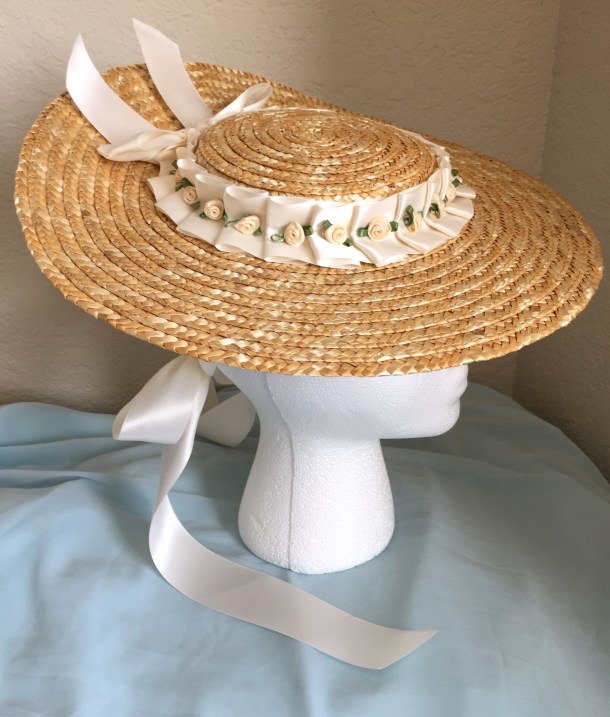
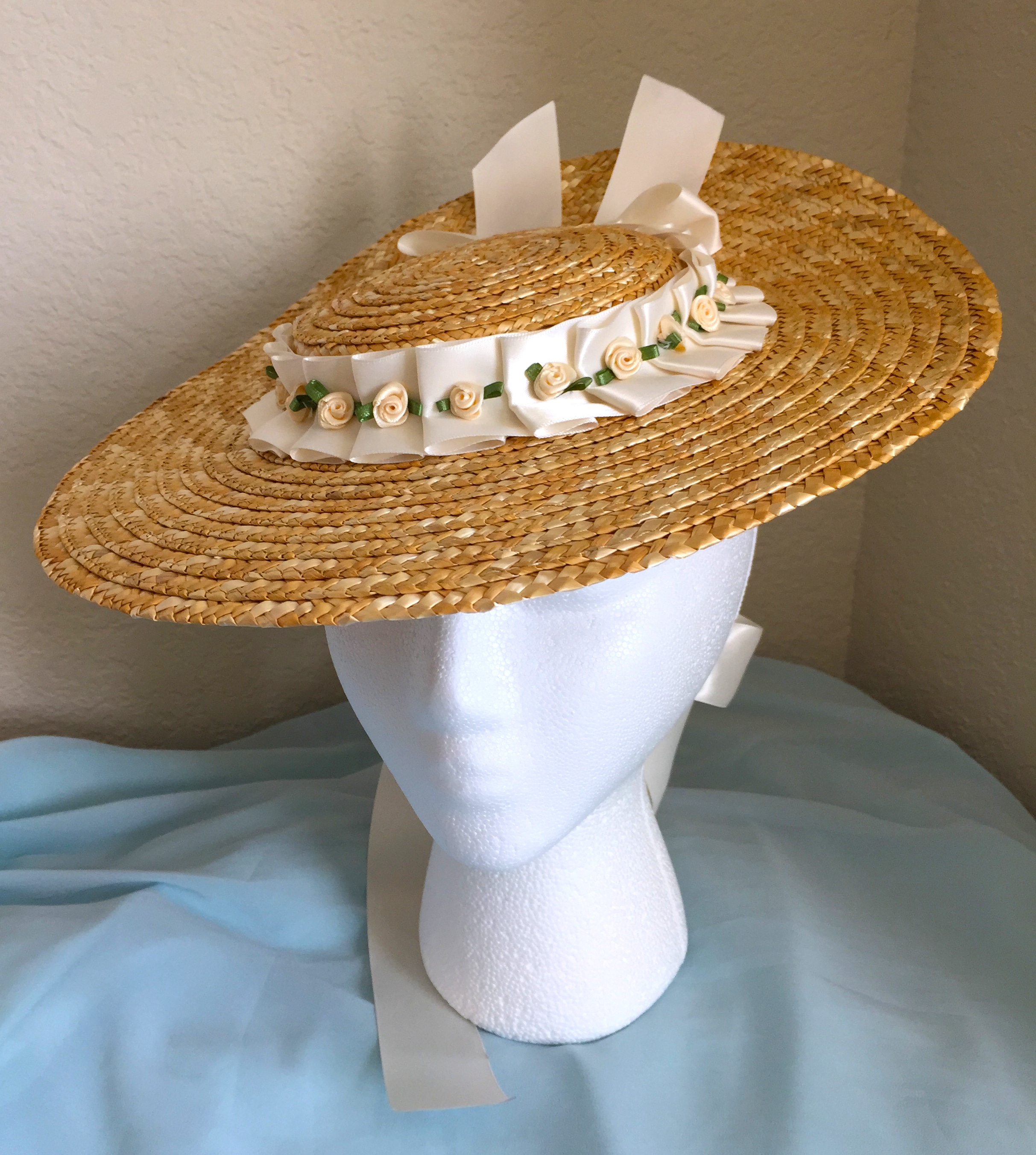
I retrimmed a bergere hat.
IMG_5412

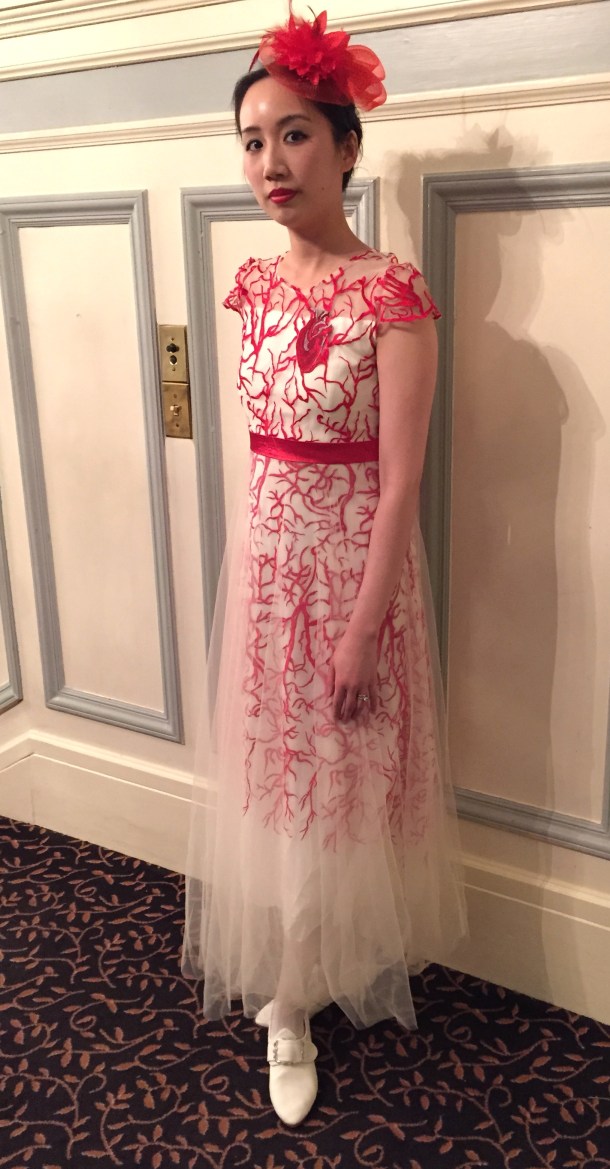
I attached appliques to a dress to make my Circulatory System outfit
for the Vampire Ball.
IMG_6037

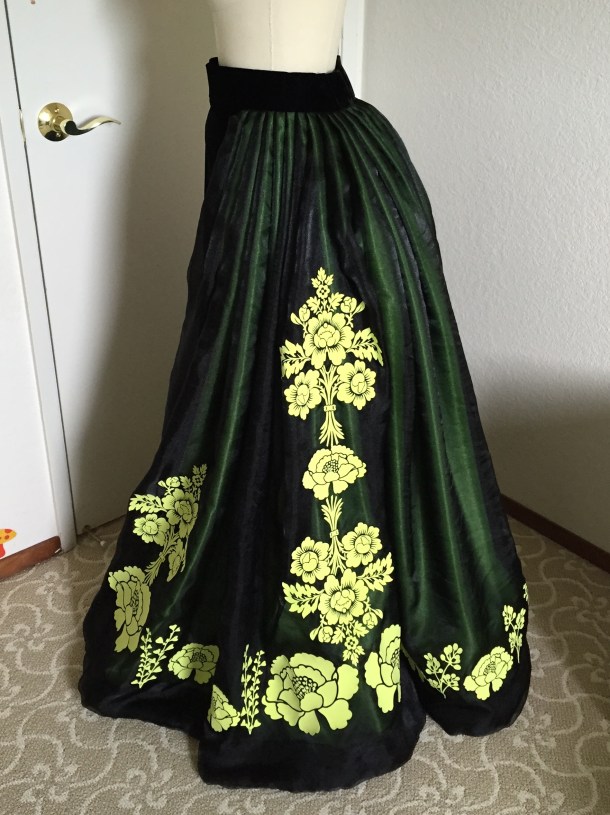
I finished the underskirt and overskirt for my Lady Tremaine costume.
IMG_6133

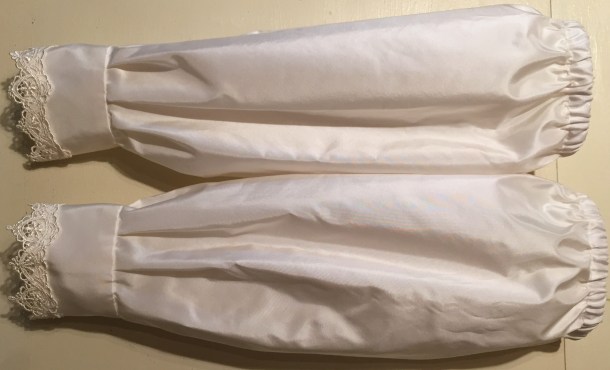
I made new undersleeves for my 1850s silk plaid Victorian day dress.
IMG_6102

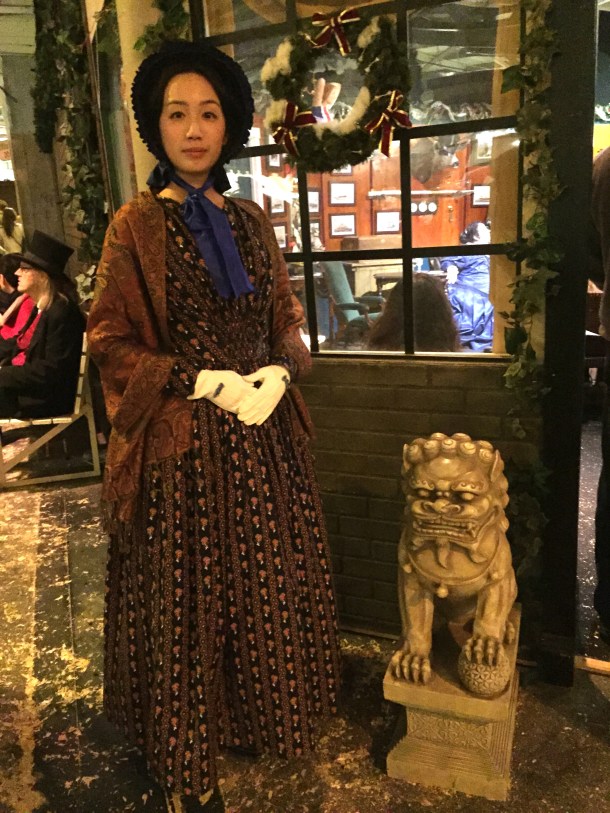
My final project of the year was my 1840s fan-front Victorian day dress.
IMG_6401

Goals for 2016:

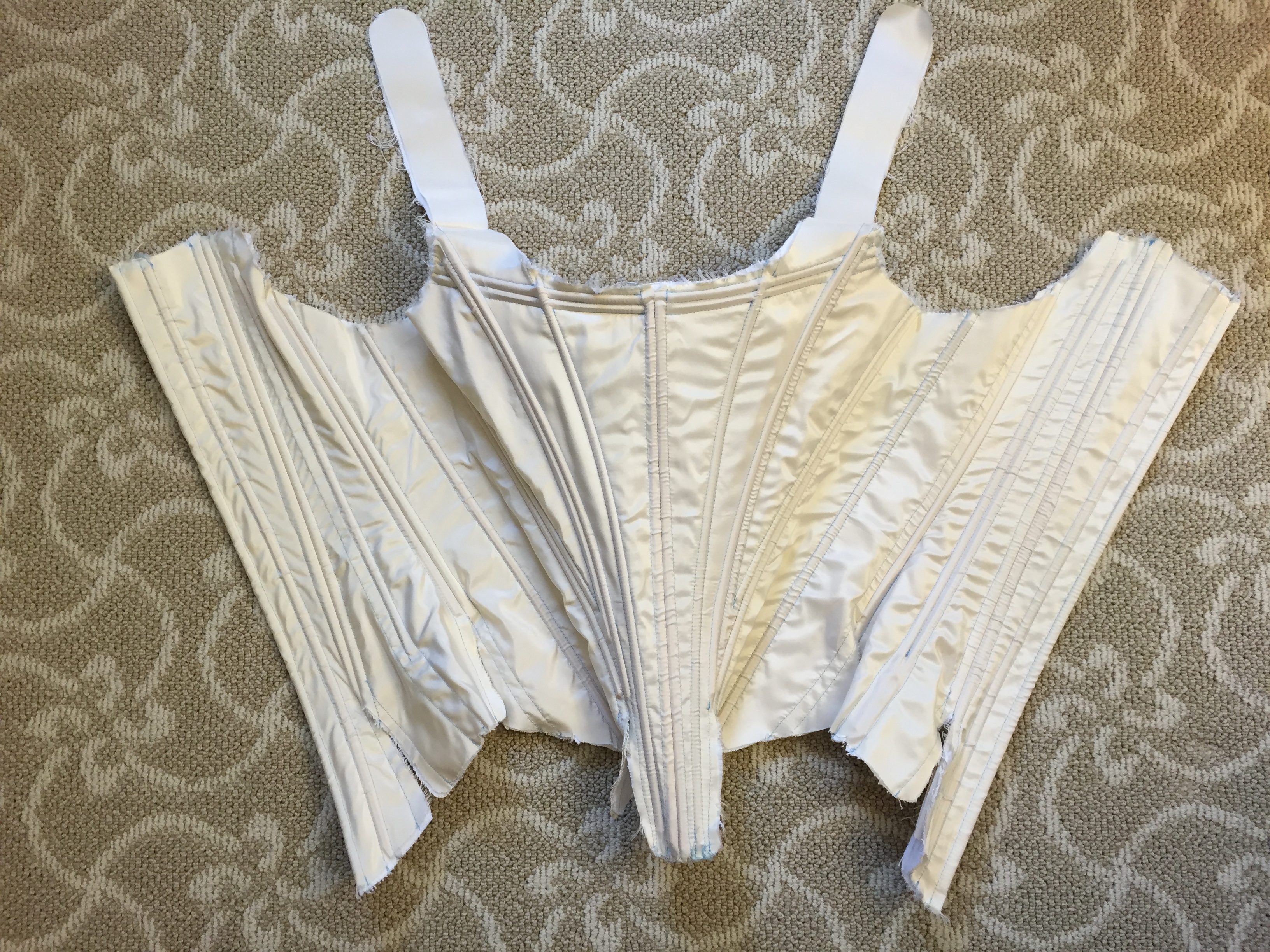
  • Finally complete my 18th century stays! I actually “finished” them months ago except for the binding on the eyelets, but took a break from most hand-sewing because of a wrist injury.
  • Make the bodice for my Lady Tremaine costume.
  • Trim a hat for Lady Tremaine.
  • Sew a 1920s Egyptian Revival dress for a GBACG event.
  • New regency gown – not sure day or evening yet.
  • Make more PJs.

Wish list with time frame unknown:

  • Black silk 18th century market hat
  • Black chemise a la reine
  • 1940s cocktail dress
  • Fur muff
  • Velvet cloak

Retrimming an 18th Century Bergere Hat

This weekend I am going to a fancy tea party, so I decided to retrim a small straw bergere hat I have. I was originally going to use silk ribbon and make little puffs, but realized I didn’t have enough to trim the hat and also have matching ribbon ties. Instead I used the leftover ribbons and ribbon roses from a dress I made. My other idea was the cover the hat completely in silk, but I decided to skip that for now.

IMG_5412IMG_5414 IMG_5405 IMG_5410

Previously, the hat was trimmed to match another outfit that consisted of a navy blue skirt and red and blue jacket. This is what the hat looked like before:

IMG_5373

I am considering trimming a pair of gloves to match, but that may be a little too over the top. =)

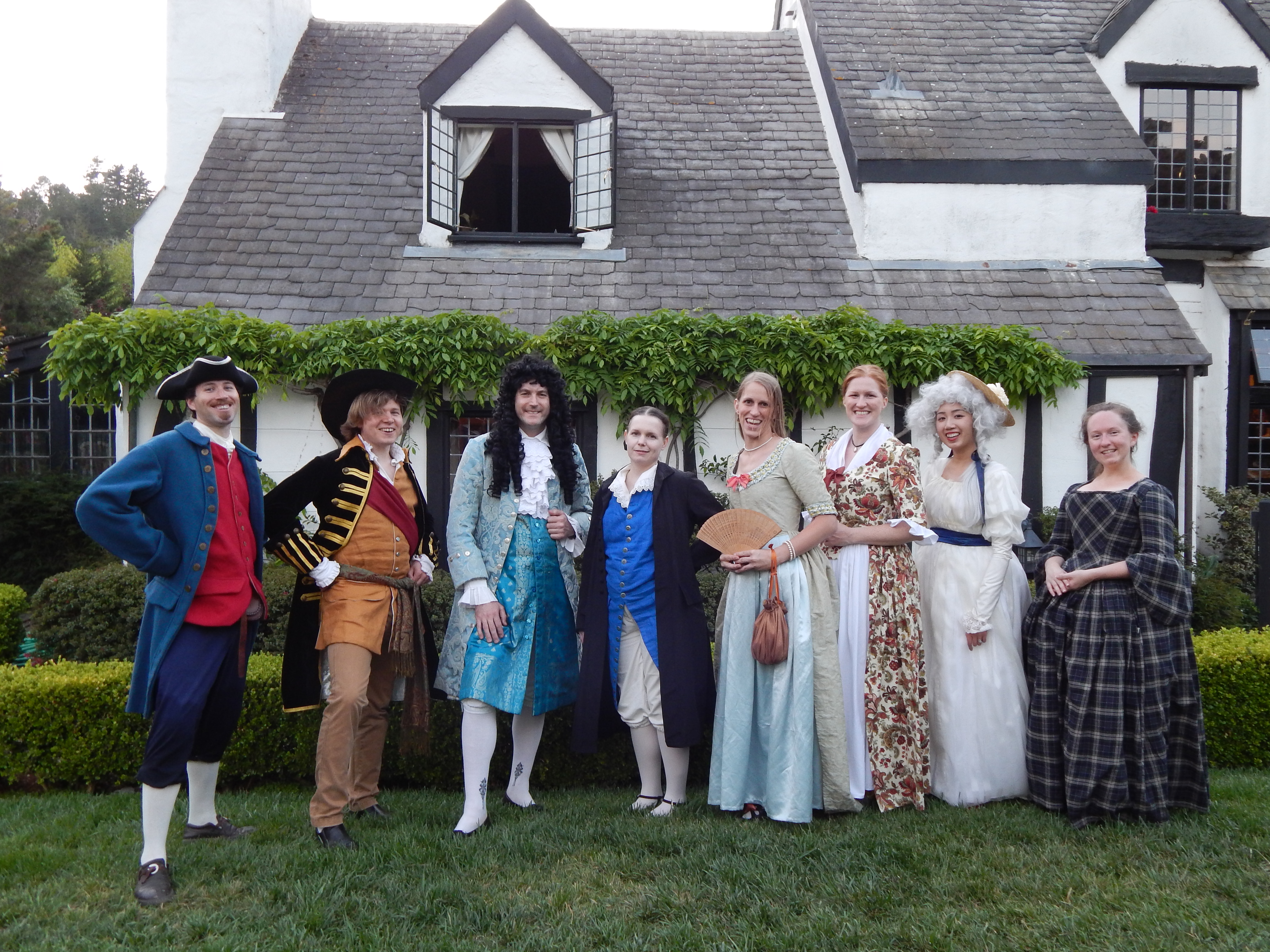
18th Century at the Pelican Inn

Last weekend a group of friends decided to gather at the Pelican Inn in Muir Beach to have dinner and take photos. The Inn is a very charming building, and we thought it would be nice to go there wearing 18th century outfits, and also visit the beach just down the road. I also finished my hedgehog wig, and so it was the perfect opportunity to take daylight pictures of my sheer striped silk organza chemise a la reine!

DSCN1524 DSCN1525I also wore my red hooded mantle when it got cooler in the evening on the beach. It matched perfectly with my red American Duchess Kensingtons!

DSCN1557I made the wig the day before, so it was a little rushed and not perfect, but I think a little more careful trimming will make it into something quite nice. I used the instructions in Kendra’s 18th Century Hair book, and I highly recommend it. There are wonderful step-by-step instructions and lots of color photographs. The overall steps were:

  1. Comb out a portion in the back that will remain straight.
  2. Put the rest of the hair in curlers.
  3. Boil the wig to set the curls.
  4. Tease the curls, except for 2 large side curls.
  5. Trim off the extra length.

We had a delightful time at the Inn, and it is a nice place for a small gathering.

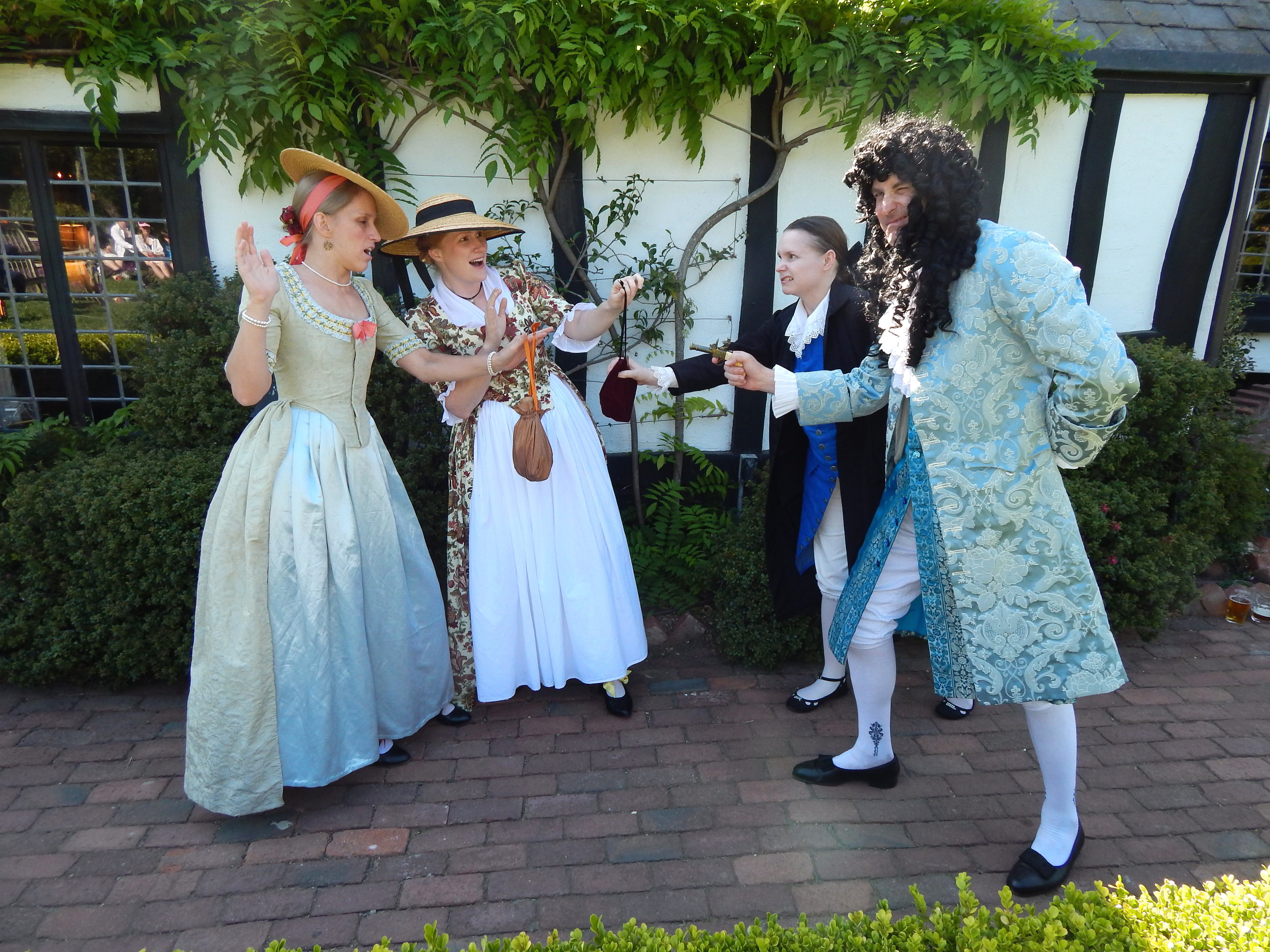
DSCN1598Although you must be on the lookout for highwaymen!

DSCN1532But fear not, you may be rescued!

DSCN1578Or maybe not.

DSCN1572For more fun photos see my Flickr album.

18th Century Half-Boned Stays (Part 5): How to Do Eyelets

My old wrist injury is acting up, so I have to take a little break from hand-sewing, but since I have a few of the eyelets done, I thought this would be a good time to show how I do them.

This is not necessarily the historically correct way, but the method I find to be sturdy and aesthetically pleasing.

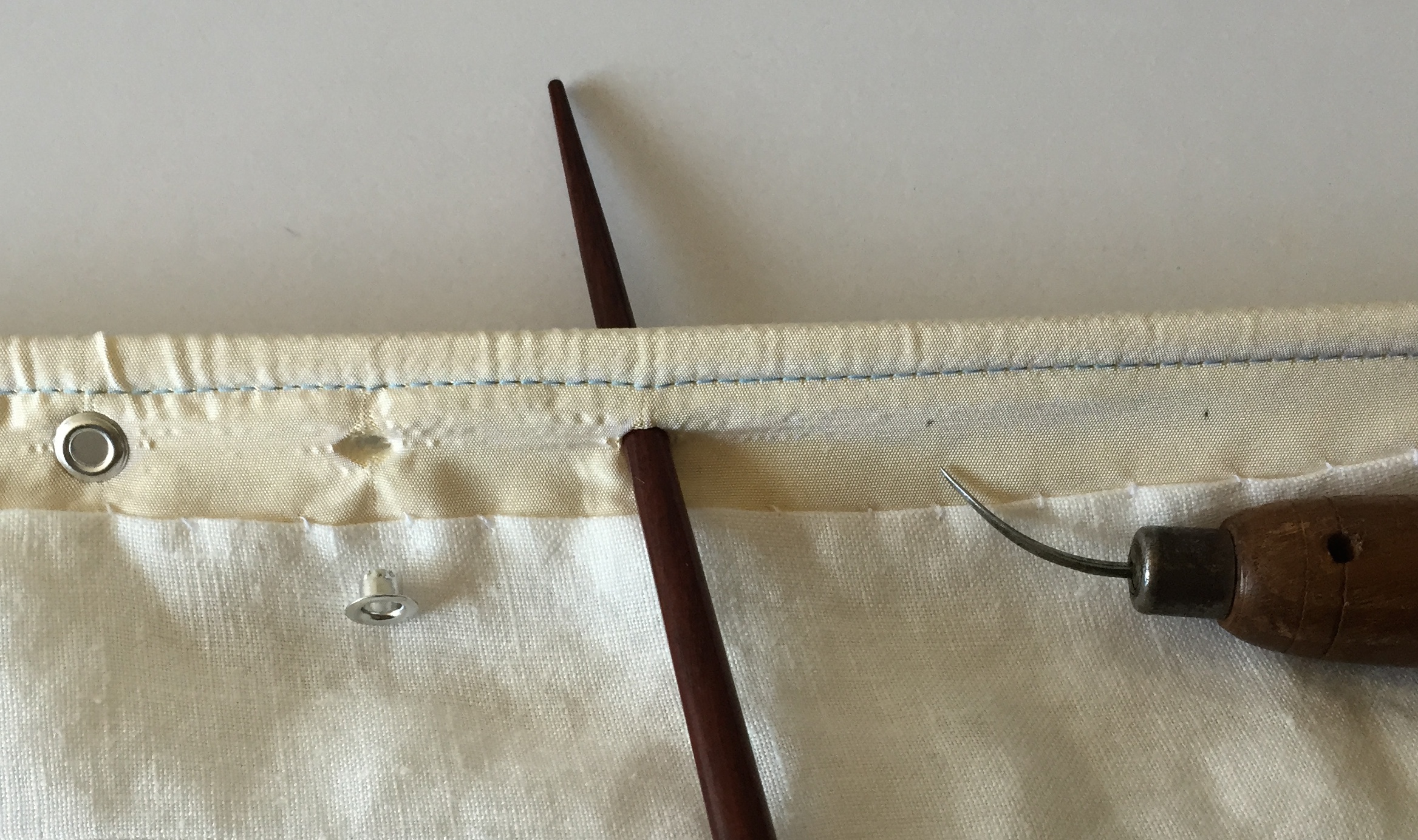
Punching a hole through the fabric weakens it, so I use an awl to poke a small hole, which I widen with a pointed chopstick. I then insert an eyelet through the widened hole, and then use a table-top eyelet/grommet press to set it in place. Finally, I sew over the eyelet with a button hole stitch to make it pretty.

The picture below, from right to left shows:

  1. Mark the hole with a pencil.
  2. Poke the hole with an awl.
  3. Widen the hole with a chopstick.
  4. Insert the eyelet from the wrong side (explained below).
  5. The eyelet set in by the eyelet press.IMG_4422

The eyelet is inserted from the lining side, with the flange remaining inside the stays. This results in the outside having a smaller surface area for you to wrap with thread. (If you are making a corset where the metal eyelets will show, you will insert the eyelet in the opposite direction, from the fashion fabric side).

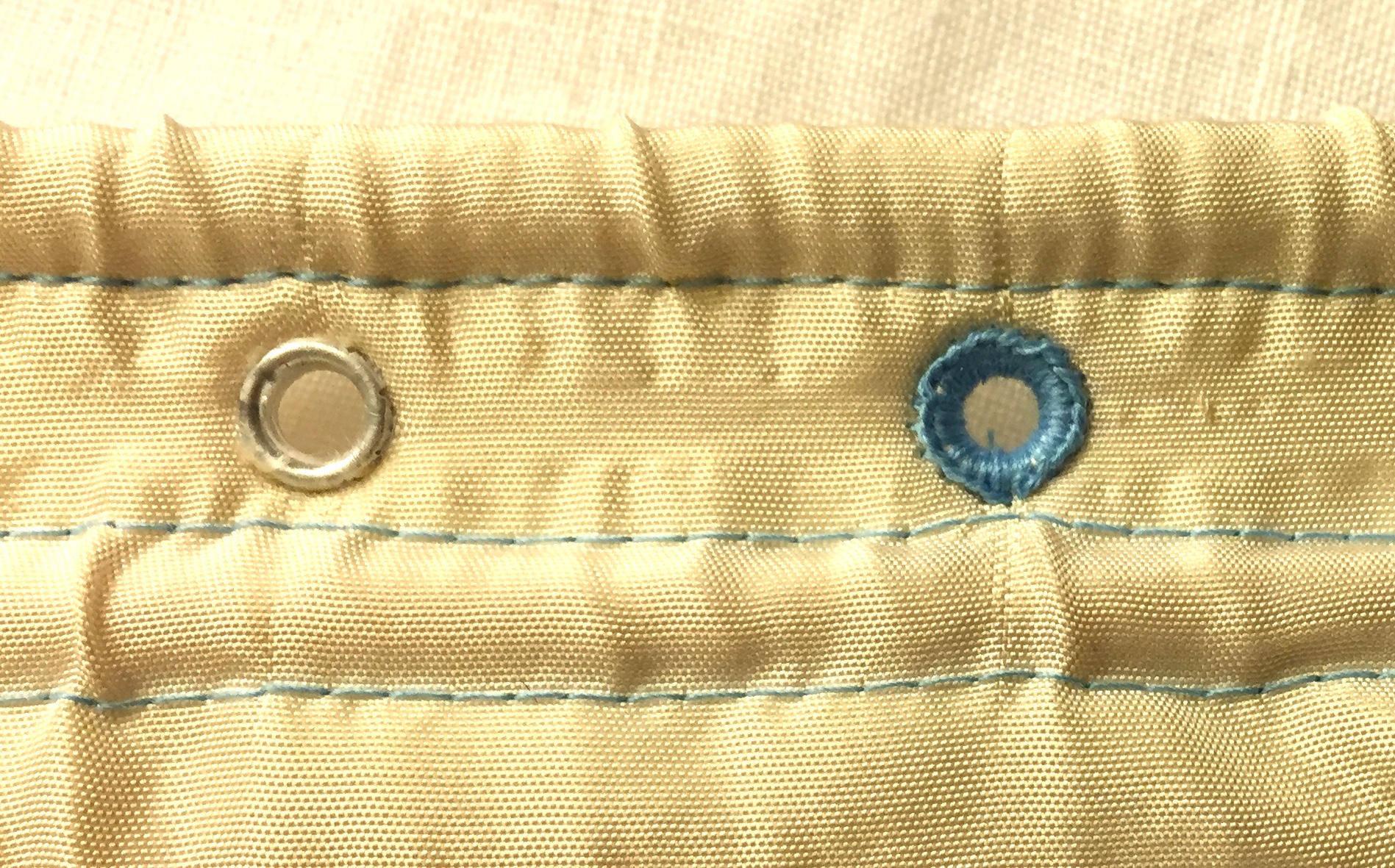
Here is a view from the other side. From left to right you have the widened hole, the eyelet inserted, and the eyelet after being pressed. (There is some puckering in my fabric because I sewed the channels a little too tight for the double reed boning).

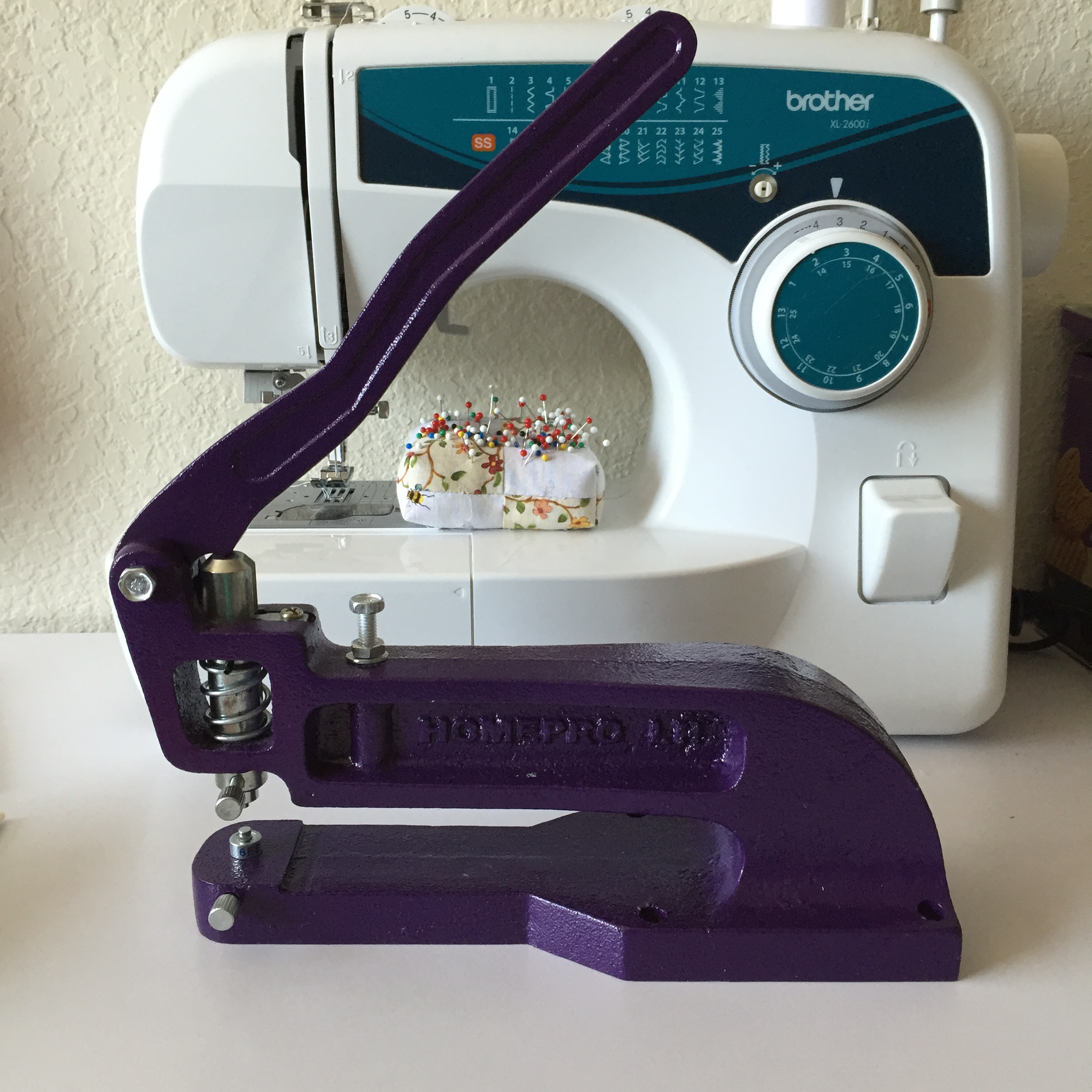
IMG_4424I use a Homepro eyelet setter with a size 6 die. It is quite heavy, and very easy to use. I have trouble applying enough pressure with hand-held eyelet pliers, and find using a hammer awkward, so this is a handy thing to have.

IMG_4426Use a tight blanket stitch over the eyelet to give it a finished appearance. You can use embroidery thread, or sewing thread. I used the latter, folding over a length of thread before threading the needle, resulting in a cluster of 4 threads each time. You can also just cast over with your thread, which is faster than using a blanket stitch, but I prefer the look of the latter.

IMG_4450See parts 1 and 2 and 3 and 4.

18th Century Half-Boned Stays (Part 4)

This is a quick post to show I haven’t forgotten about the stays!

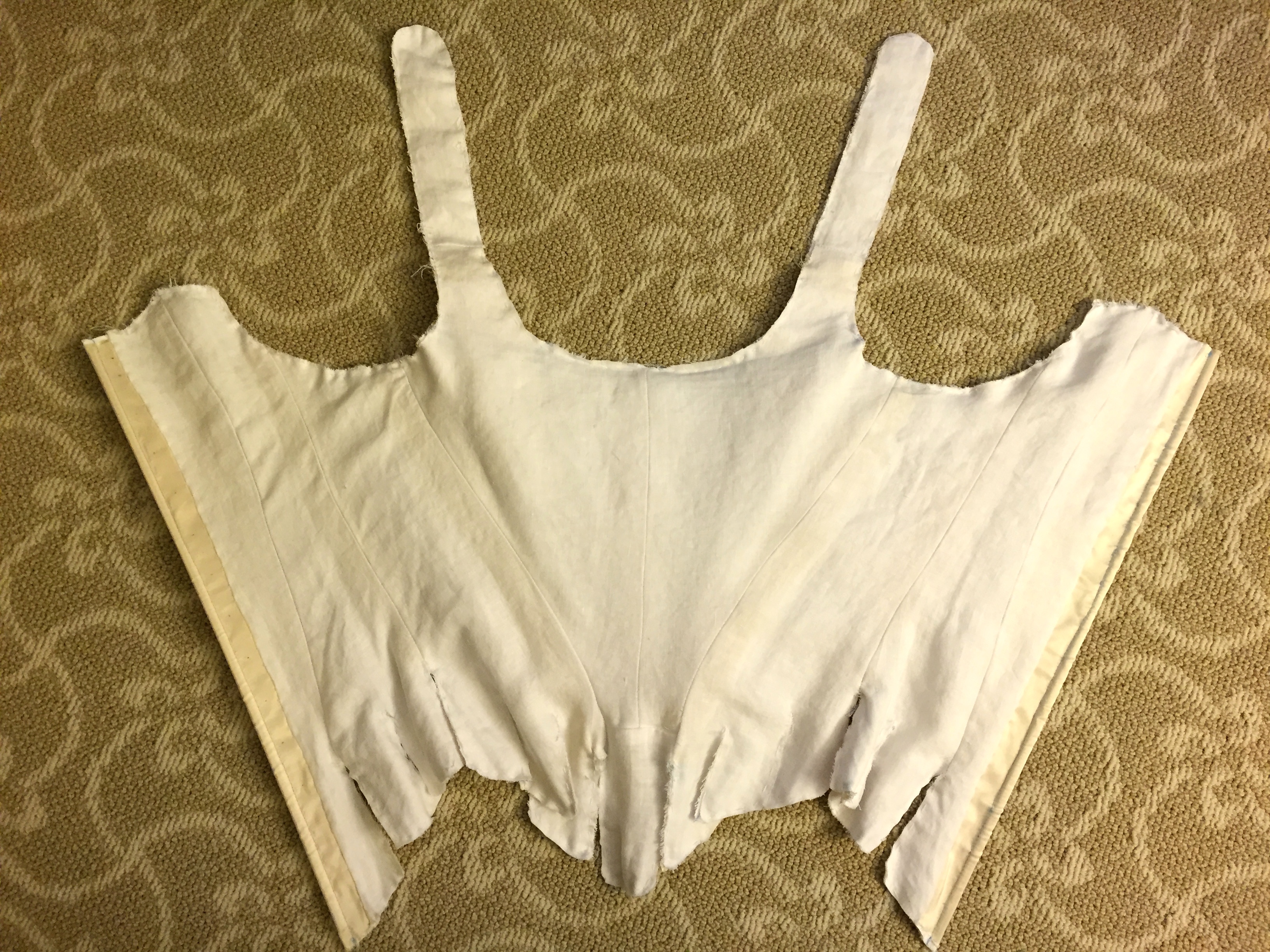
I finished altering the channel placement in the tabs and put in the boning. I had to redo the linen lining because the stays “shrank” once the boning was completed.

It is hard to get a good picture right now because the stays won’t lie flat anymore due to the curved fabric pieces and boning.

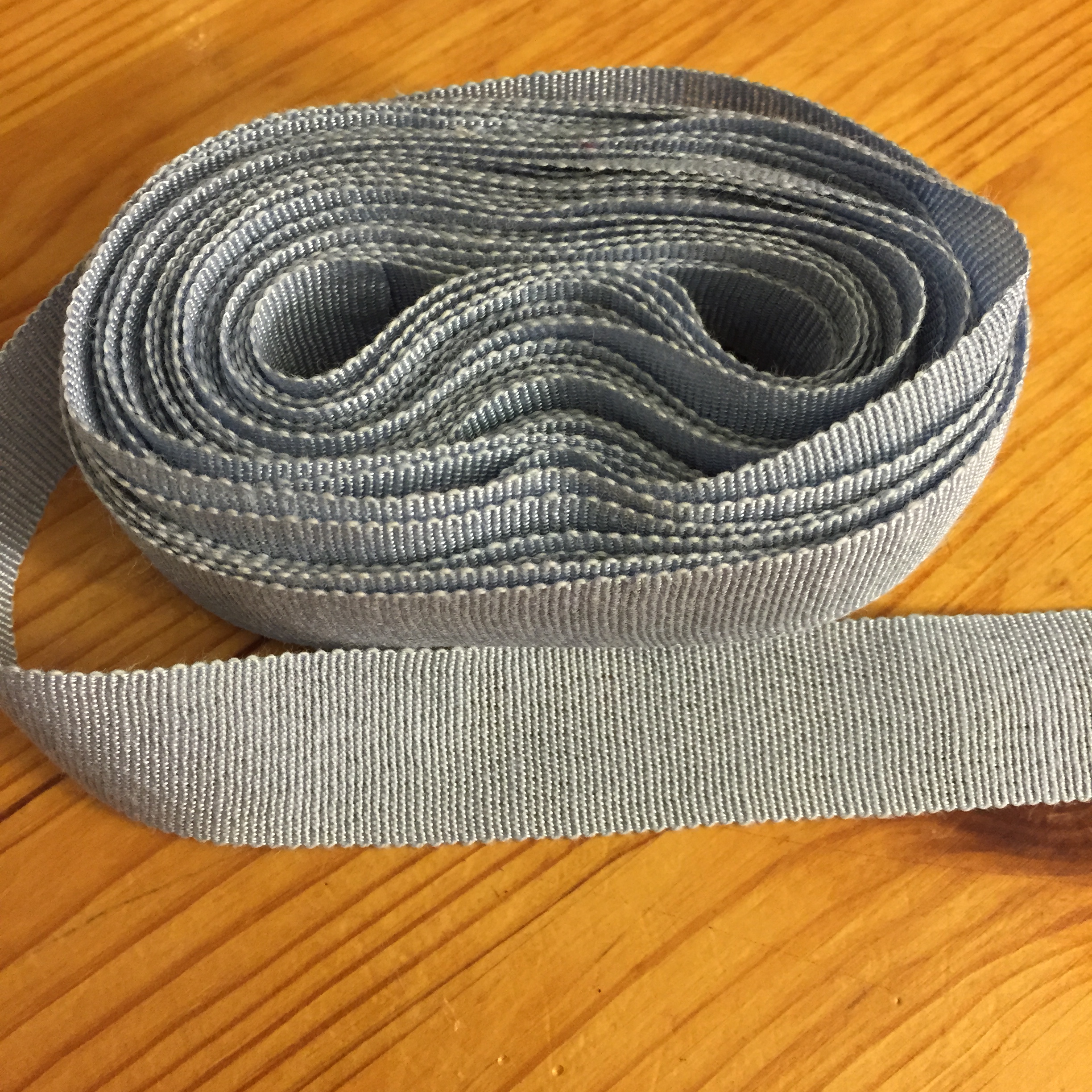
IMG_4414The lining is sewn in with some large stitches to hold it in place while I do the binding. IMG_4418I have some vintage rayon petersham to use as binding. It coordinates with the blue thread I used to stitch the channels. I plan to find some blue cord for lacing to make everything match!

IMG_4419See parts 1 and 2 and 3.

Chemise a la Reine (And Girls in White Dresses with Blue Satin Sashes!)

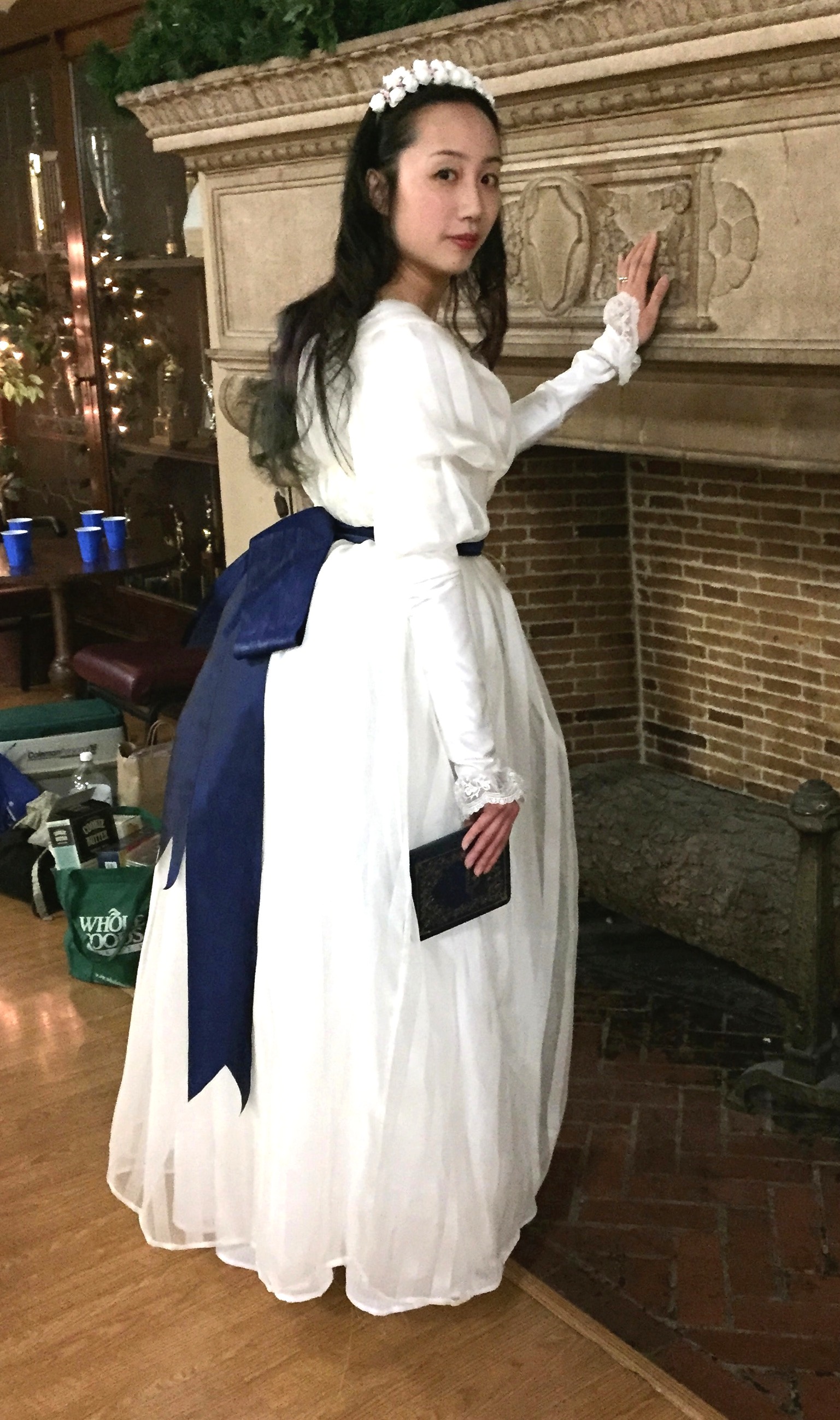
Last Saturday I wore my chemise a la reine, inspired by “Portrait of a Lady with a Book, Next to a River Source” by Antoine Vestier.  The pictures were taken at the Rite of Spring Ball, so I wore a simple floral headband.

IMG_4129These photos were taken with my phone in a side room where snacks were being served. I’m sorry if they are a little dark and grainy. When I make a hedgehog wig and complete the whole ensemble I plan to take some nicer photos!

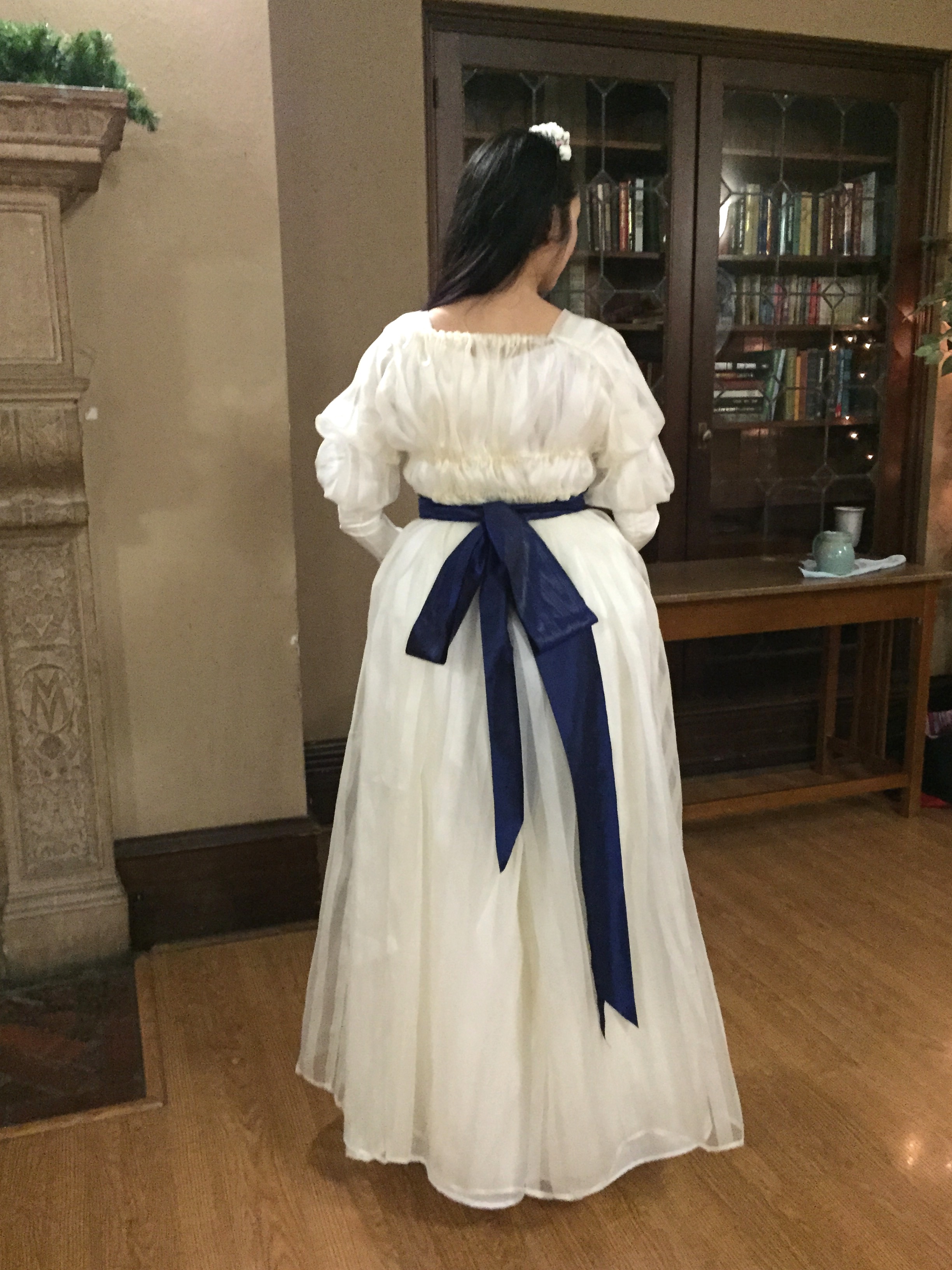
IMG_4061 IMG_4069 I made a few little changes. The sheer layer in the portrait is more fitted, while I made my dress gathered with drawstrings for several reasons: 1) I could reuse the same pattern I used for the underdress. 2) I wanted the dress to be adjustable so I could wear it with and without stays. 3) Let’s be honest. I’m flat-chested and usually a little more fluff in the front looks better on me. =)

The other major change I made is in the neckline. In the original, the neckline of the sheer dress is very low, and shows what appears to be the subject’s chemise underneath. When I tried that combination with my outfit I thought it looked rather odd, perhaps because my cotton chemise material isn’t as delicate and transparent as the one in the portrait. In real life, it would have looked like I was falling out of my dress!

The dress opens in the front, with organza ribbon drawstrings to close the neckline, waist, and underbust. I also used organza ribbon for the gathering channels.

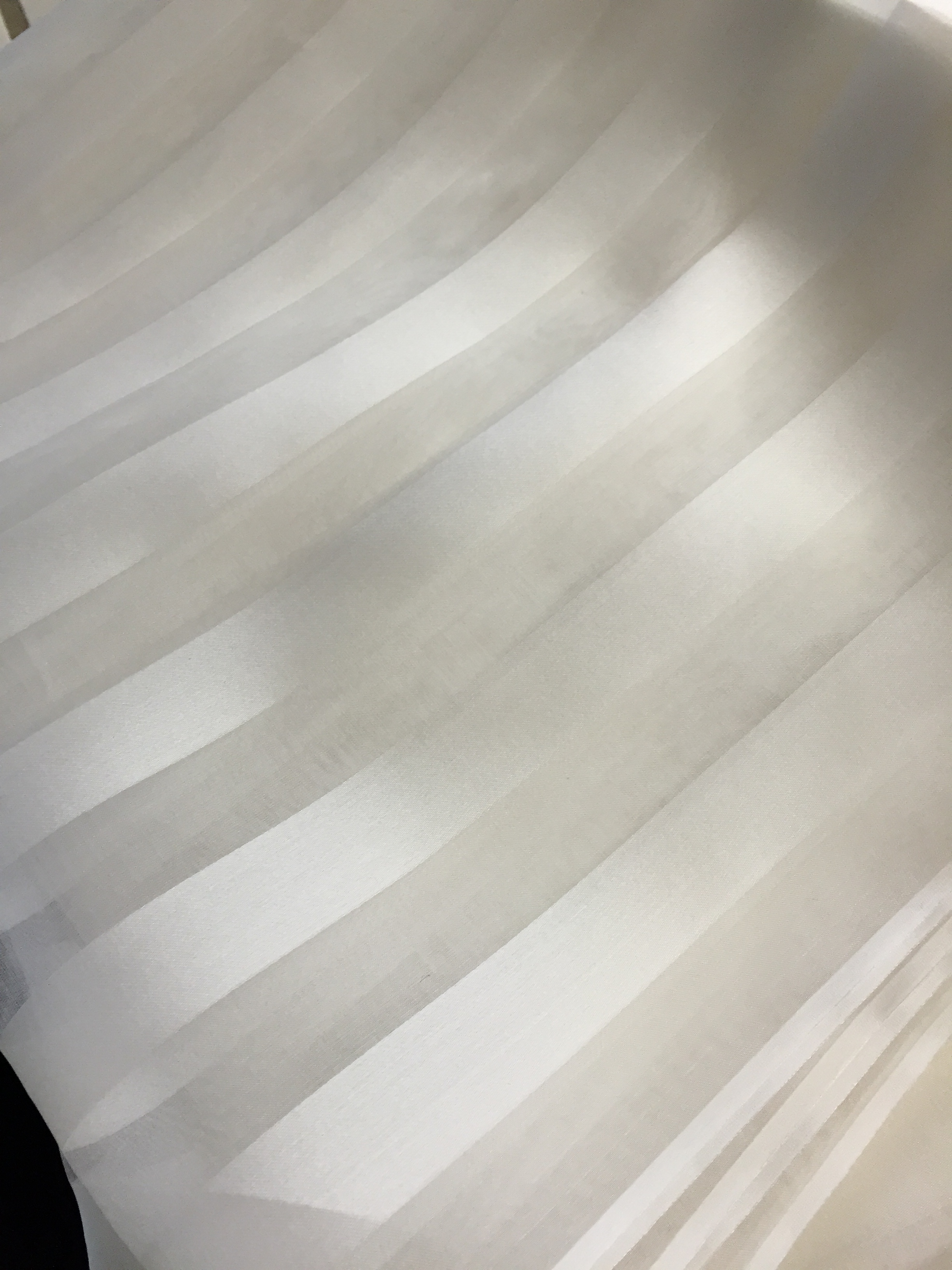
I used a sheer striped silk organza for my dress. I spent a long time looking for the right fabric, but alas, could not find the exact type from the portrait with the correct alternating wide and thin stripes. Renaissance Fabrics now has a reproduction of the portrait fabric in a sheer taffeta. I wish it was around when I purchased my fabric months ago!

The dress was constructed in much the same way as the cotton voile chemise dress I wore underneath. There was an extra gathering channel under the bust, instead of just one at the waist. The organza was rather stiff and puffy, and did not lie as flat as I would have liked, but the extra channel helped.

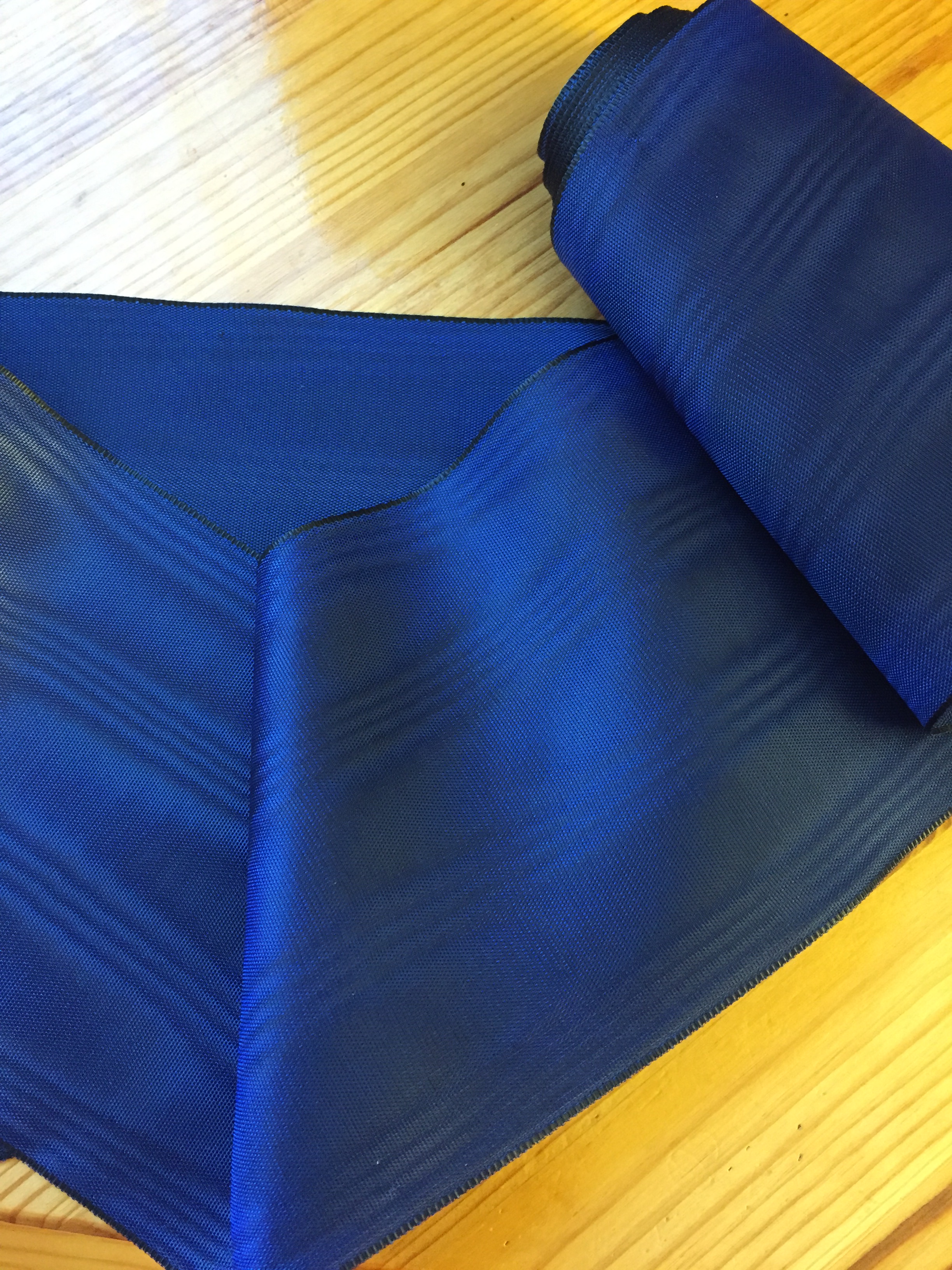
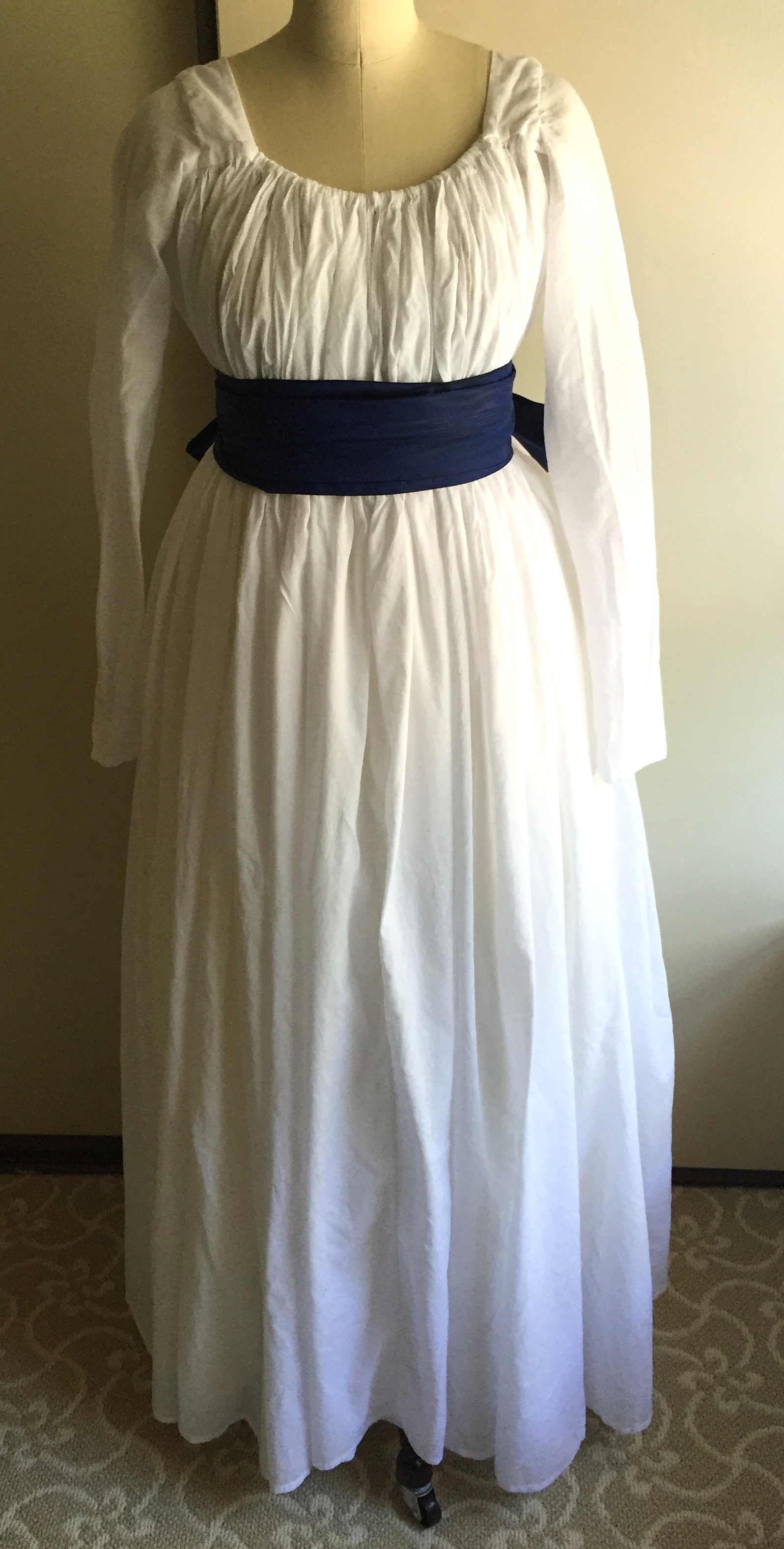
IMG_4119The sash is a 4 inch wide German rayon moire ribbon, about 5 yards long. I loved the color and texture.IMG_4002The sleeves are a silk taffeta leftover from my 1830s Hopeless Romantics dress. The sheer puffed part consists of a tube (I love sewing tubes!) tacked in strategic places to create its shape. The top part of the sheer tube is curved to fit in the armscye. The bottom part of the sheer tube was sewn into the taffeta fitted sleeve, which was sliced apart horizontally, then sewn back together with the sheer part sandwiched in. The cuffs are organza lace.

IMG_4123I carried around a Kindle cover “book” to hide my phone. I plan to sew in some straps or pockets to hold dance cards, cash, or secret notes! (I also got some suggestions at the ball to turn it into a flask haha).

To save time the dress was machine-sewn. However, I would like to go back and redo the hems by hand. I also need to hem the underdress a wee bit shorter.

I am wearing a half-moon bumpad and 2 petticoats underneath the dress. I am still working on my stays!

Here are the other lovely girls in white dresses with blue satin sashes (and some boys, too!) The group consisted of many of our Hopeless Romantics, plus a few new faces.

IMG_4078Project costs:

  • 4 meters silk organza: $80.23 ($54.80 + $25.43 shipping from Halo Silk Shop).
  • 5 yards cotton voile: $20.90 ($14.95 + $5.95 shipping from eBay). Yes at $3 a yard this was cheaper than the sash!
  • 6 yards moire ribbon: $25.50 ($24 + $1.50 shipping from Ribbonstore.com)
  • Organza lace: $5.10 from eBay.
  • Organza and satin ribbons: $5.67 from Michael’s.

Total cost: $137.40 (It’s more than I normally spend on a project, but I have two dresses for the price of one! I can wear the cotton chemise with the sash for a daytime look).

Previous posts:

https://freshfrippery.com/2015/03/21/sheer-striped-chemise-a-la-reine/

https://freshfrippery.com/2015/04/07/easy-chemise-dress/

Easy Chemise Dress (with Instructions)

I have nearly completed the cotton voile underdress for my sheer striped gown inspired by the “Portrait of a Lady with a Book, Next to a River Source” by Antoine Vestier. I still have to hem the bottom and sleeves, but I will wait to do that until I’ve finished the overdress. I have a bum pad (not shown), but I still need to work on some petticoats to give the skirt some floof.
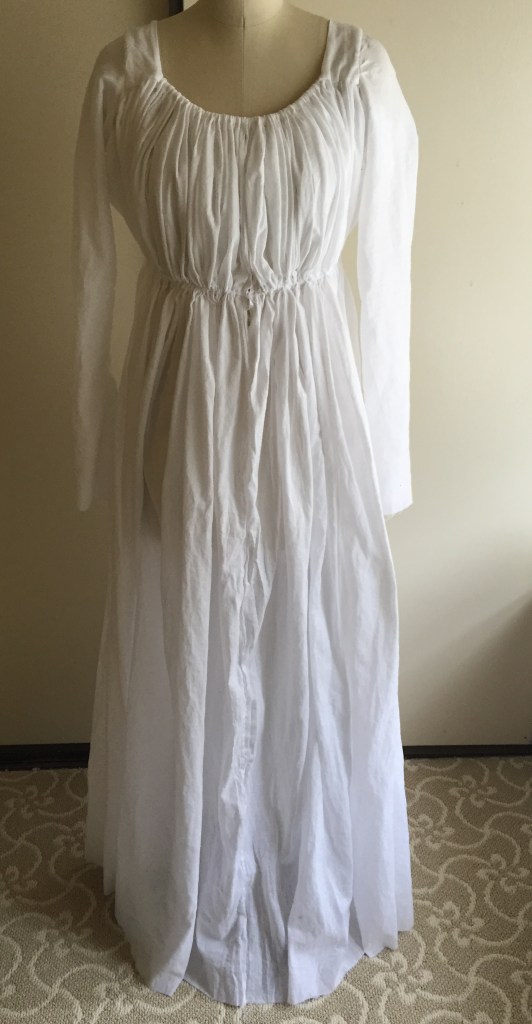
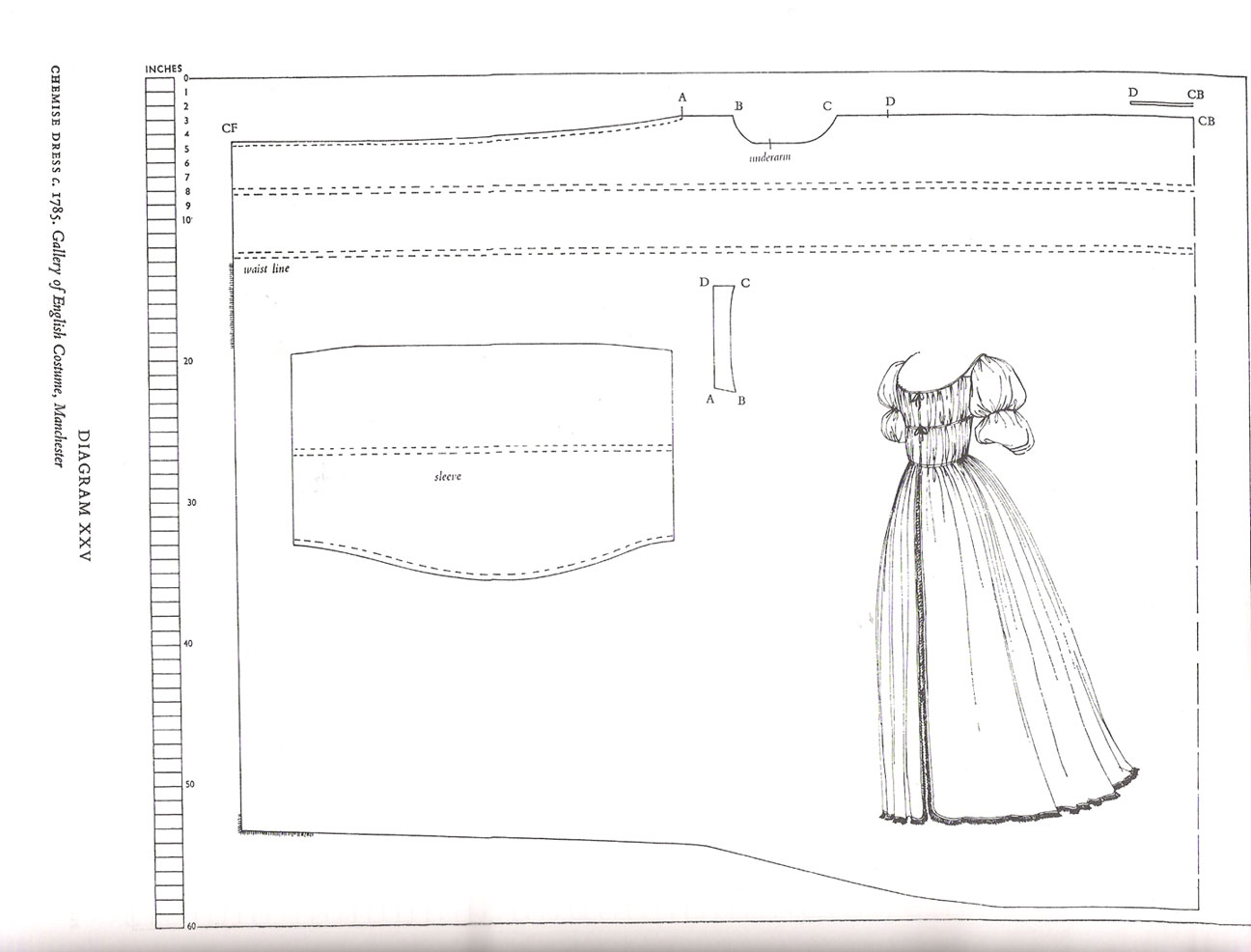
IMG_3975I spent some time studying the Nora Waugh pattern, and many costuming blogs (with their very helpful construction techniques!) but in the end, decided to drape my own using my own adapted method. I think that if I used a proper pattern the dress could have been a little more polished, but for an underdress I am perfectly happy with the result. Plus it was very easy!

I used 3 panels of 55 inch wide cotton voile, purchased from Fabric Wholesale Direct, via their eBay store. I sewed them together at the selvedges, forming a giant rectangle. I rolled the top edge down to form a channel for gathering. I left 12 inch gaps at the seams, where the arm holes would eventually be. (My panels were also 55 inch tall. I am 5’6″, and wanted the hem short enough for dancing. If you are taller or want a floor-length dress your panels should be longer).

IMG_3991The Nora Waugh pattern has dips cut out for the neckline, but I decided to have gravity take care of the scoop in the neckline for me, which you will see when it is gathered). I inserted ribbon into the channels and gathered them.

At this point it is useful to pin this a dress form (or have a friend help you) so you can know how tightly to gather the middle panel. It will be about the width of your shoulder blades once it is fully gathered. (You can also sew the gathered edge down to another strip of fabric for extra security). At that point you will cut of the excess ribbon and sew the ends down to secure them at the anchor points indicated on the picture below. Each of the side panels will have one free ribbon end, which you will use to close the neckline each time you wear the dress.

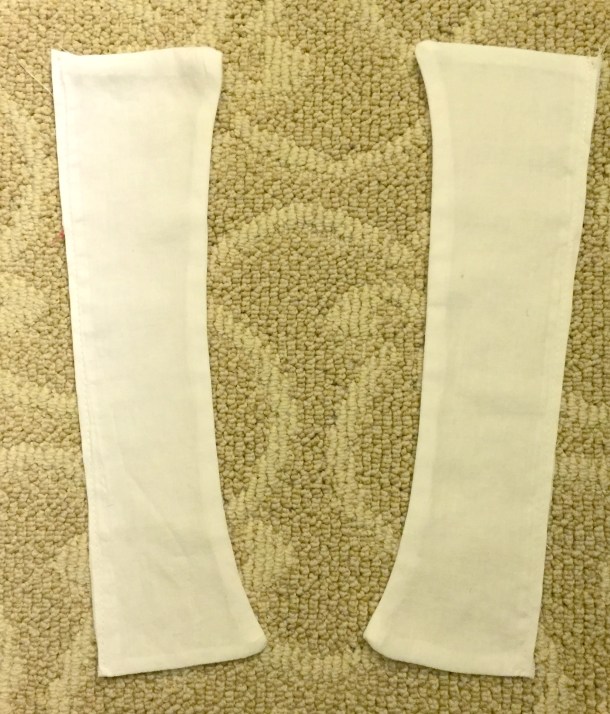
IMG_3992I cut two bands for the shoulder straps. They are about 10 inches long and 3 inches wide, with a curve on one side, but the dimensions will depend on your height. (You also lose a little length in the straps if you sew them with the ends tucked in and hidden like I did). Once I gathered the top of the dress I pinned the straps on and tested the fit before sewing them down. The straps are lined in linen for extra strength.
IMG_3923When the straps are sewn on you will have something that looks like a sleeveless tube dress that is open in the front. Pull the ribbons in the side panels to close the top, and you will have a curved neckline.
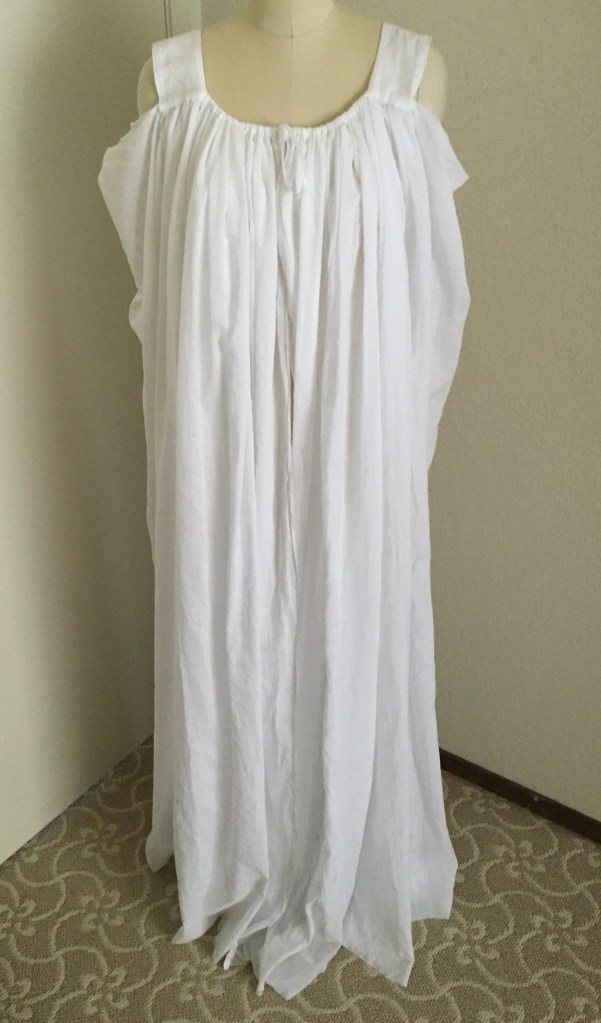
IMG_3940There is excess fabric in the sides because the underarm holes have not been cut yet. (I did that after pinning sleeves on to fit). However, if you tie a sash on the middle you will see a chemise dress starting to take shape! The picture below is the dress shown inside out because . . .
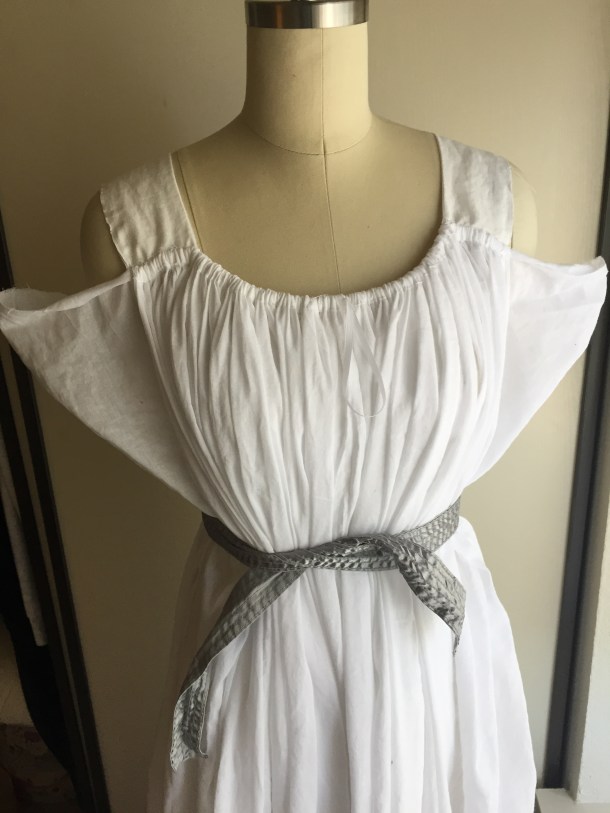
IMG_3941. . . if you take a string and wrap it around the middle you can use a pen to mark where you should put in another channel for the waist.

IMG_3942Use the marked lines as a guide to sew down a wider ribbon, and then use that as channel for another ribbon that will be used to gather the waist when you put the dress on. I sewed the front of the side panels together starting several inches down from the waist. (The many gathers of the fabric will keep the top of the dress closed).

For the sleeves I borrowed a sleeve pattern I drafted from another dress I made. If you can’t draft your own, any tight-fitting sleeve will do. If you don’t want a fitted sleeve that’s even easier! Sew a big tube and gather it into the sleeve head and at various points to make a puffy elbow-length sleeve common in the earlier style of gowns.
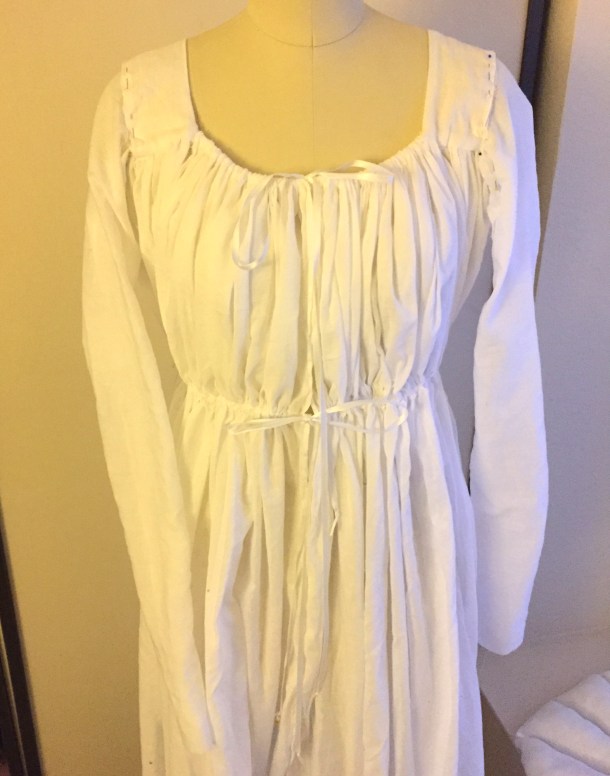
IMG_3949Pin the sleeve into the dress, pulling out the excess fabric that will be trimmed.

IMG_3954Trim the excess, sew the sleeves in (I did French seams), hem, and voila! Add some petticoats and a pretty sash and you are set.

IMG_3975UPDATE: Now that I have a sash, here are some pictures of the finished cotton dress with a small bum pad and petticoat. (I plan to make another petticoat and possibly a slightly more padded bum). The sash is about 5 yards of moire ribbon, wrapped around the waist 3 times and tied into a bow.

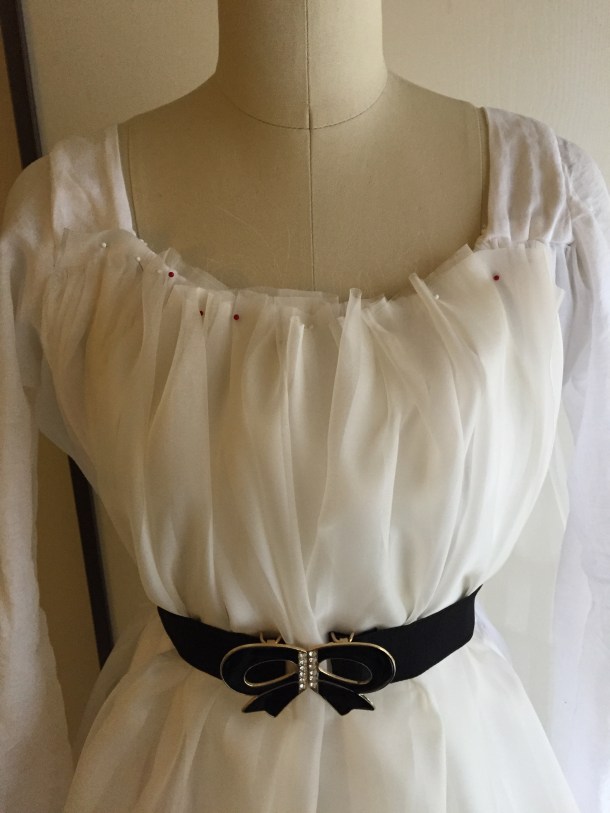
IMG_4178 IMG_4180 IMG_4174Here is a sneak preview of the silk overlayer I am in the process of draping, along with a temporary belt.
IMG_3980I hope this tutorial made sense. I welcome any comments and questions.

You can see the finished dresses worn here: https://freshfrippery.com/2015/04/25/chemise-a-la-reine-and-girls-in-white-dresses-with-blue-satin-sashes/

I am happy to provide all patterns and tutorials for for free on my blog. It is absolutely optional, but if you would like to donate towards my domain registration and the data costs of hosting the many photos on my site, consider buying me a “coffee”: https://ko-fi.com/freshfrippery.  Thank you!

Screen Shot 2019-11-27 at 9.28.46 PM

DSCN1816

Sheer Striped Chemise a la Reine

My next project is something I’ve been planning for a while, but only have about a month left to finish!

More than a year ago I bookmarked the painting “Portrait of a Lady with a Book, Next to a River Source” by Antoine Vestier, from about 1785.

445px-Antoine_vestier_-_retrato_de_For the Rite of Spring Ball our Hopeless Romantics group is turning into “Our Favorite Things.” We are doing a “Girls in White Dresses with Blue Satin Sashes” theme for April. This dress is perfect, but now I’m running out of time!

To recreate the outfit I will be wearing a cotton voile chemise a la reine, and a sheer striped silk overdress.

I had a hard time finding the right sheer fabric. I found many fabrics where the stripes were much too wide, or much too thin, and most of them were synthetic. I finally found a 1 inch wide striped sheer silk organza in a nice ivory color.

IMG_3551I am in the process of draping the voile. I studied a lot of blogs, and Nora Waugh’s pattern, but will be making my dress according to what makes sense to me (translation: what’s the easiest way), and combining construction ideas from various dresses.

waugh

18th Century Half-Boned Stays (Part 3)

I took a break from my 18th century half-boned stays to work on my silk plaid Dickens dress, but I recently attended a sewing party where I made some more progress on the stays.

I put in the horizontal bones, and most of the long vertical bones, and the stays are starting to take shape!

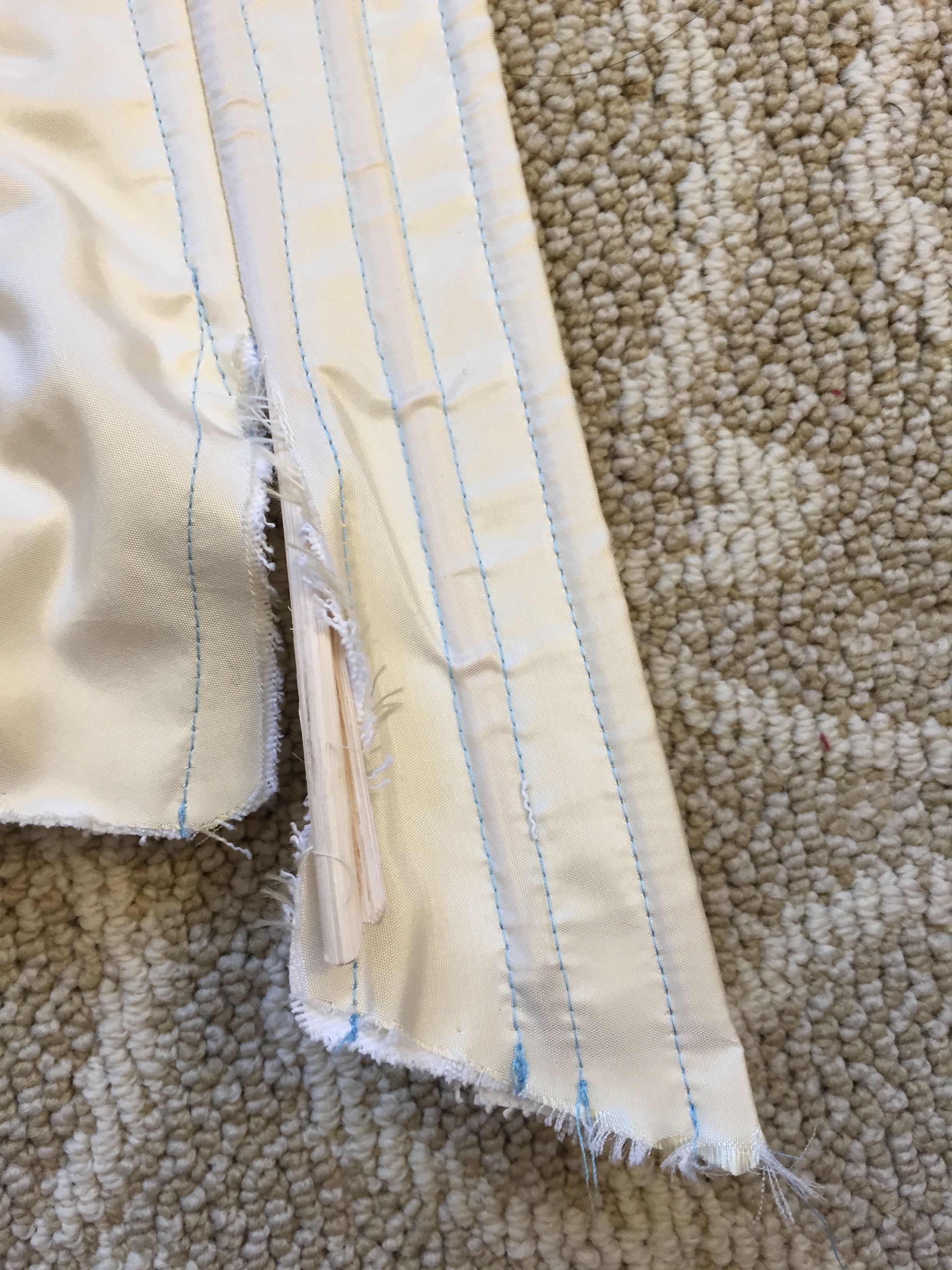
IMG_3604However, I am going to have to make a modification to the boning in the tabs. The JP Ryan pattern has a lot of the vertical boning channels along seams, which is quite handy, but when they get to the tabs there is no room for binding. I will shorten the boning and sew additional short channels.

IMG_3605Some parts of the pattern already have shorter channels for boning in the tabs, but they are still on the edge. I have added an additional row of stitching nearby to move the boning channel. The white pin shows the original stitch line, and the red pin shows the one I added.

IMG_3610To give you an idea, here are some hasty crooked red pen markings on my pattern pieces:   IMG_3611See parts 1 and 2.

18th Century Half-Boned Stays (Part 2)

I’ve sewn together the silk cover and canvas interlining. Most of the boning channels are stitched, although the last two channels next to where the eyelets will be in the back are going to wait until I have a fitting.

image

Since contrast stitching was popular with stays I decided to go with blue thread, and later I will have blue binding to finish the edges. To save time I did machine stitching, but if I have the opportunity to make another pair of stays I would prefer to do hand-sewing or not do contrast stitching. The colored thread make the areas where I had to backstitch on the machine much more obvious, such as the short horizontal boning channels. It’s also harder to control exactly where the stitches end on a sewing machine, and there were places where I had to rip out stitches because I wasn’t entirely happy with the placement. Oh well, lesson learned! Still, for a first try at stays I’m satisfied with how it’s turning out.

The remaining steps are determining the placement of the eyelets and final channels, boning with reed, attaching the lining, slashing the tabs, and then binding all the edges.